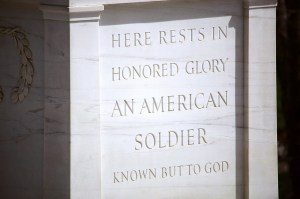
US Military

A Brief History of Valentine’s Day

220px-St-Valentine-Kneeling-In-SupplicationEach year on February 14th we celebrate Valentine’s Day. It is a time for romance, love and for many a great excuse to play kissy-face with a chosen sweetheart!  But the origins of the day are actually dark, bloody — and a bit muddled.

Though no one has pinpointed the exact origin of the holiday, one good place to start is ancient Rome, where men hit on women by, well~ by hitting them!

On February 14 around the year 278 A.D., Valentine, a holy Christian priest in Rome back in the days of Emperor Claudius II, was executed for performing too many Christian marriages. Indeed, Emperor Claudius II actually executed two men — both named Valentine — on Feb. 14, each in different years in the 3rd century A.D. and their martyrdom was honored by the Catholic Church with Valentine (Valentinus in latin) the priest’s canonization and the eventual celebration of St. Valentine’s Day. Ironic; huh?  Celebrating a day devoted to romance and love on the anniversary date of the poor man’s execution!

From February 13 to 15, the Romans celebrated the feast of Lupercalia. The men sacrificed a goat and a dog, then whipped women with the hides of the animals they had just slain. Those silly Roman romantics got drunk & naked and young women would actually line up for the men to hit them, because they believed this would make them fertile. (Oh, those wild and crazy Romans!) The brutal party included a matchmaking lottery, where young men drew the names of women from a jar. The couple would then be coupled up for the extent of the festival — or longer, if the match was right.

In the 5th century sometime between 492 – 496 A.D., Pope Gelasius I, mixed things up a bit by combining St. Valentine’s Day with Lupercalia in order to banish the pagan rituals. But the festival became more of a theatrical interpretation of what it had once been. Regardless, the holiday was still celebrated as a day of fertility and love.

Legend has it that while in jail awaiting execution for preaching Christianity~ St. Valentine left a farewell note for the jailer’s daughter, who had become his friend, and he signed it, “From Your Valentine”. So there you have it in a nutshell! ~ JGT

My Valentine’s Day Story

While serving in the U.S. Navy during the mid-1980’s, I met & married my husband, Luke. We had met a little more than a year earlier, on a Friday  afternoon, while I was reporting for duty at NRC Fort Wadsworth (later NAVSTA), Staten Island, NY. During the check-in process, it was customary for the sponsor, in my case, the Chief Petty Office on duty, to introduce incoming personnel to department heads. When we reached the “Library” I was greeted by an empty desk but introduced to a sailor wearing blue coveralls who was obviously busy rummaging through stacks of paperwork beneath the counter.  A few seconds passed before I heard a loud ‘thump’ and Luke stood up and muttered, “Welcome aboard” while rubbing his throbbing scalp where it had just collided with the countertop.

As required, I had reported in full dress uniform and Luke confessed to me a few years later that he had been so distracted by staring at my legs, that he didn’t realize the distance between his head and the countertop was as close as it was! How romantic was that? Oh, and by the way; did I forget to mention that it was also Valentine’s Day?!?

Happy Valentine’s Day, Bear! “I never knew what I always wanted, until I met you!”  ~ As Ever, D~~

Me & Luke Christmastime 198720110824163248723

THE PLEDGE OF ALLEGIANCE

The Pledge of Allegiance was originally written in August 1892 by a Socialist Minister, Francis Bellamy (1855-1931) from New York. He originally wrote it to promote Socialism & eventually the rise of Nazism in Europe and the United States.  Originally published in The Youth’s Companion on September 8, 1892, Bellamy had hoped that the pledge would be used by citizens in any country.
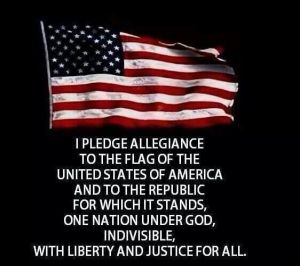
In its original form, it read:  “I pledge allegiance to my Flag and the Republic for which it stands, one nation, indivisible, with liberty and justice for all.”

In 1923, a National Flag Conference, presided over by the American Legion and the Daughters of the American Revolution, ordained that “my flag” should be changed to “the flag of the United States,” lest immigrant children be unclear just which flag they were saluting. The following year, the Flag Conference refined the phrase further, adding “of America.”  In 1942, the pledge’s 50th anniversary, Congress adopted it as part of a national flag code. By then, the salute had already acquired a powerful institutional role, with some state legislatures obligating public school students to recite it each school day.
A decade later, following a lobbying campaign by the Knights of Columbus—a Catholic fraternal organization—and others, Congress approved the addition of the words “under God” within the phrase “one nation,  indivisible.” On June 14, 1954, President Dwight Eisenhower signed the bill into law making it the same 31-word “Pledge” we recite today.
Section 4 of the United States Flag Code states:  “I pledge allegiance to the Flag of the United States of America, and to the Republic for which it stands, one Nation under God, indivisible, with liberty and justice for all.”

The Pledge should be observed by standing at attention facing the flag with the right hand over the heart. When not in uniform men should remove any non-religious headdress with their right hand and hold it at the left shoulder, the hand being over the heart. Persons in uniform should remain silent, face the flag, and render the military salute. ~JGT


“A Day That Will Live in Infamy” (Japanese Attack Pearl Harbor, Hawaii)

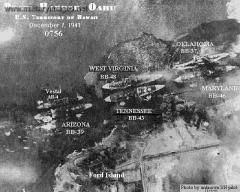
  1. Aerial_photograph_from_unknown_jap_aviator_over_Pearl_Harbo

On an otherwise calm Sunday morning on December 7, 1941, the Japanese shocked the world by bombing the American naval bYase at Pearl Harbor, Hawaii.

This ‘dastardly attack’ was the turning point for America and for the War.

On December 8, the nation was gathered around its radios to hear President Roosevelt deliver his “Day of Infamy” speech. That same day, Congress declared war on Japan. On December 11, Congress declared war on Germany.

The slogan ‘Remember Pearl Harbor’ mobilized a nation and helped awaken the mighty war machine and economic engine that was America.

**Eighty three years ago~ just before 8 a.m. on December 7, 1941, a Japanese dive bomber bearing the red symbol of the Rising Sun of Japan on its wings appears out of the clouds above the island of Oahu. A swarm of 360 Japanese warplanes followed, descending on the U.S. naval base at Pearl Harbor in a ferocious assault. The barrage lasted just two hours, but it was devastating: The Japanese managed to destroy nearly 20 American naval vessels, including eight enormous battleships, and almost 200 airplanes. More than 2,000 Americans soldiers and sailors died in the attack, and another 1,000 were wounded.

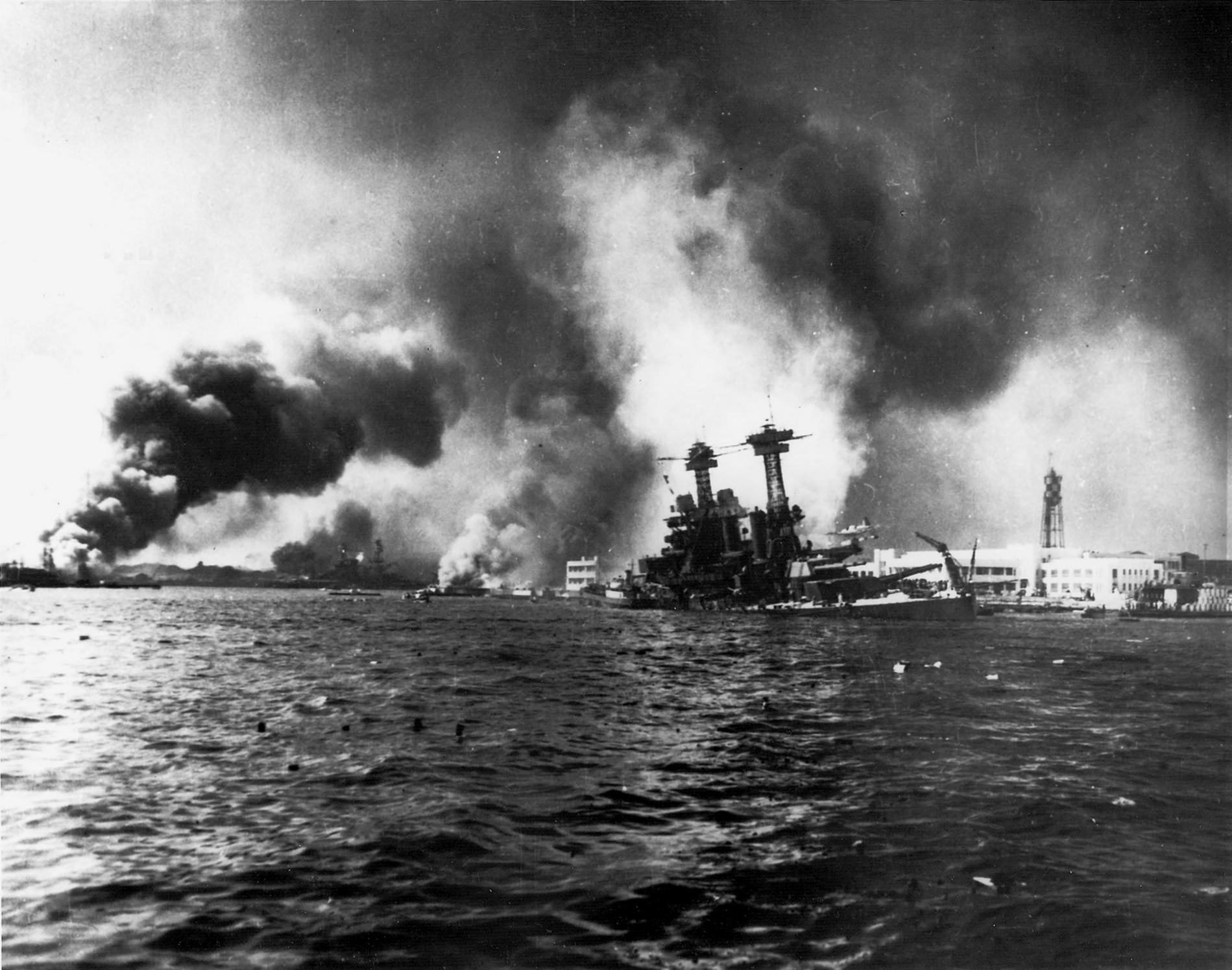
USS_California_sinking-Pearl_Harbor

The surprise attack struck a critical blow against the U.S. Pacific fleet and drew the United States irrevocably into World War II. The day after the assault, President Franklin D. Roosevelt asked Congress to declare war on Japan; Congress approved his declaration with just one dissenting vote. Three days later, Japanese allies Germany and Italy also declared war on the United States, and again Congress reciprocated. More than two years into the conflict, America had finally joined World War II.

With diplomatic negotiations with Japan breaking down, President Franklin D.

PH 1941

Roosevelt and his advisers knew that an eminent Japanese attack was probable, but nothing had been done to increase security at the important naval base at Pearl Harbor. It was Sunday morning, and many military personnel had been given passes to attend religious services off base. At 7:02 a.m., two radar operators spotted large groups of aircraft in flight toward the island from the north, but, with a flight of B-17s expected from the United States at the time, they were told to sound no alarm. Thus, the Japanese air assault came as a devastating surprise to the naval base.

Uss Arizona

Much of the Pacific fleet was rendered useless: Five of eight battleships, three destroyers, and seven other ships were sunk or severely damaged, and more than 200 aircraft were destroyed. A total of 2,400 Americans were killed and 1,200 were wounded, many while valiantly attempting to repulse the attack. Japan’s losses were some 30 planes, five midget submarines, and fewer than 100 men. Fortunately for the United States, all three Pacific fleet carriers were out at sea on training maneuvers. These giant aircraft carriers would have their revenge against Japan six months later at the Battle of Midway, reversing the tide against the previously invincible Japanese navy in a spectacular victory.

The day after Pearl Harbor was bombed, President Roosevelt appeared before a

ntyph

joint session of Congress and declared, “Yesterday, December 7, 1941–a date which will live in infamy–the United States of America was suddenly and deliberately attacked by naval and air forces of the Empire of Japan.” After a brief and forceful speech, he asked Congress to approve a resolution recognizing the state of war between the United States and Japan. The Senate voted for war against Japan by 82 to 0, and the House of Representatives approved the resolution by a vote of 388 to 1. The sole dissenter was Representative Jeannette Rankin of Montana, a devout pacifist who had also cast a dissenting vote against the U.S. entrance into World War I. Three days later, Germany and Italy declared war against the United States, and the U.S. government responded in kind.

The American contribution to the successful Allied war effort spanned four long years and cost more than 400,000 American lives.

Eighty-three Years ago, our parents & perhaps our grandparents learned of the atrocity perpetrated by the Japanese that was Pearl Harbor. Today our country is faced with a similar invasion with the incursion of our country by Illegal Aliens, Drug Smugglers, Criminals and significantly: Jihadi Terrorists. Some are even referred to as “home-grown” yet they are nonetheless invaders of our homeland, America! ALL Terrorists whether foreign-born or natural-born Americans are evil in my opinion and a threat to American Lives & Liberty. Call it whatever you like but today, the growing threat to America is Islamic Terrorism most believed to be instigated by the Islamic State of Iraq and the Levant also referred to as ISIS. So, my brother & sister Americans & Patriots~ during this holiday season, remember to say your prayers, kiss your loved ones, be vigilant & arm yourselves because America is once again under attack by Radical Ideology, Illegal Aliens & Islamic Jihadists! (Beware: The Barbarians are at the Gates.) Meanwhile, I wish you all a Merry Christmas & Happy New Year! ~ JGT (updated) 12/6/2018

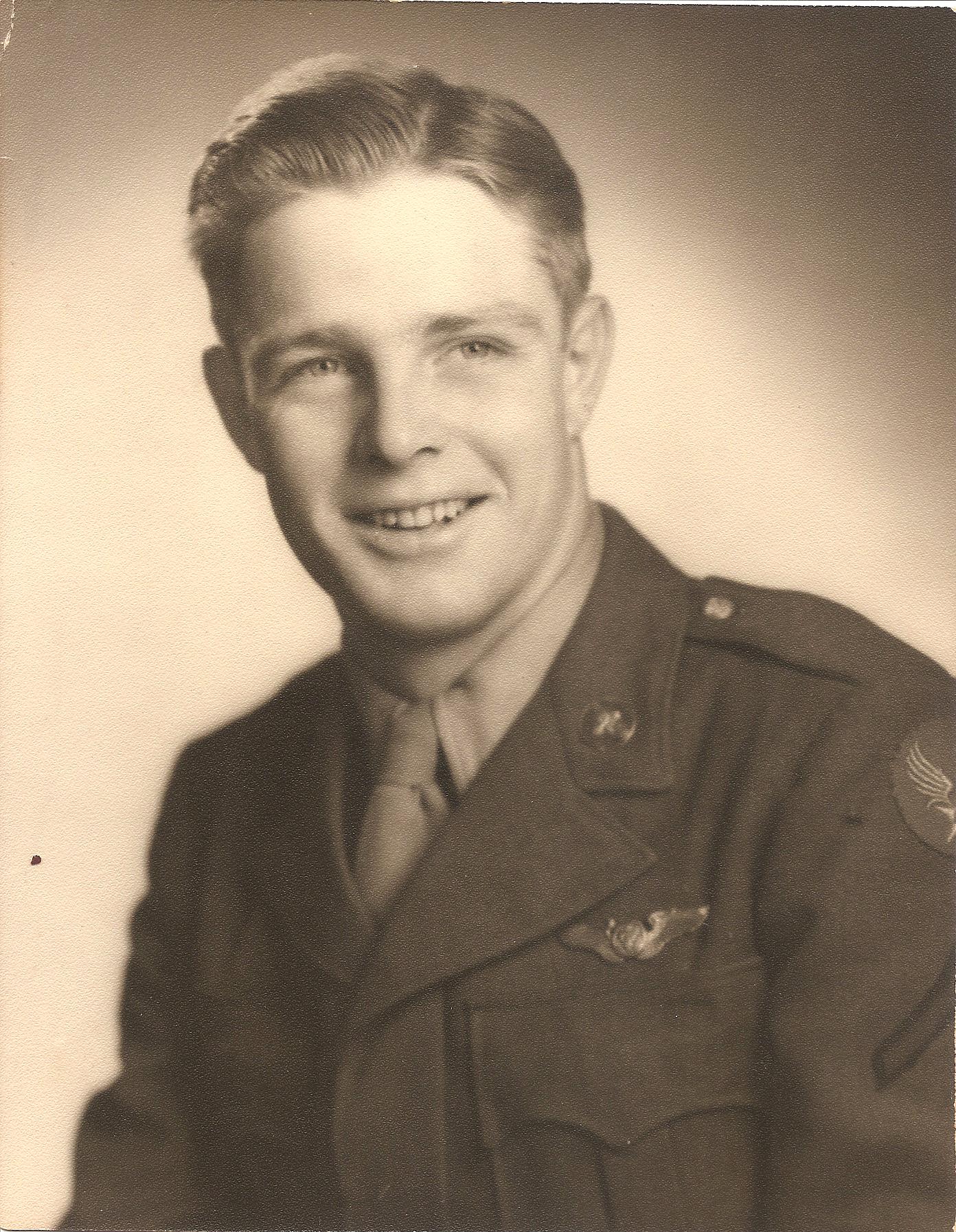
(Pictured L to R) My Father, Donald W. Flint, WWII Army Air Corps (Circa 1942) & My Father-in-Law, John Howard, US Army Ranger (Circa 1943)

Thank you, Daddy & Pop~ for your devotion & service to our country. You set great examples for your children, all US Navy & Marine Corps Veterans. We miss and love you both! ~ dfh

DONALD W. FLINT USAF WWII 001

Howard,_John_(website)

MILITARY TRADITION UNDER ATTACK ~ AGAIN!

Obama Bans Military From Making Church Donations ~ Are you kidding me? President Obama has banned members of the US Military from making donations to churches.  Obama is trying to “suppress” religious freedom so that his “radical social policy” may be advanced.  Military people have been told,  “If you are supporting an evangelical Christian organization, then you are committing a crime and are subject to Uniform Code of Military Justice (UCMJ).” ~ Thanks Obama!

Religion in the Military ~ In a stunning attack on the speech rights and free religious exercise of U.S. soldiers, the Obama administration released a statement confirming the unthinkable: “Any soldier who professes Christianity can now be court-martialed and may face imprisonment and a dishonorable discharge from the military … even if they are a military chaplain”. ~ Thanks Obama!

The VA Strikes Again! ~ The Veteran’s Administration has Banned the Word, GOD from Services at Military Cemetaries.  The words, “God” and “Jesus” are forbidden and that “God Bless” should no longer be written in condolence cards to families. Volunteers are also banned from speaking a religious message when talking directly to veterans’ families on cemetery grounds. To add insult to injury ~ last December, the Obama administration’s Department of Veterans Affairs (VA) prohibited veterans under treatment in VA Medical Centers from hearing Christmas carols by banning Christmas carolers from singing Christmas songs with religious references in public areas. BO even had the nerve to ban those veterans from receiving any  gifts wrapped in Christmas-themed wrapping paper. (What a creep!) Thanks Obama!!!


Obama’s Military: No Navy Jack, No Traditions, No God (As a Navy Veteran, this one really pisses me off! ~ dfh) ~ The Navy Jack – the ‘don’t tread on me’ flag – has been banned from use on Navy SEALS uniforms. The patch on Navy uniforms has been ordered removed.  The Navy Jack was the first flag of the Continental Navy during the war of independence and it has been in use through the centuries, including the current war on terror. This is a symbol of our heritage and it is being erased with one memo by someone in our administration. It’s probably not Mr. Obama because he doesn’t know anything.

An amendment to the Navy code called SECNAV Instruction 10520.6 clearly states that as of 31 May 2002 all ships are to fly the flag throughout the duration of the War on Terror. No longer. The Navy brass has ordered the symbol removed from all SEALs’ uniforms. Why would they do something like this? The obvious reason is because it is very similar to the revolutionary flag that has become the symbol of the Tea Party. ~ Thanks Obama!

TATTOOS (Portions excerpted from the NY Times article dated  April 30, 2014)

The military tattoo has a deep history, with reports going back at least to the Roman legions, historians say. Images of adventure or battle — if not a haunting beauty from the frontiers of Gaul — could be captured forever on a bicep. Declarations of unit loyalty or individuality, or both, could be sealed through rituals of ink and pain. But now a tightening of the Army’s regulations on the wear and appearance of uniforms and insignia — issued on March 31 with a 30-day window of unit-by-unit enforcement — had driven a land rush to tattoo shops around the country to get “tatted,” as soldiers call it, while the old rules still applied.

The new rules restrict total inkage on arms and legs visible on a soldier wearing short sleeves and short pants. They also limit the size of each visible tattoo to no bigger than the wearer’s open hand. But the Army is also generally allowing soldiers to keep the tattoos they had before the effective date of the new rules, as long as they do not violate prohibitions on things like obscenity, racism or extremism, and are documented with a photograph before the deadline.

Hence the rush to get inked. With some superior officers, many of them tattooed as well, giving ample warning as to when those photographs would be taken, soldiers said they have experienced a unique window of opportunity — but also, perhaps, a nudge — to get that next tattoo, or a lot of them.

Military regulation of tattoos, or at least the attempt, is not new. Shortly before World War I, military authorities tried to reign in wayward ink with a prohibition on “indecent or obscene” tattoos — mostly naked women in those days — but allowed existing depictions to be altered to meet the new rule, which led to many a discreet grass skirt as cover-up.

The Navy updated its tattoo policies again in 2003, and again in 2006, and with a further update in 2010 — nodding to the modern military of men and women serving together — that tweaks the rules on so-called permanent makeup tattoos, allowed for eyebrows, eyeliner, lipstick and lip liner. “Permanent makeup shall be in good taste,” the Navy’s regulations say.

The Marines tightened their personal grooming and appearance regulations in 2010, the Air Force in 2012. All four main military branches prohibit tattoos around the neck. No person with what is called a sleeve — or fully tattooed arm — can become a Marine.

AMERICANS UNITED

Obama is the shepherd I did not want, He leadeth me beside the still factories, He restoreth my faith in the Republican party, He guideth me in the path of unemployment for his party’s sake. Yea, though I walk through the valley of the bread line, I shall fear no hunger, for his bailouts are with me. He has anointed my income with taxes, My expenses runneth over. Surely, poverty and hard living will follow me all the days of my life, And I will live in a mortgaged home forever.

“Old Glory” & the History of “Flag Day” in America

Did you know that the week of June 12–18, 2024 is designated as National Flag Week. “Old Glory” or rather, the American “Stars and Stripes” which originated as a result of a resolution adopted by the Marine Committee of the Second Continental Congress at Philadelphia on June 14, 1777. The resolution read: Resolved, that the flag of the United States be thirteen stripes, alternate red and white; that the union be thirteen stars, white in a blue field representing a new constellation.”

The resolution gave no instruction as to how many points the stars should have, or how the stars should be arranged on the blue union. Consequently, some flags had stars scattered on the blue field without any specific design, some arranged the stars in rows, and some in a circle. The first Navy Stars and Stripes had the stars arranged in staggered formation in alternate rows of threes and twos on a blue field. Other Stars and Stripes flags had stars arranged in alternate rows of four, five and four. Some stars had six points while others had eight.

Strong evidence indicates that Francis Hopkinson of New Jersey, a signer of the Declaration of Independence, was responsible for the stars in the U.S. flag. At the time that the flag resolution was adopted, Hopkinson was the Chairman of the Continental Navy Board’s Middle Department. Hopkinson also helped design other devices for the Government including the Great Seal of the United States. For his services, Hopkinson submitted a letter to the Continental Admiralty Board asking “whether a Quarter Cask of the public Wine will not be a proper & reasonable Reward for these Labours of Fancy and a suitable Encouragement to future Exertions of a like Nature.” His request was subsequently turned down since the Congress regarded him as a public servant.

According to legend, in 1776, George Washington commissioned Philadelphia seamstress Betsy Ross to create a flag for the new nation. Scholars debate this legend, but agree that Mrs. Ross most likely knew Washington and sewed flags. To date, there have been twenty-seven official versions of the flag, but the arrangement of the stars varied according to the flag-makers’ preferences until 1912 when President Taft standardized the then-new flag’s forty-eight stars into six rows of eight. The forty-nine-star flag (1959-60), as well as the fifty-star flag, also have standardized star patterns. The current version of the flag dates to July 4, 1960, after Hawaii became the fiftieth state on August 21, 1959.

The first celebration of the U.S. Flag’s birthday was held in 1877 on the 100th anniversary of the Flag Resolution of 1777. However, it is believed that the first annual recognition of the flag’s birthday dates back to 1885 when school teacher, BJ Cigrand, first organized a group of Wisconsin school children to observe June 14 – the 108th anniversary of the official adoption of The Stars and Stripes as the Flag’s Birthday. Cigrand, now known as the ‘Father of Flag Day,’ continued to publically advocate the observance of June 14 as the flag’s ‘birthday’, or ‘Flag Day’ for years.

In 1916, the anniversary of the Flag Resolution of 1777 became a nationally observed event by a proclamation by President Woodrow Wilson thus establishing a national Flag Day on June 14 each year. Americans have commemorated the adoption of the Stars and Stripes by celebrating June 14 as Flag Day. Prior to 1916, many localities and a few states had been celebrating the day for years. Congressional legislation had already designated that date as the national Flag Day and it was signed into law by President Harry Truman in 1949; the legislation also called upon the president to issue a Flag Day proclamation every year. However, it was not designated as National Flag Day until August 3rd, 1949, when an Act of Congress designated June 14th of each year as National Flag Day.

Though Flag Day is neither a federal holiday nor one can declare it as an official leave the state of Pennsylvannia was the first and foremost state in the U.S. who declared & celebrated Flag Day as a state holiday on June 14th 1937.

Today, Flag Day is celebrated throughout the country with parades, essay contests, ceremonies, and picnics sponsored by veterans’ groups, schools, and groups like the National Flag Day foundation whose goal is to preserve the traditions, history, pride, and respect that are due the nation’s symbol, Old Glory.

Pledge

The Battle of Monmouth ~ June 28th 1778

300px-BattleofMonmouthOn June 28, 1778, approximately 11,000 troops of the Continental Army (which included members of the New Jersey & Pennsylvania Militias) led by General George Washington & Major General Charles Lee, faced off against 14,500 British regulars led by Lieutenant General Sir Henry Clinton, Major General Earl Cornwallis and Major General Knyphausen at Monmouth Courthouse in New Jersey.
Although the Americans held the field and claimed victory, it is generally regarded as a draw, since the British were successful at defending their baggage train. This would be the last battle fought between the two MAIN armies as well as the longest. The remaining battles of the Revolutionary War would be fought by secondary forces in the southern states (colonies).

The Americans loved harassing the British by burning bridges, cutting down trees across roads & muddying wells & streams thus slowing down the march of the Redcoats and especially the Hessian troops who were carrying heavy backpacks & sweating profusely in the sweltering 98 degree June heat. Many of them fell from heat exhaustion and many more deserted. Indeed, the British only advanced about 40 miles a week!

As was his habit to dither & complain, General Lee continued advising Washington that he shouldn’t commit the American Army against British Regulars. However; in spite of Lee & his other generals, Washington ignored Lee’s advice because he knew that his troops are now trained and better equipped than they had been before and that he could not afford losing a major engagement at that point in the war. Yet; Washington also knew that the British would be vulnerable to attack since their army was now spread out widely across the state as he pursued them into New Jersey once leaving Valley Forge.

*Note: Washington & his army had spent the previous winter (1777/1778) in considerably deplorable conditions at Valley Forge, PA. Early on there was a lack of food and supplies. The Americans were suffering from starvation as well as influenza, dysentery, typhoid and typhus which killed two-thirds of the nearly 2,000 soldiers who died but the situation eventually improved with the proper issue of equipment and food rations. Once Washington put Prussian, Baron von Steuben in charge of training the American Regiments, morale improved and the Americans became eager to engage the British in the Spring.

The British left Philadelphia on 18th June 1778 and began the laborious march to the North-East into New Jersey. General Washington marched east from Valley Forge into New Jersey, determined to intercept the British. The two armies came face to face at Monmouth Courthouse, NJ.

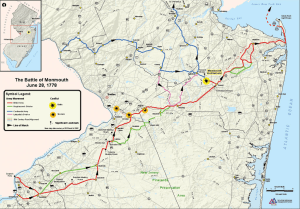
General Washington moved his army forward with advanced force of some 4,000 troops which was designated to attack the marching British Army and cut it in half. He offered the command of this assault to Major General Charles Lee who eventually agreed to take charge once the troop force was increased to 5,000 men.  Lee had the task of attacking the British column in the flank and delaying it so that the main American army could come up and join the battle.NJ map Battle

The New Jersey militia warned that the British army was on the move so Washington ordered Lee to attack and bring the British withdrawal to a halt until he could bring up the main strength of the American army along the Monmouth Road. Lee lay to the west of the Middletown road and should have delivered a coordinated attack on the slow moving column. Properly executed, Lee could have halted the British withdrawal to the north east and enabled the main American army under Washington to attack from the rear.

However; history records that Lee gave no proper orders to his commanders and permitted them to commit their troops as they saw fit. Various skirmishes with small parties of British troops took place as Lee’s force moved tentatively forward towards the Middletown Road. Confused fighting broke out with Clinton’s rearguard, largely composed of British regiments. Finally, Lee ordered his troops to into a cowardly retreat on the main American army. As he withdrew down the road, Clinton launched his troops in pursuit.

General Washington, bringing the main American army along the Monmouth road, encountered, not the rear of the British column, but Lee’s regiments, retreating in considerable disorder with the British advancing behind them.

*Memorably this is the one occasion Washington is said to have sworn. He deployed a consignment of oaths directed at Lee, to the admiration of those listening, before ordering Lee to the rear. Washington then galloped forward and began the task of rallying Lee’s disordered troops.

Washington ordered General Wayne, with the last of Lee’s regiments, Stewart’s 13th Pennsylvania and Ramsay’s 3rd Maryland, to form to the North of the road and hold the British advance. These regiments resisted strongly but were driven back by the British 16th Light Dragoons. Their stand gave Washington the time to form the rest of the American army, with artillery on Comb’s Hill to the South of the road. Ferocious fighting took place as the British attempted to drive back the American line. This was the first test of Steuben’s re-trained American Continental Foot regiments and they withstood the trial well. As the evening wore on, the British troops fell back, and returned to their journey north, leaving the Americans on the field. ~ Dorian F. Howard© 2016

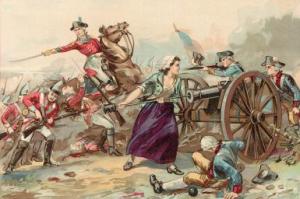
Illustration depicting American widow Mary Ludwig Hays McCauley (1754 - 1832), nicknamed 'Molly Pitcher,' stoking a cannon for the US Pennsylvania artillery in the Battle of Monmouth, during the American Revolutionary War, Freehold, New Jersey, June 1778. She replaced her fallen husband John Hays as a cannon loader. (Photo by Kean Collection/Getty Images)

The Battle of Monmouth is often remembered for the legend of “Molly Pitcher.” While many of the details regarding “Molly Pitcher” have been embellished or are in dispute, the story refers to a woman who brought water to American artillery during the battle. This water was intended for swabbing the guns during the reloading process as well as cooling the hot gun crew. In one version of the story she replaced her husband on a gun crew when he fell wounded or from heat stroke. The Molly Pitcher of Monmouth, New Jersey is generally identified Mary Ludwig Hayes. 


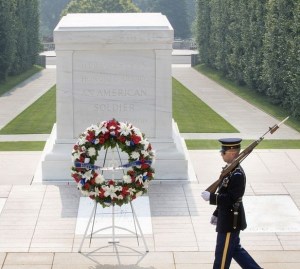
TOMB OF THE UNKNOWN SOLDIER

tomb-of-unknown-soldier-usa-12

1. How many steps does the guard take during his walk across the tomb of the Unknowns and why? They take 21 steps. This alludes to the twenty-one gun salute, which is the highest honor given any military or foreign dignitary.

2. How long does he hesitate after his about face to begin his return walk and why? It takes 21 seconds for the same reason as the answer above.

3. Why are his gloves kept wet? His gloves are moistened to prevent his losing his grip on the rifle.

4. Does he carry his rifle on the same shoulder all the time and if not, why not? He carries the rifle on the shoulder away from the tomb. After his march across the path, he executes an about face and moves the rifle to the outside shoulder.

5. How often are the guards changed? Guards are changed every thirty minutes, twenty-four hours a day, 365 days a year.

6. What are the physical traits of the guard limited to? For a person to apply for guard duty at the tomb, he must be between 5′ 10′ and 6′ 2′ tall and his waist size cannot exceed 30.’

Other Requirements of the Guard are:

  1. They must commit 2 years of life to guard the tomb, live in a barracks under the tomb, and cannot drink any alcohol on or off duty for the rest of their lives. They cannot swear in public for the rest of their lives and cannot disgrace the uniform {fighting} or the tomb in any way.
  2. After two years, the guard is given a wreath pin that is worn on their lapel signifying they served as guard of the tomb. There are only 400 presently worn. The guard must obey these rules for the rest of their lives or give up the wreath pin.
  3. The shoes are specially made with very thick soles to keep the heat and cold from their feet. There are metal heel plates that extend to the top of the shoe in order to make the loud click as they come to a halt.
  4. There are no wrinkles, folds or lint on the uniform. Guards dress for duty in front of a full-length mirror.
  5. The first six months of duty a guard cannot talk to anyone, nor watch Television.
  6. Every guard spends five hours a day getting his uniforms ready for guard duty.
  7. All off duty time is spent studying the 175 notable people laid to rest in Arlington National Cemetery. A guard must memorize who they are and where they are interred.

Among the notables are: President Taft, Joe E. Lewis {the boxer} and Medal of Honor winner Audie Murphy, {the most decorated soldier of WWII} of Hollywood fame.

ETERNAL REST GRANT THEM O LORD, AND LET PERPETUAL LIGHT SHINE UPON THEM.

In 2003 as Hurricane Isabelle was approaching Washington , DC , our US Senate/House took 2 days off with anticipation of the storm. On the ABC evening news, it was reported that because of the dangers from the hurricane, the military members assigned the duty of guarding the Tomb of the Unknown Soldier were given permission to suspend the assignment.

They respectfully declined the offer, ‘No way, Sir!’ Soaked to the skin, marching in the pelting rain of a tropical storm, they said that guarding the Tomb was not just an assignment, it was the highest honor that can be afforded to a serviceperson. The tomb has been patrolled continuously, 24/7, since 1930.

God Bless and Keep Them

Without sounding too self-serving, I’d like to add that all Americans should be very proud of our young men and women in the service of the United States of America no matter where they serve. ~JGT

tomb_of_the_unknown_soldier_-_nw_view_detail_-_arlington_national_cemetery_-_2012Duty – Honor – Country
IN GOD WE TRUST

A History of the New Year

A Move from March to January by Borgna Brunner

The celebration of the new year on January 1st is a relatively new phenomenon. The earliest recording of a new year celebration is believed to have been in Mesopotamia, c. 2000 B.C. and was celebrated around the time of the NewYearsEvevernal equinox in mid-March. A variety of other dates tied to the seasons were also used by various ancient cultures. The Egyptians, Phoenicians, and Persians began their new year with the fall equinox, and the Greeks celebrated it on the winter solstice.
Early Roman Calendar: March 1st Rings in the New Year

The early Roman calendar designated March 1 as the new year. The calendar had just ten months, beginning with March. That the new year once began with the month of March is still reflected in some of the names of the months. September through December, our ninth through twelfth months, were originally positioned as the seventh through tenth months (septem is Latin for “seven,” octo is “eight,” novem is “nine,” and decem is “ten.”

January Joins the Calendar

The first time the new year was celebrated on January 1st was in Rome in 153 B.C. (In fact, the month of January did not even exist until around 700 B.C., when the second king of Rome, Numa Pontilius, added the months of January and February.) The new year was moved from March to January because that was the beginning of the civil year, the month that the two newly elected Roman consuls—the highest officials in the Roman republic—began their one-year tenure. But this new year date was not always strictly and widely observed, and the new year was still sometimes celebrated on March 1.

Julian Calendar: January 1st Officially Instituted as the New Year

In 46 B.C. Julius Caesar introduced a new, solar-based calendar that was a vast improvement on the ancient Roman calendar, which was a lunar system that had become wildly inaccurate over the years. The Julian calendar decreed that the new year would occur with January 1, and within the Roman world, January 1 became the consistently observed start of the new year.

Middle Ages: January 1st Abolished

In medieval Europe, however, the celebrations accompanying the new year were considered pagan and unchristian like, and in 567 the Council of Tours abolished January 1 as the beginning of the year. At various times and in various places throughout medieval Christian Europe, the new year was celebrated on Dec. 25, the birth of Jesus; March 1; March 25, the Feast of the Annunciation; and Easter.

Gregorian Calendar: January 1st Restored

In 1582, the Gregorian calendar reform restored January 1 as new year’s day. Although most Catholic countries adopted the Gregorian calendar almost immediately, it was only gradually adopted among Protestant countries. The British, for example, did not adopt the reformed calendar until 1752. Until then, the British Empire —and their American colonies— still celebrated the new year in March.

Article written by: Borgna Brunner & Reprinted Courtesy of  http://www.infoplease.com/spot/newyearhistory.html

I’d like to wish a very Happy New Year to ALL of my brother & sister Military Veterans & those brave Navy, Marine Corps, Air Force, Army, Coast & National Guard personnel currently serving on Active Duty around the world!  God Bless You ALL & Thank You for Your Service to our Country! ~JGT

US NAVY SAILOR’S “T’was The Night Before Christmas”

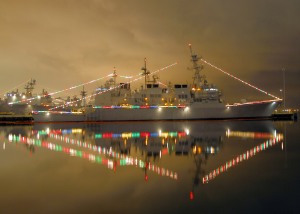
USS John Paul Jones (DDG 53)

USS John Paul Jones (DDG 53)

T’was the night before Christmas, the ship was out steaming,
Sailors stood watch while others were dreaming.
They lived in a crowd with racks tight and small,
In a 40-man berthing, cramped one and all.

I had come down the stack with presents to give,
And to see inside just who might perhaps live.
I looked all about, a strange sight did I see,
No tinsel, no presents, not even a tree.

No stockings were hung, shined boots close at hand,
On the bulkhead hung pictures of a far distant land.
They had medals and badges and awards of all kind,
And a sober thought came into my mind.

For this place was different, so dark and so dreary,
I had found the house of a Sailor, once I saw clearly.
A Sailor lay sleeping, silent and alone,
Curled up in a rack and dreaming of home.

The face was so gentle, the room squared away,
This was the United States Sailor today.
This was the hero we saw on TV,
Defending our country so we could be free.

I realized the families that I would visit this night,
Owed their lives to these Sailors lay willing to fight.
Soon round the world, the children would play,
And grownups would celebrate on Christmas Day.

They all enjoyed freedom each day of the year,
Because of the Sailor, like the one lying here.
I couldn’t help wonder how many lay alone,
On a cold Christmas Eve on a sea, far from home.

The very thought brought a tear to my eye,
I dropped to my knees and started to cry.
The Sailor awakened and I heard a calm voice,
“Santa, don’t cry, this life is my choice.”

“Defending the seas all days of the year,
So others may live and be free with no fear.”
I thought for a moment, what a difficult road,
To live a life guided by honor and code.

After all it’s Christmas Eve and the ship’s underway!
But freedom isn’t free and it’s sailors who pay.
The Sailor say’s to our country “be free and sleep tight,
No harm will come, not on my watch and not on this night.”

The Sailor rolled over and drifted to sleep,
I couldn’t control it, I continued to weep.
I kept watch for hours, so silent, so still,
I watched as the Sailor shivered from the night’s cold chill.

I didn’t want to leave on that cold dark night,
This guardian of honor so willing to fight.
The Sailor rolled over and with a voice strong and sure,
Commanded, “Carry on Santa, It’s Christmas, and All is Secure!”

Merry Christmas to all my brothers & sisters currently serving on active duty, in the reserves, retired or veterans (like me). Fair Winds & Following Seas!  Never Forget; WE OWN THE SEAS!~ JGT

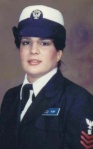
DoriNavy1stClass (4)

USN 1979 – 1990

0817-02TheSeaIsOurs


A SAILOR’S CHRISTMAS AT SEA

USS Theodore Roosevelt (CVN 71)

USS Theodore Roosevelt (CVN 71)

The sea is cold, the night is dark… the blowing wind is crisp,
I stare across the ship’s huge deck… I did not get my wish.
I wanted so, to be at home… this year on Christmas Eve,
But this will be the year that I… did not get Christmas leave.

I stand and think about my family… gathered by the tree,
I know that one will say my name… and then they’ll think of me.
I am not there to share their joy… my country needs me here,
But I am not the only one… who won’t get home this year.

I miss my family but I am… on guard for my country,
Protecting those who can have Christmas… is my first duty.
Many men have given all… for us to have that right,
And I feel honored just to sacrifice… a Christmas night.

But still I’m feeling so alone… as many of us are,
As I just stand here on the deck… and watch a Christmas star.
I guess it is a Christmas star… it shines for all it’s worth,
And I think back to when a star… foretold His peace on earth.’

If only people felt this calm… as on this Christmas Eve,
And not create hostilities… that make their brothers grieve.
Then we could have a peaceful world… as it was meant to be,
But until then we must stand guard… and this night it is me.

Once again my thoughts turn home… my family safe and sound,
Because this ship and other men… are ready to stand ground.
The Navy and the other branches… keep us safe and strong,
So those at home can celebrate… and sing their Christmas song.

But knowing that I must do this… I can’t hold back a tear,
Wishing I was home this Christmas… sharing in the cheer.
Seeing all my families faces… lights and Christmas trim,
Now the night is getting darker… as I think of them.

Trying now to fight this feeling… of such loneliness,
Softly speaking to myself… a lonely Christmas wish.
Actually my Christmas wish… is now a Christmas prayer,
Thank you for the men who serve… our country everywhere.

Thank you for our families… who enjoy this Christmas free,
Thank you for the other men… who serve this ship with me.
Thank you for allowing me… to make this sacrifice,
A joyous Christmas for our families… makes it worth the price.

May there be peace within you today.
May you trust that you are exactly where you are meant to be.
I believe that friends are quiet angels who lift us to our feet when our
Wings have trouble remembering how to fly.

~Author Unknown~

This former “WIN” (Such was the PC term for ‘Women in the Navy’ during the over 11 years I served on active duty) salutes ALL of my brothers & sisters currently serving in the Navy, Marine Corps. Air Force, Army & Coast Guard throughout the World Today~ Yesterday & Tomorrow! I salute ALL U.S. Military Veterans who have or ever have taken the following oath & most especially, those that have Given Their Last Full Measure of Devotion to the Citizens & People of the United States of America.

 ‘I, (state name of enlistee), do solemnly swear (or affirm) that I will support and defend the Constitution of the United States against all enemies, foreign and domestic; that I will bear true faith and allegiance to the same; and that I will obey the orders of the President of the United States and the orders of the officers appointed over me, according to regulations and the Uniform Code of Military Justice. So help me God.’ 

Who am I? I am a Christian! I am an American! I am a U.S. Navy Veteran. I am a Woman & Proud Wife of a Retired U.S. Navy Chief. We are so much more than this but we owe our lives to our God & the Country we each served for over 32 years combined. To that end, I’d like to wish you ALL a Very MERRY CHRISTMAS & HAPPY NEW YEAR! And~ God Bless Us~ Every One! -JGT