 When the 13 American Colonies initially began resisting Britain, they had no organized military. Individual states fielded militias and troops, but a unified military was lacking. In part, this was a result of wary attitudes among many members of the public who did not support the idea of an organized military force acting on behalf of all of the colonies. The Continental Congress also shared this view.
After a few defeats, however, the Continental Congress reluctantly established the Continental Army as a unified means for the colonies to fight Great Britain. Officially established on June 14, 1775, George Washington was named its commander in chief. But unconditional support was missing. The Continental Congress came up with an inadequate and, in retrospect, foolish requirement where each of the then-colonies were to send men and to supply and pay those men. Since few colonies were able to meet these requirements, the Continental Army was often inadequately supplied with food, clothing, and other materials.
What was not lacking, however, was the spirit to succeed along with an interesting blend of traditional and well-established military tactics and innovations shown by members of the Continental Army. While it often struggled against the more highly trained and organized British troops in open battle, Continental forces were not above using guerrilla tactics to harry the British. It subverted traditional ideas about how wars should be fought, relying on knowledge of the terrain and creativity to fight the British, rather than attempting to overpower British forces by conventional means. Inconsistent organization within the British military forces was exploited by Continental troops.
Thought there were many defeats, there were also enough successes for the United States to win its bid for independence. After the signing of the Treaty of Paris in 1783 to end the Revolutionary War, the Founding Fathers, still suspicious of standing armies and believing that the militia would be suited to all the nation’s defensive needs, they disbanded the Continental Army. State militias became the new nation’s sole ground army, with the exception of a regiment to guard the Western Frontier and one battery of artillery guarding West Point’s arsenal.
However, because of continuing conflict with Native Americans, it was soon realized that it was necessary to field a trained standing army. The Regular Army was at first very small, and after General St. Clair’s defeat at the Battle of the Wabash, the Regular Army was reorganized in 1791 as the Legion of the United States.
St. Clair’s Defeat also known as the Battle of the Wabash, the Battle of Wabash River or the Battle of a Thousand Slain, was fought on November 4, 1791 in the Northwest Territory between the United States and the Western Confederacy of American Indians, as part of the Northwest Indian War. It was a major American Indian victory and remains the greatest defeat of the United States Army by American Indians; of the 1,000 officers and men that St. Clair led into battle, only 24 escaped unharmed.
The defeat of St. Clair, whose forces were drawn principally from state militias, caused a shift in thinking. President Washington picked his old lieutenant, General “Mad Anthony” Wayne, to lead a new professional army. At the recommendation of Secretary of War Henry Knox, it was decided to recruit and train a “Legion of the United States” that would combine all land combat arms of the day (cavalry, heavy and light infantry, artillery) into one efficient brigade-sized force divisible into stand-alone combined arms teams. Congress agreed with this proposal and agreed to augment the small standing army until “the United States shall be at peace with the Indian tribes.”
Eventually the need for a standing Army was realized by the congress and in 1789, the United States Army was established.
 George III perpetrated over the American colonies are what ultimately led to The Declaration of Independence, the American Revolutionary War, and the formation of The United States of America. The Declaration of Independence lists the tyrannies exercised by King George III over the American colonies. We are now faced with an administration whose actions are very similar to those tyrannies listed in the Declaration.
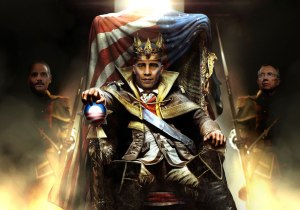 Obama is similar to King George III in this regard because he has attempted on a number of occasions to implement social welfare programs for “the good of the people.” I know, I know, I must sound crazy. Why is it a bad thing that Obama is implementing welfare programs? Well, there are numerous reasons. First and foremost is that any social welfare program provided by the federal government comes at a cost to the people, and that cost is individual liberty. It is imperative that the people understand that when the government implements such programs we lose more money and more freedom. So, if you look at the bigger picture it is easy to see that Obama is not implementing these programs from the compassion of his bleeding liberal heart. He pushes these social welfare programs to keep the people dependent upon the government. His purpose in implementing such programs is to grow the power and influence of the government over the people. Obama has also attempted to impose unwarranted regulations on the people, such as cap-and-trade, which would inevitably raise our taxes and subject us to more excessive government authority.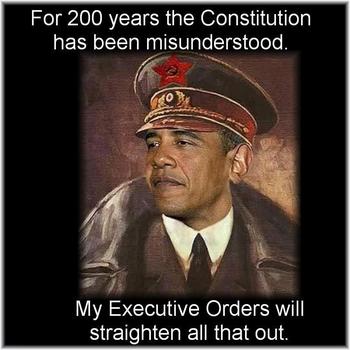
 Jersey Girl Today