
Did you know that the week of June 12–18, 2024 is designated as National Flag Week. “Old Glory” or rather, the American “Stars and Stripes” which originated as a result of a resolution adopted by the Marine Committee of the Second Continental Congress at Philadelphia on June 14, 1777. The resolution read: “Resolved, that the flag of the United States be thirteen stripes, alternate red and white; that the union be thirteen stars, white in a blue field representing a new constellation.”
The resolution gave no instruction as to how many points the stars should have, or how the stars should be arranged on the blue union. Consequently, some flags had stars scattered on the blue field without any specific design, some arranged the stars in rows, and some in a circle. The first Navy Stars and Stripes had the stars arranged in staggered formation in alternate rows of threes and twos on a blue field. Other Stars and Stripes flags had stars arranged in alternate rows of four, five and four. Some stars had six points while others had eight.
Strong evidence indicates that Francis Hopkinson of New Jersey, a signer of the Declaration of Independence, was responsible for the stars in the U.S. flag. At the time that the flag resolution was adopted, Hopkinson was the Chairman of the Continental Navy Board’s Middle Department. Hopkinson also helped design other devices for the Government including the Great Seal of the United States. For his services, Hopkinson submitted a letter to the Continental Admiralty Board asking “whether a Quarter Cask of the public Wine will not be a proper & reasonable Reward for these Labours of Fancy and a suitable Encouragement to future Exertions of a like Nature.” His request was subsequently turned down since the Congress regarded him as a public servant.
According to legend, in 1776, George Washington commissioned Philadelphia seamstress Betsy Ross to create a flag for the new nation. Scholars debate this legend, but agree that Mrs. Ross most likely knew Washington and sewed flags. To date, there have been twenty-seven official versions of the flag, but the arrangement of the stars varied according to the flag-makers’ preferences until 1912 when President Taft standardized the then-new flag’s forty-eight stars into six rows of eight. The forty-nine-star flag (1959-60), as well as the fifty-star flag, also have standardized star patterns. The current version of the flag dates to July 4, 1960, after Hawaii became the fiftieth state on August 21, 1959.
The first celebration of the U.S. Flag’s birthday was held in 1877 on the 100th anniversary of the Flag Resolution of 1777. However, it is believed that the first annual recognition of the flag’s birthday dates back to 1885 when school teacher, BJ Cigrand, first organized a group of Wisconsin school children to observe June 14 – the 108th anniversary of the official adoption of The Stars and Stripes as the Flag’s Birthday. Cigrand, now known as the ‘Father of Flag Day,’ continued to publically advocate the observance of June 14 as the flag’s ‘birthday’, or ‘Flag Day’ for years.
In 1916, the anniversary of the Flag Resolution of 1777 became a nationally observed event by a proclamation by President Woodrow Wilson thus establishing a national Flag Day on June 14 each year. Americans have commemorated the adoption of the Stars and Stripes by celebrating June 14 as Flag Day. Prior to 1916, many localities and a few states had been celebrating the day for years. Congressional legislation had already designated that date as the national Flag Day and it was signed into law by President Harry Truman in 1949; the legislation also called upon the president to issue a Flag Day proclamation every year. However, it was not designated as National Flag Day until August 3rd, 1949, when an Act of Congress designated June 14th of each year as National Flag Day.
Though Flag Day is neither a federal holiday nor one can declare it as an official leave the state of Pennsylvannia was the first and foremost state in the U.S. who declared & celebrated Flag Day as a state holiday on June 14th 1937.
Today, Flag Day is celebrated throughout the country with parades, essay contests, ceremonies, and picnics sponsored by veterans’ groups, schools, and groups like the National Flag Day foundation whose goal is to preserve the traditions, history, pride, and respect that are due the nation’s symbol, Old Glory.


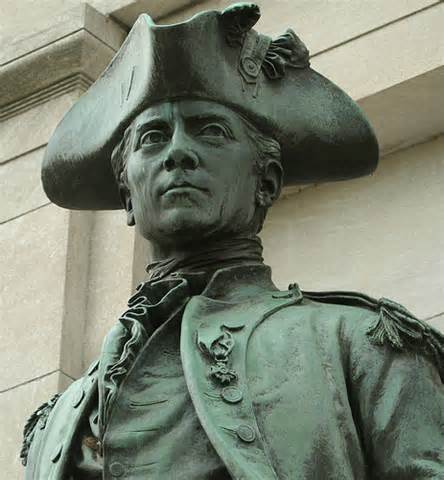



 PN1 Dorian F. Howard, US Navy 1979 – 1990



 vernal equinox in mid-March. A variety of other dates tied to the seasons were also used by various ancient cultures. The Egyptians, Phoenicians, and Persians began their new year with the fall equinox, and the Greeks celebrated it on the winter solstice.
 Who could’ve imagined when Barack Hussein Obama, took to the podium and spoke so eloquently those immortal lines; “we are 5-days from fundamentally “transforming America,” did we envision the implication hidden within those words. Most ignored the fact that standing before us at the podium was a young and inexperienced individual with no executive experience, and with a few worrisome skeletons hidden within his closet, and most (I didn’t’), overlooked the apparent inconsistencies and his ties to leftist and violent radicals, most felt it was time for a change, regardless of those implications…we were making history and showing the world how morally advanced we were as a nation in voting for the “FIRST AFRICAN AMERICAN PRESIDENT.”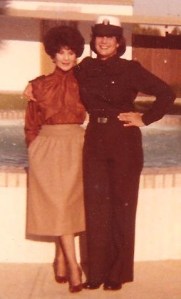
 Someone I once knew used to always say, “If I didn’t have bad luck~ I wouldn’t have luck at all!”.








 My goal for 2016 was to lose 10 pounds. Only 15 to go.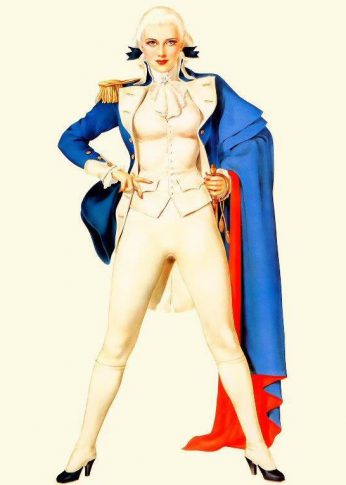

 Easter is the holiday that celebrates and commemorates the central event of the Christian faith: the resurrection of Jesus Christ three days after his death by crucifixion. All major branches of Christianity observe the holiday. Today, other than church attendance, the holiday often involves Easter Eggs for toys and candy as well as the imagery of bunnies and rabbits (see more below). Easter occurs the Sunday after Good Friday.
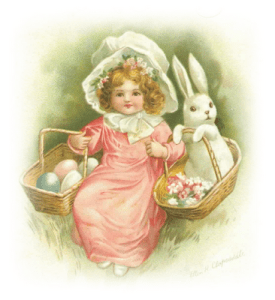 What do eggs have to do with Easter? Over the centuries, Easter Sunday has been supplemented by popular customs, many of were incorporated from springtime fertility celebrations of European and Middle Eastern pagan religion. Rabbits and eggs, for example, are widely-used pagan symbols for fertility.
 Jersey Girl Today