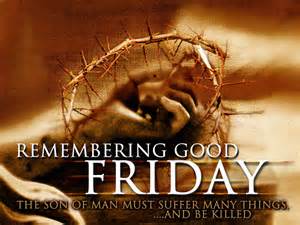
 Good Friday, the Friday before Easter Sunday, commemorates the Passion and Death of our Lord Jesus Christ on the Cross. Good Friday is the second of the three days of the Easter Triduum.
If you are a Christian, and you believe that the Lord Jesus Christ Is the Eternal Son Of God, and that HE died for all your sins, then for you, Good Friday is the most sorrowful, the most solemn, and yet, one of the holiest days of the entire year. Indeed, it is not a day for celebration; it is a day for observing.
Good Friday is the day on which Christians remember the crucifixion and death of Jesus Christ. It is a dark and somber holiday, the lowest emotional point of Holy Week, which begins with Palm Sunday, the day of Christ’s triumphant march into Jerusalem, and ends with Easter Sunday, the day he was resurrected from the dead.
In the Protestant church, Good Friday is traditionally commemorated with an evening worship service. The altar is stripped bare or covered with a black cloth. A large cross is placed in the front of the congregation, often topped with a crown of thorns, which will be replaced by a regal crown of gold or white on Easter morning. In many churches, part or all of Good Friday worship is held in the dark, lit only by candlelight.
Worship is traditionally devoid of the word, “Alleluia.” The service consists of prayer, music, readings, and gradual extinguishing of candles. Prayers are for forgiveness of sin, for on this dark night, Christ took the sins of the world on his shoulders and died in the stead of sinners. Music is quiet and in minor keys. Readings are Gospel lessons, from the New Testament of the Bible, recounting the stories of the Passion of Christ, from his accusations, condemnation, thirty-nine lashes, crucifixion, and death, all told in painful detail. As each part of the Passion is read, candles are extinguished one by one, until the last candle is snuffed out like the innocent life of Christ, who is compared to a lamb led to the slaughter.
Another Good Friday tradition is the Stations of the Cross. Fourteen crosses are set up around a room or garden. Each cross is marked with an event from the Passion of the Christ. Christians walk from one station to the next in successive order, pausing at each to pray or meditate.
In contrast with the Catholic Church, Protestant traditions throughout the year tend to focus more on the risen Christ than the crucified Christ. Protestant crosses are usually empty, whereas Catholic crosses are crucifixes, adorned with the body of Christ. Catholics also focus more on sin in everyday worship, through individual confession and regular prayers of atonement, where Protestants confess in unison, followed by a group absolution, or forgiveness of sin, by an ordained pastor. Good Friday is the one day in the Christian calendar on which Protestants focus exclusively on their sins and the pain, suffering, and death that Christ experienced on their behalf. This is the Protestant’s day of mourning, and it lasts until the joy and celebration of Christ’s triumphant resurrection, celebrated on Easter morning.
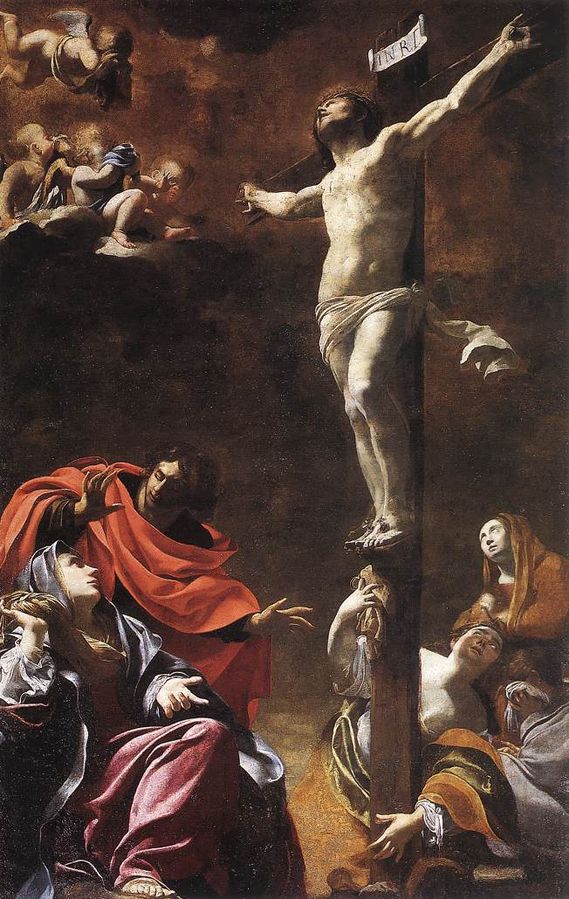 and death of Jesus. Good Friday is a religious holiday observed primarily by Christians commemorating the crucifixion of Jesus Christ and his death at Calvary. Good Friday is a fast day in the Catholic Church, and falls within the Paschal Triduum. The holiday is observed during Holy Week on the Friday preceding Easter Sunday, and may coincide with the Jewish observance of Passover.
 Jersey Girl Today