American Patriots

WHAT ARE POLICEMEN MADE OF?

WHAT ARE POLICEMEN MADE OF? By Paul Harvey~ August 27, 1966

Don’t credit me with the mongrel prose: It has many parents-at least 420,000 of them: Policemen.

A policeman is a composite of what all men are, mingling of a saint and sinner, dust and deity.

Gulled statistics wave the fan over the stinkers; underscore instances of dishonesty and brutality because they are “new”.  What they really mean is that they are exceptional, unusual, and not commonplace.

Buried under the frost is the fact: less than one-half of one percent of policemen misfit the uniform.  That’s a better average than you would find among clergy!

What is a policeman made of? He, of all men, is once the most needed and the most unwanted.  He’s a strangely nameless creature while it is “sir” to his face and “pig” or worse to his back.

He must be such a diplomat that he can settle differences between individuals so that each will think he won.

But…If the policeman is neat, he is conceited; If he’s careless, he’s a bum.  If he’s pleasant, he’s flirting; if not, he’s a grouch.

He must make an instant decision which would require months for a lawyer to make.

But…if he hurries, he’s careless; if he’s deliberate, he’s lazy.  He must be the first to an accident and be infallible with his diagnosis.  He must start breathing, stop bleeding, tie splints and above all, be sure the victim goes home without a limp, or expect to get sued.

The police officer must know every type of gun, draw on the run, and hit where it doesn’t hurt.  He must be able to whip two men twice his size and half his age without damaging his uniform and without being “brutal”.  If you hit him…he’s a coward.  If he hits you…he’s a bully.

A policeman must know everything-and not tell.  He must know where the sin is and not partake.

A policeman must from a single strand of hair, be able to describe the crime, the weapon and tell you who the criminal is and where he is hiding.

But…if he catches the criminal, he’s lucky; if he doesn’t, he is a dunce.  If he gets promoted, he has political pull; if he doesn’t, he is a dullard.  The policeman must chase a bum lead to a dead-end, stake out ten nights to tag one witness who saw it happen-but refused to remember.

The policeman must be a minister, a social worker, a diplomat, a tough guy and a gentleman.

And of course, he’d have to be a genius…for he will have to feed a family on a policeman’s salary.

B5lpuabCMAIUErdPaul Harvey’s father was a Policeman killed in the line of duty in 1921 when Paul was only 3 years old. Here, he opined on the role of the police officer. God bless our Police, Firefighters and First Responders! ~JGT~


HOMELESS VETERANS ARE SNUBBED IN FAVOR OF ILLEGALS!

No Room for Vets in the Inn”  by Katie Kieffer,  Dec 22, 2014

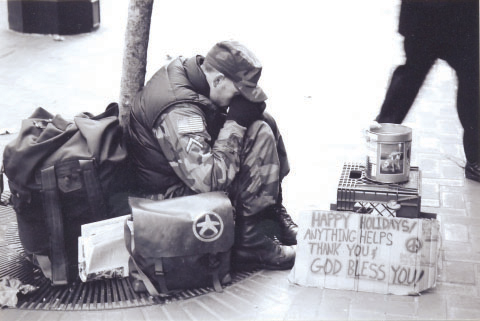
homeless-veteranHomeless American veterans shiver in the bitter cold while illegal immigrants receive subsidized four-year degrees. At midnight, in Bethlehem, in piercing cold, Christ was born in a stable after his parents were turned away by every innkeeper. Joseph and Mary did not respond with entitlement: “If you don’t shelter us, then you’re racist.” Rather, they used their ingenuity to find an alternative birthplace for their son among friends—farm animals, shepherds, kings, and angels—beneath the light of an extraordinary star.

“And she brought forth her firstborn son, and wrapped him up in swaddling clothes, and laid him in a manger; because there was no room for them in the inn.” Luke 2:7

Earlier this month, I spoke at American Legion Post 3 in Lincoln, NE. I was impressed by how veterans—many of them disabled or elderly—are actively working to serve homeless veterans in their community. The post commander distributed a long list of items including bath towels, silverware and blankets that he wanted help gathering for local homeless vets. Post 3 American Legion Riders and the Legionnaires were also planning monthly pancake breakfasts where homeless veterans could receive warm meals served by friendly faces.

Veterans who are active within the American Legion are working very hard to help their brothers and sisters who have served their country—only to find themselves on the streets. However, it is troubling to see that our federal government seems to be prioritizing aid for illegal immigrants over care for our homeless veterans.

American Legion National Commander Michael D. Helm has taken a firm stand against the current administration’s recent executive order, which will essentially grant amnesty to as many as 5 million illegal immigrants. On November 20, Helm wrote

“The American Legion urges the President in the strongest possible terms to put our security, and our citizens’ interests and wishes, ahead of providing amnesty for millions of immigrants here illegally. …we have reached out to the U.S. Citizenship and Immigration Services to offer our help in bringing immigrants to full citizenship. Rewarding illegal immigration is a slap in the face to those who have obeyed the law and patiently went through the process.”

Indeed, legal experts such as American Center for Law and Justice Chief Counsel Jay Sekulow call the President’s executive order “an unconstitutional power grab of historic proportions.” ArthurSchwab, federal judge in United States District Court for the Western District of Pennsylvania, authored a 38-page ruling last week showing that the President’s order violates the Constitution’s “Take Care” clause, which states: [The President] shall take care that the laws be faithfully executed….”

Article II, Section 3 of the Constitution mandates that the President enforce the laws. Only Congress, per the Constitution, may make laws. Since the executive order changes U.S. immigration law by decree of the President rather than through an act of Congress, it is unconstitutional.

Amnesty proponents often cite the economic contributions of illegal immigrants. Certainly, many illegal immigrants do backbreaking work. They have also broken our laws. Veterans, in contrast, served while risking their lives to defend our laws. Until every homeless veteran is in permanent housing, we should not be granting work permits and college financial aid packages to illegal immigrants.

Plus, here’s the dirty little secret: the current executive order is not about helping destitute people achieve the American Dream. It’s about buying votes. A careful read of a Dec. 14 New York Times article reveals that organizations fronting as advocacy groups are brainwashing illegal immigrants to abhor Republicans so as to secure millions of future votes for Democrats.

Immigration is a non-partisan issue, and Latinos should not be used as pawns for lobby groups, non-profits and crony capitalists. The current administration has used young people (Millennials), gays, blacks and women to win votes while abandoning and betraying our veterans like Lt. Clint Lorance and Sgt. Rob Richards. Now, the administration is using Latinos for votes.

Here’s the real humanitarian crisis: our political leadership has no respect for veterans. Veterans were denied access to the WWII, Vietnam and Korean War memorials in Washington, D.C.—while amnesty advocates were allowed on the National Mall and the state of California confiscated millions of taxpayer dollars to bankroll the education of illegal immigrants.

50,000 veterans will cope with homelessness every night this winter—while the President promises protection from deportation and work permits for up to 5 million illegal immigrants.

Away on a bleacher, no cot for a bed, a veteran lay down his sweet head. The stars in the bright sky looked down where he lay—in solidarity with the little Lord Jesus asleep in the hay.

In 2015, demand that your government make room for vets in America—“the inn” they fought so hard to defend.

Read the entire article at TownHall.com


HAPPY 239TH BIRTHDAY UNITED STATES NAVY

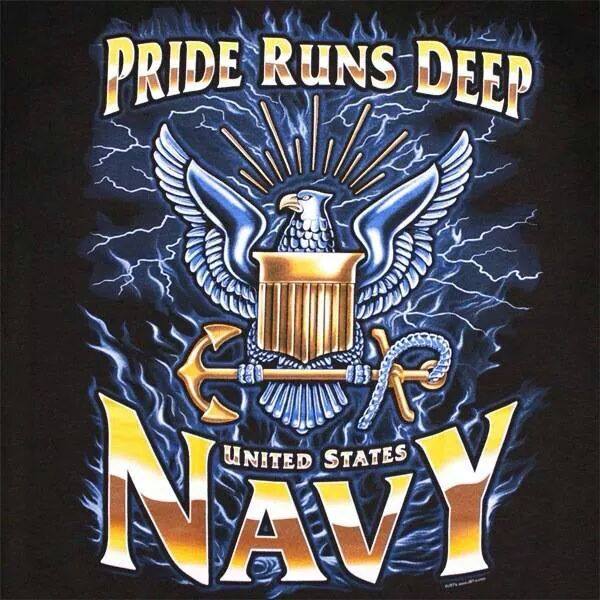
NAVY PRIDE RUNS DEEPOct. 13 marks the U.S. Navy’s 239th birthday. For many Sailors & Veterans the Navy’s birthday is a time to remember tradition and legacy. The U.S. Navy traces its origins to the Continental Navy, established by the Continental Congress, Oct. 13, 1775, by authorizing the procurement, fitting out, manning and dispatch of two armed vessels to cruise in search of munitions ships supplying the British Army in America.

In 1972, Chief of Naval Operations Admiral Elmo R. Zumwalt authorized recognition of Oct. 13 as the Navy Birthday, encouraging a Navy-wide celebration of this occasion, “to enhance a greater appreciation of our Navy heritage, and to provide a positive influence toward pride and professionalism in the naval service.”

The Birth of the Navy of the United States

On Friday, October 13, 1775, meeting in Philadelphia, the Continental Congress voted to fit out two sailing vessels, armed with ten carriage guns, as well as swivel guns, and manned by crews of eighty, and to send them out on a cruise of three months to intercept transports carrying munitions and stores to the British army in America. This was the original legislation out of which the Continental Navy grew and as such constitutes the birth certificate of the navy.

To understand the momentous significance of the decision to send two armed vessels to sea under the authority of the Continental Congress, we need to review the strategic situation in which it was made and to consider the political struggle that lay behind it.

Americans first took up arms in the spring of 1775, not to sever their relationship with the king, but to defend their rights within the British Empire. By the autumn of 1775, the British North American colonies from Maine to Georgia were in open rebellion. Royal governments had been thrust out of many colonial capitals and revolutionary governments put in their places. The Continental Congress had assumed some of the responsibilities of a central government for the colonies, created a Continental Army, issued paper money for the support of the troops, and formed a committee to negotiate with foreign countries. Continental forces captured Fort Ticonderoga on Lake Champlain and launched an invasion of Canada.

In October 1775 the British held superiority at sea, from which they threatened to stop up the colonies’ trade and to wreak destruction on seaside settlements. In response, a few of the states had commissioned small fleets of their own for defense of local waters. Congress had not yet authorized privateering. Some in Congress worried about pushing the armed struggle too far, hoping that reconciliation with the mother country was still possible.

Yet, a small coterie of men in Congress had been advocating a Continental Navy from the outset of armed hostilities. Foremost among these men was John Adams, of Massachusetts. For months, he and a few others had been agitating in Congress for the establishment of an American fleet. They argued that a fleet would defend the seacoast towns, protect vital trade, retaliate against British raiders, and make it possible to seek out among neutral nations of the world the arms and stores that would make resistance possible.

Still, the establishment of a navy seemed too bold a move for some of the timid men in Congress. Some southerners agreed that a fleet would protect and secure the trade of New England but denied that it would that of the southern colonies. Most of the delegates did not consider the break with England as final and feared that a navy implied sovereignty and independence. Others thought a navy a hasty and foolish challenge to the mightiest fleet the world had seen. The most the pro-navy men could do was to get Congress to urge each colony to fit out armed vessels for the protection of their coasts and harbors.

Then, on 3 October, Rhode Island’s delegates laid before Congress a bold resolution for the building and equipping of an American fleet, as soon as possible. When the motion came to the floor for debate, Samuel Chase, of Maryland, attacked it, saying it was “the maddest Idea in the World to think of building an American Fleet.” Even pro-navy members found the proposal too vague. It lacked specifics and no one could tell how much it would cost.

If Congress was yet unwilling to embrace the idea of establishing a navy as a permanent measure, it could be tempted by short-term opportunities. Fortuitously, on 5 October, Congress received intelligence of two English brigs, unarmed and without convoy, laden with munitions, leaving England bound for Quebec. Congress immediately appointed a committee to consider how to take advantage of this opportunity. Its members were all New Englanders and all ardent supporters of a navy. They recommended first that the governments of Massachusetts, Rhode Island, and Connecticut be asked to dispatch armed vessels to lay in wait to intercept the munitions ships; next they outlined a plan for the equipping by Congress of two armed vessels to cruise to the eastward to intercept any ships bearing supplies to the British army. Congress let this plan lie on the table until 13 October, when another fortuitous event occurred in favor of the naval movement. A letter from General Washington was read in Congress in which he reported that he had taken under his command, at Continental expense, three schooners to cruise off Massachusetts to intercept enemy supply ships. The commander in chief had preempted members of Congress reluctant to take the first step of fitting out warships under Continental authority. Since they already had armed vessels cruising in their name, it was not such a big step to approve two more. The committee’s proposal, now appearing eminently reasonable to the reluctant members, was adopted.

The Continental Navy grew into an important force. Within a few days, Congress established a Naval Committee charged with equipping a fleet. This committee directed the purchasing, outfitting, manning, and operations of the first ships of the new navy, drafted subsequent naval legislation, and prepared rules and regulations to govern the Continental Navy’s conduct and internal administration.

Over the course of the War of Independence, the Continental Navy sent to sea more than fifty armed vessels of various types. The navy’s squadrons and cruisers seized enemy supplies and carried correspondence and diplomats to Europe, returning with needed munitions. They took nearly 200 British vessels as prizes, some off the British Isles themselves, contributing to the demoralization of the enemy and forcing the British to divert warships to protect convoys and trade routes. In addition, the navy provoked diplomatic crises that helped bring France into the war against Great Britain. The Continental Navy began the proud tradition carried on today by our United States Navy, and whose birthday we celebrate each year in October.

Establishment of the Navy, 13 October 1775

This resolution of the Continental Congress marked the establishment of what is now the United States Navy.


Resolved, That a swift sailing vessel, to carry ten carriage guns, and a proportionable number of swivels, with eighty men, be fitted, with all possible despatch, for a cruise of three months, and that the commander be instructed to cruise eastward, for intercepting such transports as may be laden with warlike stores and other supplies for our enemies, and for such other purposes as the Congress shall direct.

That a Committee of three be appointed to prepare an estimate of the expence, and lay the same before the Congress, and to contract with proper persons to fit out the vessel.

Resolved, that another vessel be fitted out for the same purposes, and that the said committee report their opinion of a proper vessel, and also an estimate of the expence.”


Source: Journal of the Continental Congress, 13 October 1775, in William Bell Clark, editor, Naval Documents of the American Revolution, Vol. 2, (Washington, D.C.: Government Printing Office, 1966): 442.

th5D0OF9UM

NEW JERSEY SET TO BAN COMMON HUNTING RIFLES

2nd-amendmentA bill has been sent to Governor Chris Christie’s desk in New Jersey that would have the effect of prohibiting many fixed-magazine weapons commonly used in hunting, and almost never in murders. The Truth About Guns has the scoop.

The gun ban that has gone to New Jersey Governor Christie for signature has been described as a “gun magazine restriction“, but it bans numerous common sport and hunting rifles. The ban has no exemption for rifles with fixed magazines, including most common .22 rimfire rifles that are used for sport and small game hunting…and almost never used in crimes. Assembly Bill 2006 bans rifles that meet this definition: (4) A semi-automatic rifle with a fixed magazine capacity exceeding [15] 10 rounds . . .

As Dean Weingarten notes, some common rifles have been modified from an original 17 shot clip capacity down to 15. The new New Jersey legislation would outlaw the modified ones as well.

John Hinderaker at Powerline Blog adds, “This ban on America’s most common and most inoffensive long gun has gone to Governor Chris Christie for signature. It seems almost inconceivable that any state could ban the .22 rifle in most of its iterations, but that is the age we live in. So this is an easy test for Christie: he should veto the .22 rifle ban. If he does so, it won’t tell us much except that he isn’t a complete fool. If he fails to veto the .22 ban, he will be exposed as a phony conservative who can’t be trusted with even the easiest of decisions.”  Governor Chris Christie has been inconsistent at best on 2nd Amendment issues, but last year he vetoed three gun control measures. So there may be hope yet in the Garden State.

Here is a list of common sporting rifles that would be banned by the law:

Browning  Semi-Auto .22
Colt Colteer and variants
Franchi Centennial .22
Marlin model 60 and variants
Norinco ATD .22 (Browning Clone)
Remington 6A and variants
Remington Nylon 66, clones, and variants
Remington 552
Remington 550
Remington 241
Savage model 87A and variants
Winchester model 74
Winchester 190, 290 and variants

(Article excerpted from TownHall.com & TheNation.com)

Last year, Governor Christie refused to sign three closely watched gun control bills, including a ban on .50 caliber sniper rifles.  Christie fully rejected the ban on .50 caliber rifles, five-foot-long snipers that can be loaded with palm-length cartridges designed to penetrate heavy armor a mile away; and that are, according to Christie, necessary for “recreational pastimes.” Christie carved up the two other bills and sent them back to the legislature with conditional vetoes. From a bill that supporters called a “national model” for overhauling how states conduct background checks and issue firearm permits, Christie cut provisions to digitally embed firearm permits in a gun owner’s driver’s license, to include private sales in the instant background check system and to require prospective gun owners to take a short safety course. “None of the technology necessary for this system exists,” Christie said that would link firearm permits with state ID. Christie also gutted a law requiring state officials to report data about lost and stolen firearms, along with those seized in association with a crime, to federal databases. ~ JGT