Veterans & American History

U. S. Military Veterans (News & Updates)

“Anonymous” just released something to help EVERYONE fight ISIS…

Written by Michele Hickford, Editor-in-Chief on November 19, 2015

AnonymousThere’s an interesting counter-terrorism movement afoot against ISIS. It’s not centrally organized. It belongs to no nation. It sheds no blood (as of yet). And you can join!

 As USA Today reports, the “hacktivist” group Anonymous has managed to shut down more than 6,000 Twitter accounts so far, and is also targeting other social media accounts and websites.

Now the group is ratcheting up its efforts by publishing an online guide for inexperienced hackers to help join the fight.

You can access one of the guides right here.

 I will admit to being a complete “noob” (newbie) where all of this is concerned, but am enjoying the swift response by Anonymous against ISIS (something our own leaders seem incapable of).

Here’s a snippet of the guide:

There is a system, made by a fellow anon, that has been deployed before. The system acts like a botnet to collect, coordinate, and take down targets. It is comprised of a “loader” that uploads the targets to a protected and secure command and control system. This system also discards duplicates, verifies targets as still active, and distributes them to the pool of active participants in real time. The c&c may then be used by “bots”that will perform certain actions. Many different types of bots may be constructed and used. For example, there are several forms of twittebots. One which simply files complaints with twitter (for those who want to help but notcmmit crimes). Other forms of bots will attempt to brute force targets, fileexcessive password resets, spam, etc. In other words, any form of attack that be conceived may be constructed and executed. This system coordinates all of the efforts so that they are all working together and sharing to ensure a highly effective fighting force. Its results are staggering. When people work together, they are unstoppable.

These bots are completely legal and violate no laws. However, you might consider creating a new twitter account. Thank you for your support. F**k isis.

After Anonymous announced its success yesterday, ISIS was quick to call the group “idiots” and has quickly posted its own online guide, which was immediately mocked by the hacker community as “some of the lamest and n00bish recommendations you’ll read and show the group’s lack of cyber skills.”

I have to admit “do not talk to people you don’t know” does sound pretty lame, even to my n00bish self (side note: when I was growing up, we called that type of person a “nebbish”)

Slide1

Brother & Sister Americans~  this is truly the 21st century battlefield, and we are ALL in it whether we want to be or not. So, prepare yourselves to protect your family & friends. As a US Navy Veteran and supporter of ALL American Constitutional Rights, I wholeheartedly suggest that you be extremely vigilant at all times & if you don’t have one already… Buy A Gun! ~ JGT

[Note: This article was written by Michele Hickford]


HISTORY OF VETERAN’S DAY

memorial%20parkWorld War I – known at the time as “The Great War” – officially ended when the Treaty of Versailles was signed on June 28, 1919, in the Palace of Versailles outside the town of Versailles, France. However, fighting ceased seven months earlier when an armistice, or temporary cessation of hostilities, between the Allied nations and Germany went into effect on the eleventh hour of the eleventh day of the eleventh month. For that reason, November 11, 1918, is generally regarded as the end of “the war to end all wars.”

Soldiers of the 353rd Infantry near a church at Stenay, Meuse in France, wait for the end of hostilities.  The Last Two Minutes of FightingThis photo was taken at 10:58 a.m., on November 11, 1918, two minutes before the armistice ending World War I went into effect

In November 1919, President Wilson proclaimed November 11 as the first commemoration of Armistice Day with the following words: “To us in America, the reflections of Armistice Day will be filled with solemn pride in the heroism of those who died in the country’s service and with gratitude for the victory, both because of the thing from which it has freed us and because of the opportunity it has given America to show her sympathy with peace and justice in the councils of the nations…”  The original concept for the celebration was for a day observed with parades and public meetings and a brief suspension of business beginning at 11:00 a.m.

The United States Congress officially recognized the end of World War I when it passed a concurrent resolution on June 4, 1926, with these words:

Whereas the 11th of November 1918, marked the cessation of the most destructive, sanguinary, and far reaching war in human annals and the resumption by the people of the United States of peaceful relations with other nations, which we hope may never again be severed, and

Whereas it is fitting that the recurring anniversary of this date should be commemorated with thanksgiving and prayer and exercises designed to perpetuate peace through good will and mutual understanding between nations; and

Whereas the legislatures of twenty-seven of our States have already declared November 11 to be a legal holiday: Therefore be it Resolved by the Senate (the House of Representatives concurring), that the President of the United States is requested to issue a proclamation calling upon the officials to display the flag of the United States on all Government buildings on November 11 and inviting the people of the United States to observe the day in schools and churches, or other suitable places, with appropriate ceremonies of friendly relations with all other peoples.

An Act (52 Stat. 351; 5 U. S. Code, Sec. 87a) approved May 13, 1938, made the 11th of November in each year a legal holiday—a day to be dedicated to the cause of world peace and to be thereafter celebrated and known as “Armistice Day.” Armistice Day was primarily a day set aside to honor veterans of World War I, but in 1954, after World War II had required the greatest mobilization of soldiers, sailors, Marines and airmen in the Nation’s history; after American forces had fought aggression in Korea, the 83rd Congress, at the urging of the veterans service organizations, amended the Act of 1938 by striking out the word “Armistice” and inserting in its place the word “Veterans.” With the approval of this legislation (Public Law 380) on June 1, 1954, November 11th became a day to honor American veterans of all wars.

Later that same year, on October 8th, President Dwight D. Eisenhower issued the first “Veterans Day Proclamation” which stated: “In order to insure proper and widespread observance of this anniversary, all veterans, all veterans’ organizations, and the entire citizenry will wish to join hands in the common purpose. Toward this end, I am designating the Administrator of Veterans’ Affairs as Chairman of a Veterans Day National Committee, which shall include such other persons as the Chairman may select, and which will coordinate at the national level necessary planning for the observance. I am also requesting the heads of all departments and agencies of the Executive branch of the

On that same day, President  Eisenhower sent a letter to the Honorable Harvey V. Higley, Administrator of Veterans’ Affairs (VA), designating him as Chairman of the Veterans Day National Committee.

In 1958, the White House advised VA’s General Counsel that the 1954 designation of the VA Administrator as Chairman of the Veterans Day National Committee applied to all subsequent VA Administrators. Since March 1989 when VA was elevated to a cabinet level department, the Secretary of Veterans Affairs has served as the committee’s chairman.

The Uniform Holiday Bill (Public Law 90-363 (82 Stat. 250)) was signed on June 28, 1968, and was intended to ensure three-day weekends for Federal employees by celebrating four national holidays on Mondays: Washington’s Birthday, Memorial Day, Veterans Day, and Columbus Day. It was thought that these extended weekends would encourage travel, recreational and cultural activities and stimulate greater industrial and commercial production. Many states did not agree with this decision and continued to celebrate the holidays on their original dates.

The first Veterans Day under the new law was observed with much confusion on October 25, 1971. It was quite apparent that the commemoration of this day was a matter of historic and patriotic significance to a great number of our citizens, and so on September 20th, 1975, President Gerald R. Ford signed Public Law 94-97 (89 Stat. 479), which returned the annual observance of Veterans Day to its original date of November 11, beginning in 1978. This action supported the desires of the overwhelming majority of state legislatures, all major veterans service organizations and the American people.

Veterans Day continues to be observed on November 11, regardless of what day of the week on which it falls. The restoration of the observance of Veterans Day to November 11th not only preserves the historical significance of the date, but helps focus attention on the important purpose of Veterans Day: “A celebration to honor America’s veterans for their patriotism, love of country, and willingness to serve and sacrifice for the common good. The US Government to assist the National Committee in every way possible.”

Original Article courtesy of http://www.va.gov/opa/vetsday/vetdayhistory.asp

A Note from this Jersey Girl:

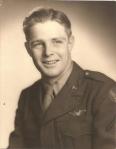
A heartfelt Thank You to my Father (Donald W. Flint, US Army Air Corps 1942 – 1945) and my Father-in Law (John Howard, US Army Rangers 3rd Battalion 1942- 1943 ) for your Patriotism & Sacrifices made during World War II. Your examples of honor & duty to country were eventually followed by your children, my husband & I when we joined the US Navy in the late 1970’s. However & Therefore; without sounding too self-serving, I’d like to thank you~both of my fathers~ for your Service to our country! (And you too, Luke!) ~JGT

DONALD W. FLINT USAF WWII 001Howard,_John_(website)RETIREMENT DAY 1999 001DoriNavy1stClass (4)

Military Facts and Legends: Legion of the United States

220px-American_Legion_1794When the 13 American Colonies initially began resisting Britain, they had no organized military. Individual states fielded militias and troops, but a unified military was lacking. In part, this was a result of wary attitudes among many members of the public who did not support the idea of an organized military force acting on behalf of all of the colonies. The Continental Congress also shared this view.

After a few defeats, however, the Continental Congress reluctantly established the Continental Army as a unified means for the colonies to fight Great Britain. Officially established on June 14, 1775, George Washington was named its commander in chief. But unconditional support was missing.  The Continental Congress came up with an inadequate and, in retrospect, foolish requirement where each of the then-colonies were to send men and to supply and pay those men. Since few colonies were able to meet these requirements, the Continental Army was often inadequately supplied with food, clothing, and other materials.

What was not lacking, however, was the spirit to succeed along with an interesting blend of traditional and well-established military tactics and innovations shown by members of the Continental Army. While it often struggled against the more highly trained and organized British troops in open battle, Continental forces were not above using guerrilla tactics to harry the British. It subverted traditional ideas about how wars should be fought, relying on knowledge of the terrain and creativity to fight the British, rather than attempting to overpower British forces by conventional means. Inconsistent organization within the British military forces was exploited by Continental troops.

Thought there were many defeats, there were also enough successes for the United States to win its bid for independence. After the signing of the Treaty of Paris in 1783 to end the Revolutionary War, the Founding Fathers, still suspicious of standing armies and believing that the militia would be suited to all the nation’s defensive needs, they disbanded the Continental Army. State militias became the new nation’s sole ground army, with the exception of a regiment to guard the Western Frontier and one battery of artillery guarding West Point’s arsenal.

However, because of continuing conflict with Native Americans, it was soon realized that it was necessary to field a trained standing army. The Regular Army was at first very small, and after General St. Clair’s defeat at the Battle of the Wabash, the Regular Army was reorganized in 1791 as the Legion of the United States.

St. Clair’s Defeat also known as the Battle of the Wabash, the Battle of Wabash River or the Battle of a Thousand Slain, was fought on November 4, 1791 in the Northwest Territory between the United States and the Western Confederacy of American Indians, as part of the Northwest Indian War. It was a major American Indian victory and remains the greatest defeat of the United States Army by American Indians; of the 1,000 officers and men that St. Clair led into battle, only 24 escaped unharmed.

The defeat of St. Clair, whose forces were drawn principally from state militias, caused a shift in thinking. President Washington picked his old lieutenant, General “Mad Anthony” Wayne, to lead a new professional army. At the recommendation of Secretary of War Henry Knox, it was decided to recruit and train a “Legion of the United States” that would combine all land combat arms of the day (cavalry, heavy and light infantry, artillery) into one efficient brigade-sized force divisible into stand-alone combined arms teams. Congress agreed with this proposal and agreed to augment the small standing army until “the United States shall be at peace with the Indian tribes.”

Eventually the need for a standing Army was realized by the congress and in 1789, the United States Army was established.

THE CHRISTMAS TRUCE OF 1914

The Christmas Truce of 1914

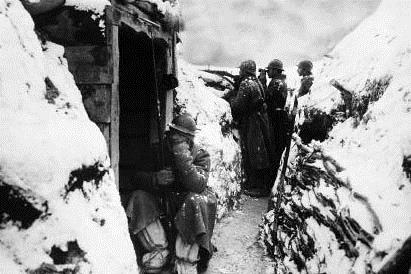
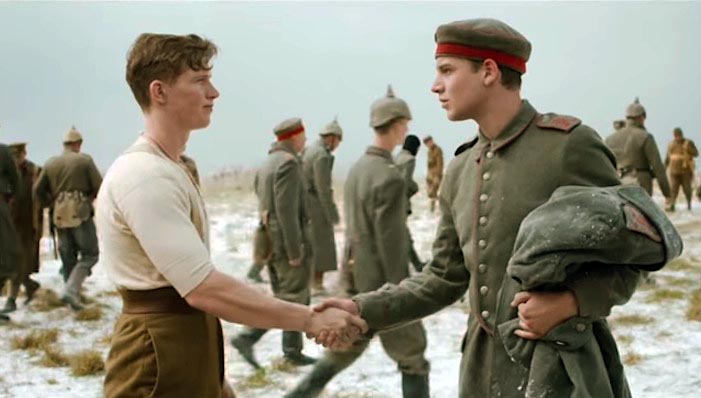
pic 1During World War I, in the bitter winter of 1914, on the battlefields of Flanders, one of the most unusual events in all of human history took place. The Germans had been in a fierce battle with the British and French. Both sides were dug in, safe in muddy, man-made trenches six to eight feet deep that seemed to stretch forever.

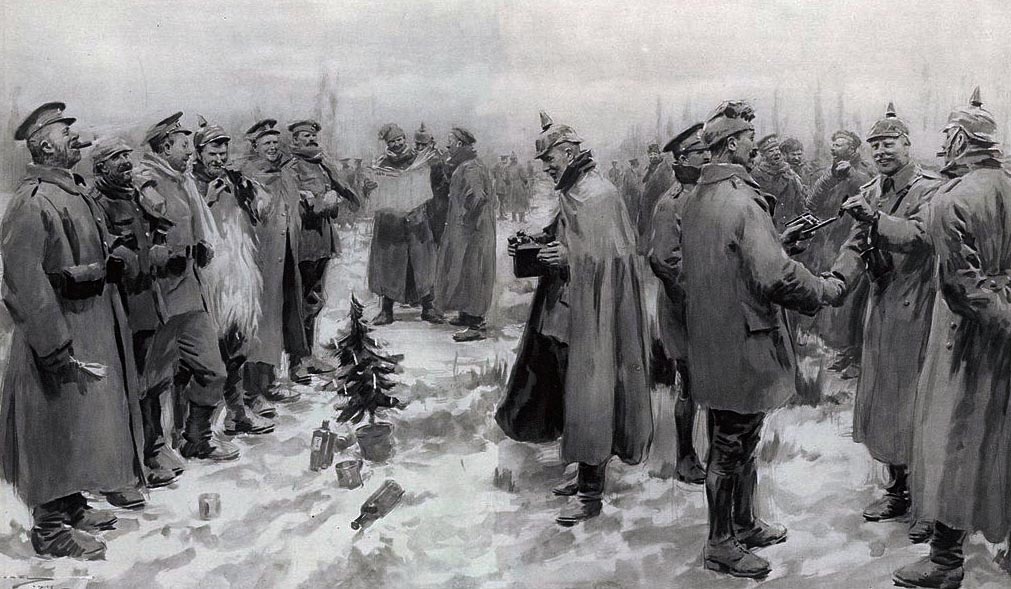
All of a sudden, German troops began to put small Christmas trees, lit with candles, outside of their trenches. Then, they began to sing songs. Across the way, in the “no man’s land” between them, came songs from the British and French troops. Incredibly, many of the Germans, who had worked in England before the war, were able to speak good enough English to propose a “Christmas” truce.

A spontaneous truce resulted. Soldiers left their trenches, meeting in the middle in fortified pic2trenches to shake hands. The first order of business was to bury the dead who had been previously unreachable because of the conflict. Then, they exchanged gifts. Chocolate cake, cognac, postcards, newspapers, tobacco. In a few places, along the trenches, soldiers exchanged rifles for soccer balls and began to play soccer in the snow.

According to Stanley Weintraub, who wrote about this event in his book, “Silent Night”, “Signboards arose up and down the trenches in a variety of shapes. They were usually in English, or – from the Germans – in fractured English. Rightly, the Germans assumed that the other side could not read traditional gothic lettering, and that few English understood pic 3spoken German. ‘YOU NO FIGHT, WE NO FIGHT’ was the most frequently employed German message. Some British units improvised ‘MERRY CHRISTMAS’ banners and waited for a response. More placards on both sides popped up.”

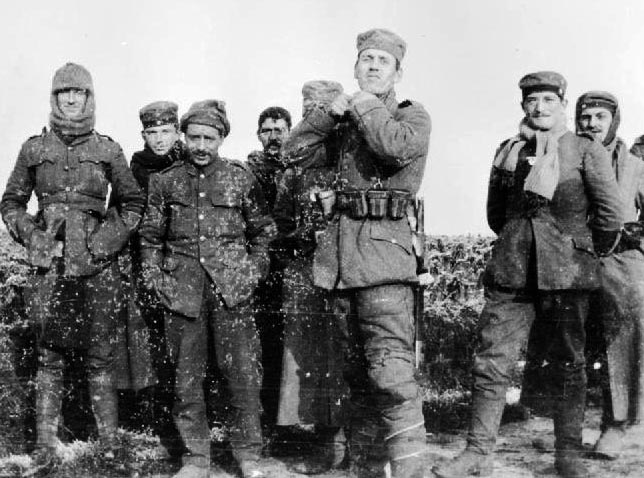
Rare photo shows German soldiers of the 134th Saxon Regiment and British soldiers of the Royal Warwickshire Regiment meeting in “no man’s land” on December 26, 1914.

It truce didn’t last forever. In fact, some of the generals didn’t like it at all and commanded their troops to resume shooting at each other. After all, they were in a war. Soldiers eventually did resume shooting at each other. But for a few precious moments there was peace on earth good will toward men. There’s something about Christmas that changes people. It happened over 2000 years ago in a little town called Bethlehem. It’s been happening over and over again down through the years of time.

Although the Christmas Truce of 1914 may seem like a distant myth to those now at arms in parts of the world where vast cultural differences between combatants make such an occurrence impossible, it remains a symbol of hope to those who believe that a recognition of our common humanity may someday reverse the maxim that “Peace is harder to make than war.”

Photos: From The Illustrated London News of January 9, 1915: “British and German Soldiers Arm-in-Arm Exchanging Headgear: A Christmas Truce between Opposing Trenches”
A cross, left in Saint-Yves (Saint-Yvon – Ploegsteert; Comines-Warneton in Belgium) in 1999, to commemorate the site of the Christmas Truce. The text reads: “1914 – The Khaki Chum’s Christmas Truce – 1999 – 85 Years  “Lest We Forget”
German soldiers of the 134th Saxon Regiment and British soldiers of the Royal Warwickshire Regiment meet in no man’s land, December 26th.

*Courtesy “Together We Served” Dispatches

HOMELESS VETERANS ARE SNUBBED IN FAVOR OF ILLEGALS!

No Room for Vets in the Inn”  by Katie Kieffer,  Dec 22, 2014

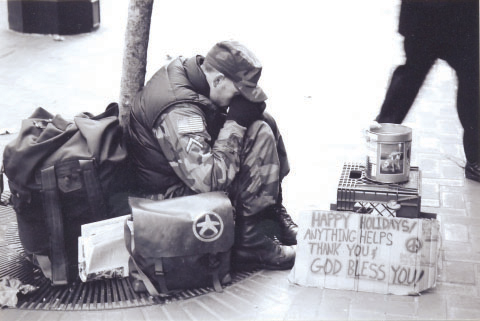
homeless-veteranHomeless American veterans shiver in the bitter cold while illegal immigrants receive subsidized four-year degrees. At midnight, in Bethlehem, in piercing cold, Christ was born in a stable after his parents were turned away by every innkeeper. Joseph and Mary did not respond with entitlement: “If you don’t shelter us, then you’re racist.” Rather, they used their ingenuity to find an alternative birthplace for their son among friends—farm animals, shepherds, kings, and angels—beneath the light of an extraordinary star.

“And she brought forth her firstborn son, and wrapped him up in swaddling clothes, and laid him in a manger; because there was no room for them in the inn.” Luke 2:7

Earlier this month, I spoke at American Legion Post 3 in Lincoln, NE. I was impressed by how veterans—many of them disabled or elderly—are actively working to serve homeless veterans in their community. The post commander distributed a long list of items including bath towels, silverware and blankets that he wanted help gathering for local homeless vets. Post 3 American Legion Riders and the Legionnaires were also planning monthly pancake breakfasts where homeless veterans could receive warm meals served by friendly faces.

Veterans who are active within the American Legion are working very hard to help their brothers and sisters who have served their country—only to find themselves on the streets. However, it is troubling to see that our federal government seems to be prioritizing aid for illegal immigrants over care for our homeless veterans.

American Legion National Commander Michael D. Helm has taken a firm stand against the current administration’s recent executive order, which will essentially grant amnesty to as many as 5 million illegal immigrants. On November 20, Helm wrote

“The American Legion urges the President in the strongest possible terms to put our security, and our citizens’ interests and wishes, ahead of providing amnesty for millions of immigrants here illegally. …we have reached out to the U.S. Citizenship and Immigration Services to offer our help in bringing immigrants to full citizenship. Rewarding illegal immigration is a slap in the face to those who have obeyed the law and patiently went through the process.”

Indeed, legal experts such as American Center for Law and Justice Chief Counsel Jay Sekulow call the President’s executive order “an unconstitutional power grab of historic proportions.” ArthurSchwab, federal judge in United States District Court for the Western District of Pennsylvania, authored a 38-page ruling last week showing that the President’s order violates the Constitution’s “Take Care” clause, which states: [The President] shall take care that the laws be faithfully executed….”

Article II, Section 3 of the Constitution mandates that the President enforce the laws. Only Congress, per the Constitution, may make laws. Since the executive order changes U.S. immigration law by decree of the President rather than through an act of Congress, it is unconstitutional.

Amnesty proponents often cite the economic contributions of illegal immigrants. Certainly, many illegal immigrants do backbreaking work. They have also broken our laws. Veterans, in contrast, served while risking their lives to defend our laws. Until every homeless veteran is in permanent housing, we should not be granting work permits and college financial aid packages to illegal immigrants.

Plus, here’s the dirty little secret: the current executive order is not about helping destitute people achieve the American Dream. It’s about buying votes. A careful read of a Dec. 14 New York Times article reveals that organizations fronting as advocacy groups are brainwashing illegal immigrants to abhor Republicans so as to secure millions of future votes for Democrats.

Immigration is a non-partisan issue, and Latinos should not be used as pawns for lobby groups, non-profits and crony capitalists. The current administration has used young people (Millennials), gays, blacks and women to win votes while abandoning and betraying our veterans like Lt. Clint Lorance and Sgt. Rob Richards. Now, the administration is using Latinos for votes.

Here’s the real humanitarian crisis: our political leadership has no respect for veterans. Veterans were denied access to the WWII, Vietnam and Korean War memorials in Washington, D.C.—while amnesty advocates were allowed on the National Mall and the state of California confiscated millions of taxpayer dollars to bankroll the education of illegal immigrants.

50,000 veterans will cope with homelessness every night this winter—while the President promises protection from deportation and work permits for up to 5 million illegal immigrants.

Away on a bleacher, no cot for a bed, a veteran lay down his sweet head. The stars in the bright sky looked down where he lay—in solidarity with the little Lord Jesus asleep in the hay.

In 2015, demand that your government make room for vets in America—“the inn” they fought so hard to defend.

Read the entire article at TownHall.com


President Ronald Reagan’s Thanksgiving Day Proclamation 1981

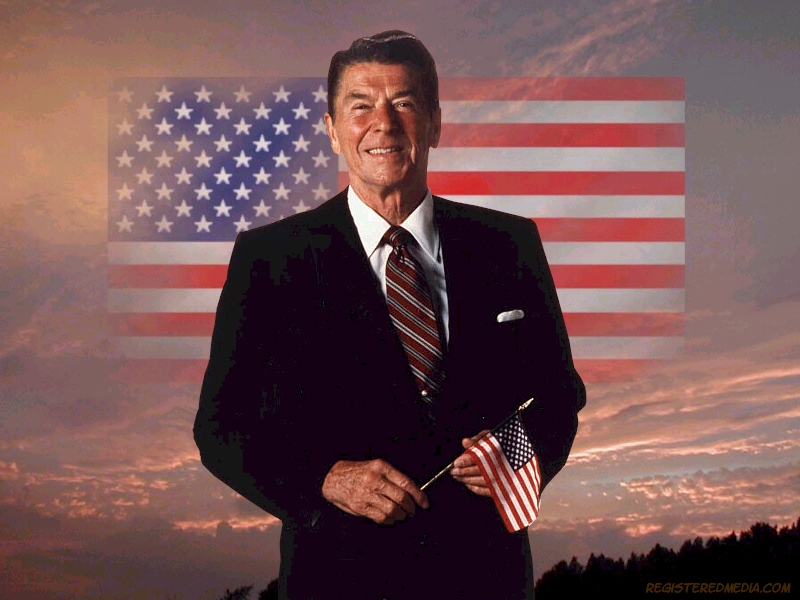
reagan2_largeAmerica has much for which to be thankful. The unequaled freedom enjoyed by our citizens has provided a harvest of plenty to this nation throughout its history. In keeping with America’s heritage, one day each year is set aside for giving thanks to god for all of His blessings. On this day of thanksgiving, it is appropriate that we recall the first thanksgiving, celebrated in the autumn of 1621. After surviving a bitter winter, the Pilgrims planted and harvested a bountiful crop. After the harvest they gathered their families together and joined in celebration and prayer with the Native Americans who had taught them so much. Clearly our forefathers were thankful not only for the material well being of their harvest but for this abundance of goodwill as well.

In this spirit, Thanksgiving has become a day when Americans extend a helping hand to the less fortunate. Long before there was a government welfare program, this spirit of voluntary giving was ingrained in the American character. Americans have always understood that, truly, one must give in order to receive. This should be a day of giving as well as a day of thanks. As we celebrate Thanksgiving in 1981, we should reflect on the full meaning of this day as we enjoy the fellowship that is so much a part of the holiday festivities. Searching our hearts, we should ask what we can do as individuals to demonstrate our gratitude to God for all He has done. Such reflection can only add to the significance of this precious day of remembrance.

Let us recommit ourselves to that devotion to God and family that has played such an important role in making this a great Nation, and which will be needed as a source of strength if we are to remain a great people. Now, Therefore, I, Ronald Reagan, President of the United States of America, do hereby proclaim Thursday, November 26, 1981, as Thanksgiving Day. In witness where of, I have here unto set my hand this twelfth day of November, in the year of our Lord nineteen hundred and eighty-one, and of the Independence of the United States of America the two hundred and sixth. ~ by Ronald Reagan, November 12, 1981.

HAPPY 239TH BIRTHDAY UNITED STATES NAVY

NAVY PRIDE RUNS DEEPOct. 13 marks the U.S. Navy’s 239th birthday. For many Sailors & Veterans the Navy’s birthday is a time to remember tradition and legacy. The U.S. Navy traces its origins to the Continental Navy, established by the Continental Congress, Oct. 13, 1775, by authorizing the procurement, fitting out, manning and dispatch of two armed vessels to cruise in search of munitions ships supplying the British Army in America.

In 1972, Chief of Naval Operations Admiral Elmo R. Zumwalt authorized recognition of Oct. 13 as the Navy Birthday, encouraging a Navy-wide celebration of this occasion, “to enhance a greater appreciation of our Navy heritage, and to provide a positive influence toward pride and professionalism in the naval service.”

The Birth of the Navy of the United States

On Friday, October 13, 1775, meeting in Philadelphia, the Continental Congress voted to fit out two sailing vessels, armed with ten carriage guns, as well as swivel guns, and manned by crews of eighty, and to send them out on a cruise of three months to intercept transports carrying munitions and stores to the British army in America. This was the original legislation out of which the Continental Navy grew and as such constitutes the birth certificate of the navy.

To understand the momentous significance of the decision to send two armed vessels to sea under the authority of the Continental Congress, we need to review the strategic situation in which it was made and to consider the political struggle that lay behind it.

Americans first took up arms in the spring of 1775, not to sever their relationship with the king, but to defend their rights within the British Empire. By the autumn of 1775, the British North American colonies from Maine to Georgia were in open rebellion. Royal governments had been thrust out of many colonial capitals and revolutionary governments put in their places. The Continental Congress had assumed some of the responsibilities of a central government for the colonies, created a Continental Army, issued paper money for the support of the troops, and formed a committee to negotiate with foreign countries. Continental forces captured Fort Ticonderoga on Lake Champlain and launched an invasion of Canada.

In October 1775 the British held superiority at sea, from which they threatened to stop up the colonies’ trade and to wreak destruction on seaside settlements. In response, a few of the states had commissioned small fleets of their own for defense of local waters. Congress had not yet authorized privateering. Some in Congress worried about pushing the armed struggle too far, hoping that reconciliation with the mother country was still possible.

Yet, a small coterie of men in Congress had been advocating a Continental Navy from the outset of armed hostilities. Foremost among these men was John Adams, of Massachusetts. For months, he and a few others had been agitating in Congress for the establishment of an American fleet. They argued that a fleet would defend the seacoast towns, protect vital trade, retaliate against British raiders, and make it possible to seek out among neutral nations of the world the arms and stores that would make resistance possible.

Still, the establishment of a navy seemed too bold a move for some of the timid men in Congress. Some southerners agreed that a fleet would protect and secure the trade of New England but denied that it would that of the southern colonies. Most of the delegates did not consider the break with England as final and feared that a navy implied sovereignty and independence. Others thought a navy a hasty and foolish challenge to the mightiest fleet the world had seen. The most the pro-navy men could do was to get Congress to urge each colony to fit out armed vessels for the protection of their coasts and harbors.

Then, on 3 October, Rhode Island’s delegates laid before Congress a bold resolution for the building and equipping of an American fleet, as soon as possible. When the motion came to the floor for debate, Samuel Chase, of Maryland, attacked it, saying it was “the maddest Idea in the World to think of building an American Fleet.” Even pro-navy members found the proposal too vague. It lacked specifics and no one could tell how much it would cost.

If Congress was yet unwilling to embrace the idea of establishing a navy as a permanent measure, it could be tempted by short-term opportunities. Fortuitously, on 5 October, Congress received intelligence of two English brigs, unarmed and without convoy, laden with munitions, leaving England bound for Quebec. Congress immediately appointed a committee to consider how to take advantage of this opportunity. Its members were all New Englanders and all ardent supporters of a navy. They recommended first that the governments of Massachusetts, Rhode Island, and Connecticut be asked to dispatch armed vessels to lay in wait to intercept the munitions ships; next they outlined a plan for the equipping by Congress of two armed vessels to cruise to the eastward to intercept any ships bearing supplies to the British army. Congress let this plan lie on the table until 13 October, when another fortuitous event occurred in favor of the naval movement. A letter from General Washington was read in Congress in which he reported that he had taken under his command, at Continental expense, three schooners to cruise off Massachusetts to intercept enemy supply ships. The commander in chief had preempted members of Congress reluctant to take the first step of fitting out warships under Continental authority. Since they already had armed vessels cruising in their name, it was not such a big step to approve two more. The committee’s proposal, now appearing eminently reasonable to the reluctant members, was adopted.

The Continental Navy grew into an important force. Within a few days, Congress established a Naval Committee charged with equipping a fleet. This committee directed the purchasing, outfitting, manning, and operations of the first ships of the new navy, drafted subsequent naval legislation, and prepared rules and regulations to govern the Continental Navy’s conduct and internal administration.

Over the course of the War of Independence, the Continental Navy sent to sea more than fifty armed vessels of various types. The navy’s squadrons and cruisers seized enemy supplies and carried correspondence and diplomats to Europe, returning with needed munitions. They took nearly 200 British vessels as prizes, some off the British Isles themselves, contributing to the demoralization of the enemy and forcing the British to divert warships to protect convoys and trade routes. In addition, the navy provoked diplomatic crises that helped bring France into the war against Great Britain. The Continental Navy began the proud tradition carried on today by our United States Navy, and whose birthday we celebrate each year in October.

Establishment of the Navy, 13 October 1775

This resolution of the Continental Congress marked the establishment of what is now the United States Navy.


Resolved, That a swift sailing vessel, to carry ten carriage guns, and a proportionable number of swivels, with eighty men, be fitted, with all possible despatch, for a cruise of three months, and that the commander be instructed to cruise eastward, for intercepting such transports as may be laden with warlike stores and other supplies for our enemies, and for such other purposes as the Congress shall direct.

That a Committee of three be appointed to prepare an estimate of the expence, and lay the same before the Congress, and to contract with proper persons to fit out the vessel.

Resolved, that another vessel be fitted out for the same purposes, and that the said committee report their opinion of a proper vessel, and also an estimate of the expence.”


Source: Journal of the Continental Congress, 13 October 1775, in William Bell Clark, editor, Naval Documents of the American Revolution, Vol. 2, (Washington, D.C.: Government Printing Office, 1966): 442.

th5D0OF9UM

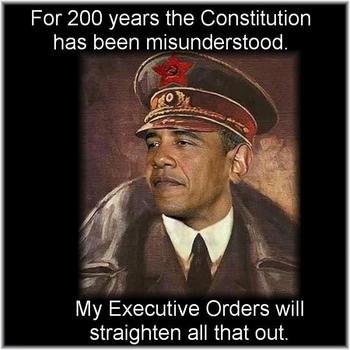
HOW IS OBAMA IS LIKE HITLER?

255156774_obama_the_dictator_1_12_2013_xlargeLast March (2014) I published an article here entitled, “Why is Barack Obama Like King George III of England“?  The comparison of the two was so interesting to me that I began making comparisons between Barrack Hussein Obama & Adolf Hitler.  Hitler’s “T-4 Program” is another comparison that I attribute to OBAMACARE and I published that opinion because I believe the Obama Administration and NOW the Veteran’s Administration are now finally in sync to murder any Americans whom the Federal Government believes are too old,  too conservative, too patriotic, too pro-American ~ thus too inconvenient to the radical, socialist agenda of liberal people who have either been indoctrinated into socialistic policies that reward the politicians in power & do NOTHING for the working class in general OR are hell-bent on destroying the very foundation and principles of the American Constitution, including but not limited to;  our Freedoms under the Bill of Rights. Free Speech, Religion & our Right to Bare Arms have all come under attack by the Socialist Liberals & Secularists currently running OUR government! ~ JGT

COMPARISON OF  OBAMA TO HITLER © by Dorian F. Howard 2014

The similarities are terrifying, the conclusion inevitable. On March 23, 1933, the German Parliament met to consider passing a bill that Adolf Hitler had created called the Enabling Act. It was officially called the ‘Law for Removing the Distress of the People and the Reich.’ Why were the German people in such distress? Because their government was in utter chaos, and the German leaders wanted to reassure the people that everything would be okay. The only fly in the ointment was that the Nazis had, behind the scenes, caused the distress themselves by creating the crisis, so that they could step in and solve it.  Sound familiar? ~JGT

Hitler promised the German people that the government would “make use of these powers only insofar as they are essential for carrying out vitally necessary measures. The number of cases in which an internal necessity exists for having recourse to such a law is in itself a limited one.” So the German congress voted on the bill, with the end result being the legal destruction of the German Democratic Republic. The bill gave Hitler enormous, unprecedented powers to do as he saw fit for the government of the German people. It was the act that officially created a legal dictator who was answerable to no one. The people cheered, and National Socialism became the law of the land from that day forward. Today, Barack Obama is changing times and laws in America, giving himself unprecedented power never before seen. His Obama Care bill, now the law of the land; empowers him to create his own private army, forces citizens to abide by unconstitutional laws, and will use the IRS in much the same way that Hitler used his brown shirts * eventually the SS to make people get in line behind his policies. Many Americans will awaken from their “Obama Dreamy-Eyed Coma” too late to the fact that Obama has subverted the United States Constitution, and stolen our precious liberties and freedoms. That’s why Obama’s followers are encouraged and taught to follow and have faith in Obama the man, and not in our God or in our country. This is exactly the ploy that Hitler used to great and terrible effect in Nazi Germany.

Some people would balk at the comparison between Hitler and Obama, saying it was unfair. After all, Hitler started WWII and killed 11,000,000 Jews and Gentiles in death camps, and Obama has done nothing like that. Well, it’s only unfair if you compare Hitler at the end of his rule to the beginning of Obama’s. But if you compare Hitler and Obama at the beginning of their rise to power, it’s extremely fair. Both Hitler & Obama held rallies in outdoor stadiums to excite and inflame people’s passions. Frequently, women would faint or break into tears. If that’s not enough, check out the following:

  Both Hitler and Obama wrote ghost-written autobiographies prior to the start of their run for political office. Hitler wrote ‘Mein Kampf’ (My Struggle), and Obama wrote ‘Dreams Of My Father’. Some doubt exists that Obama actually wrote his so-called autobiography believing instead that it may have been ghost-written by William (Bill) Charles Ayers, a former leader of the terrorist Weather Underground. A friend of Obama’s before he ran for POTUS. ~ Both Obama & Hitler then wrote a second book talking about their goals for German and America. Hitler wrote “A New World Order”, Obama wrote “The Audacity of Hope”. Yeah, pretty audacious! ~JGT
  Both Hitler and Obama originally had last names that were changed later in life. Hitler used to be Schickelbruber, and Obama’s last name was Soetoro. In other words, each used & uses an alias! ~JGT
  Both Hitler and Obama hid their real identities. Hitler had a Jewish ancestry, and Obama a Muslim one. But unlike Hitler, Obama flaunted his Muslim roots in his start as a politician in order to defuse the inevitable firestorm. His ploy of “hiding in plain sight” worked very well. ~JGT
  Both Hitler and Obama’s supporters followed them blindly, and without question. They’re what’s known as Obama Zombies! ~ JGT
  Both Hitler and Obama used political power and coercion to conceal and hide their birth certificates from coming to public view. Hitler made his disappear, and Obama is unwilling and unable to produce his REAL long-form birth certificate. Call it whatever you want. There are too many discrepancies with Obama’s so-called Hawaiian birth registration to prove it’s authentic! ` JGT
  Both Hitler and Obama advocate using young people as a driving force to create an “army” of youth dedicated to their Ideals. Hitler had his Hitler Youth, and Obama his Obama Youth Brigade.The federal government calls them FEMA Corps. But they conjure up memories of the Hitler Youth of 1930’s Germany. Regardless of their name, the Dept. of Homeland Security graduated its first class of 231 Homeland Youth in Oct. 2012. Kids, aged 18-24 and recruited from the President’s AmeriCorp volunteers, they represent the first wave of DHS’s youth corps, designed specifically to create a full time, paid, standing army of FEMA Youth across the country. Scary~ huh? ~JGT
  Both Hitler and Obama were known for their tremendous oratorical skills. Albeit~ Obama uses a teleprompter. God forbid it fails to work! ~JGT
  Both Hitler and Obama received Messianic comparisons, and both men had songs of adoration written about them and for them. Do you remember the song~ “Barrack Hussein Obama ~ mmm, mmm, mmm”? ~JGT
  Like Hitler, Obama rules in direct disregard to the will and wishes of the people. The American People mean nothing to Obama! `~JGT
  Like Hitler, Obama has an obvious distaste for the Jews, and sides with the Muslims every chance he gets. Thus~ he ignores crimes against Christians & Jews all over the world! Typical of Islamic Radicals! ~JGT
  Both Hitler and Obama were able to mesmerize the people even when it was obvious that what they were saying was not true. Again~Obama Zombies! ~ JGT
  Both Hitler and Obama used domestic terrorists to launch their careers. Hitler had his Brown Shirts from his beer hall days, and Obama had people like Bill Ayers, Bernardine Dohrn, and many other radical leftists including Rashid Khalidi & Reverend Jerimiah Wright. All long-time friends of the Obamas. Bill Ayers and Bernardine Dohrn were former leaders of the 1960s’ Weather Underground, America’s first terrorist cult.  One of their bombing targets, as it happened, was the Pentagon. ~JGT
  Like Hitler, Obama advocates using murder as a means of population control. From taxpayer funding of abortions in America and around the world, to the funding of the creating and destruction of human life in embryonic stem cell research with your tax money; from the absolute refusal to cut off public funding to Planned Parenthood to the stacking of the Supreme Court and federal courts with hardcore abortion advocates, pro-life groups say Obama has left every unborn child behind. Last year Planned Parenthood announced that Obama is the most pro-abortion president in history! ~ JGT

Earlier today, the entire nation heard the news that Sgt. Bowe Bergdahl (held by the Taliban for 5 years in Afghanistan) had been released because of a “back-room” deal made by POTUS Obama in exchange for 5 of the most deadly (battle-field )captured Terrorists held at Guantanamo Bay Detention Facility. If Obama had not already sealed his fateful legacy as being the biggest Spender POTUS & biggest Cover-up POTUS & Laziest POTUS & most Scandal-Ridden POTUS & worst Foreign Policy POTUS & biggest Liar POTUS in the History of the United States~ then today he added Naivety, Cowardice, Stupidity,  Constitutional Law-Breaker & Traitorous Acts by Negotiating with Terrorists to his resume’ as in my opinion the “WORST PRESIDENT IN THE HISTORY OF THE UNITED STATES OF AMERICA!

I am an American. I am a Patriot. I am a U.S. Navy Veteran & I am a Jersey Girl. And~ for the first time in my life~ I am ASHAMED of my Country today! ~JGT

In Profound Gratitude

Bravo! My husband & I are U.S. Navy Veterans and our fathers, grandfathers & great grandfathers, etc… all served in both World Wars, The Civil War AND the American Revolutionary War. Thank you for the article & post. God Bless You & God Bless America! ~dfh

Karen Evans's avatarTribute to Veterans

Memorial Grounds-8

 In Memory of Supreme Sacrifice for Country

They shall grow not old, as we that are left grow old:
Age shall not weary them, nor the years condemn.
At the going down of the sun, and in the morning,
We will remember them.

“Ode of Remembrance” from Laurence Binyon’s poem, “For the Fallen” (1914)

———————————-

“The very soul of a nation is its heroes”

PFC Joel Ramirez-off the plane

Their sacrifices, their pain, their selfless courage must continue to burn like an eternal     flame in our memory.
                                                                    Gen. Colin Powell

PFC Joel Ramirez carried home

When we mourn for such men who have died, ….we should thank God that such men were born.

Gen. George S. Patton Jr.

PFC Welcomed Home

As I wept inside, I asked, Lord, where did we get such men?  And I was reminded, if a nation is to be great, if a nation truly is to be the land of the free, that it also must be the…

View original post 106 more words

THE AMERICAN CRISIS~ (Part 2) By Thomas Paine

The American Crisis: PHILADELPHIA, Jan. 13, 1777

TO LORD HOWE. “What’s in the name of lord, that I should fear To bring my grievance to the public ear? UNIVERSAL empire is the prerogative of a writer. His concerns are with all mankind, and though he cannot command their obedience, he can assign them their duty.  The Republic of Letters is more ancient than monarchy, and of far higher character in the world than the vassal court of Britain; he that rebels against reason is a real rebel, but he that in defence of reason rebels against tyranny has a better title to “Defender of the Faith,” than George the Third.

As a military man your lordship may hold out the sword of war, and call it the “ultima ratio regum”: the last reason of kings; we in return can show you the sword of justice, and call it “the best scourge of tyrants.” The first of these two may threaten, or even frighten for a while, and cast a sickly languor over an insulted people, but reason will soon recover the debauch, and restore them again to tranquil fortitude. Your lordship, I find, has now commenced author, and published a proclamation; I have published a Crisis. As they stand, they are the antipodes of each other; both cannot rise at once, and one of them must descend; and so quick is the revolution of things, that your lordship’s performance, I see, has already fallen many degrees from its first place, and is now just visible on the edge of the political horizon.

It is surprising to what a pitch of infatuation, blind folly and obstinacy will carry mankind, and your lordship’s drowsy proclamation is a proof that it does not even quit them in their sleep. Perhaps you thought America too was taking a nap, and therefore chose, like Satan to Eve, to whisper the delusion softly, lest you should awaken her. This continent, sir, is too extensive to sleep all at once, and too watchful, even in its slumbers, not to startle at the unhallowed foot of an invader. You may issue your proclamations, and welcome, for we have learned to “reverence ourselves,” and scorn the insulting ruffian that employs you. America, for your deceased brother’s sake, would gladly have shown you respect and it is a new aggravation to her feelings, that Howe should be forgetful, and raise his sword against those, who at their own charge raised a monument to his brother. But your master has commanded, and you have not enough of nature left to refuse. Surely there must be something strangely degenerating in the love of monarchy, that can so completely wear a man down to an ingrate, and make him proud to lick the dust that kings have trod upon. A few more years, should you survive them, will bestow on you the title of “an old man”: and in some hour of future reflection you may probably find the fitness of Wolsey’s despairing penitence- “had I served my God as faithful as I have served my king, he would not thus have forsaken me in my old age.”

The character you appear to us in, is truly ridiculous. Your friends, the Tories, announced your coming, with high descriptions of your unlimited powers; but your proclamation has given them the lie, by showing you to be a commissioner without authority. Had your powers been ever so great they were nothing to us, further than we pleased; because we had the same right which other nations had, to do what we thought was best. “The UNITED STATES of AMERICA,” will sound as pompously in the world or in history, as “the kingdom of Great Britain”; the character of General Washington will fill a page with as much lustre as that of Lord Howe: and the Congress have as much right to command the king and Parliament in London to desist from legislation, as they or you have to command the Congress. Only suppose how laughable such an edict would appear from us, and then, in that merry mood, do but turn the tables upon yourself, and you will see how your proclamation is received here. Having thus placed you in a proper position in which you may have a full view of your folly, and learn to despise it, I hold up to you, for that purpose, the following quotation from your own lunarian proclamation.- “And we (Lord Howe and General Howe) do command (and in his majesty’s name forsooth) all such persons as are assembled together, under the name of general or provincial congresses, committees, conventions or other associations, by whatever name or names known and distinguished, to desist and cease from all such treasonable actings and doings.”

You introduce your proclamation by referring to your declarations of the 14th of July and 19th of September. In the last of these you sunk yourself below the character of a private gentleman. That I may not seem to accuse you unjustly, I shall state the circumstance: by a verbal invitation of yours, communicated to Congress by General Sullivan, then a prisoner on his parole, you signified your desire of conferring with some members of that body as private gentlemen. It was beneath the dignity of the American Congress to pay any regard to a message that at best was but a genteel affront, and had too much of the ministerial complexion of tampering with private persons; and which might probably have been the case, had the gentlemen who were deputed on the business possessed that kind of easy virtue which an English courtier is so truly distinguished by. Your request, however, was complied with, for honest men are naturally more tender of their civil than their political fame. The interview ended as every sensible man thought it would; for your lordship knows, as well as the writer of the Crisis, that it is impossible for the King of England to promise the repeal, or even the revisal of any acts of parliament; wherefore, on your part, you had nothing to say, more than to request, in the room of demanding, the entire surrender of the continent; and then, if that was complied with, to promise that the inhabitants should escape with their lives. This was the upshot of the conference. You informed the conferees that you were two months in soliciting these powers. We ask, what powers? for as commissioner you have none. If you mean the power of pardoning, it is an oblique proof that your master was determined to sacrifice all before him; and that you were two months in dissuading him from his purpose. Another evidence of his savage obstinacy! From your own account of the matter we may justly draw these two conclusions: 1st, That you serve a monster; and 2d, That never was a messenger sent on a more foolish errand than yourself. This plain language may perhaps sound uncouthly to an ear vitiated by courtly refinements, but words were made for use, and the fault lies in deserving them, or the abuse in applying them unfairly.

Soon after your return to New York, you published a very illiberal and unmanly handbill against the Congress; for it was certainly stepping out of the line of common civility, first to screen your national pride by soliciting an interview with them as private gentlemen, and in the conclusion to endeavor to deceive the multitude by making a handbill attack on the whole body of the Congress; you got them together under one name, and abused them under another. But the king you serve, and the cause you support, afford you so few instances of acting the gentleman, that out of pity to your situation the Congress pardoned the insult by taking no notice of it.

You say in that handbill, “that they, the Congress, disavowed every purpose for reconciliation not consonant with their extravagant and inadmissible claim of independence.” Why, God bless me! what have you to do with our independence? We ask no leave of yours to set it up; we ask no money of yours to support it; we can do better without your fleets and armies than with them; you may soon have enough to do to protect yourselves without being burdened with us. We are very willing to be at peace with you, to buy of you and sell to you, and, like young beginners in the world, to work for our living; therefore, why do you put yourselves out of cash, when we know you cannot spare it, and we do not desire you to run into debt? I am willing, sir, that you should see your folly in every point of view I can place it in, and for that reason descend sometimes to tell you in jest what I wish you to see in earnest. But to be more serious with you, why do you say, “their independence?” To set you right, sir, we tell you, that the independency is ours, not theirs. The Congress were authorized by every state on the continent to publish it to all the world, and in so doing are not to be considered as the inventors, but only as the heralds that proclaimed it, or the office from which the sense of the people received a legal form; and it was as much as any or all their heads were worth, to have treated with you on the subject of submission under any name whatever. But we know the men in whom we have trusted; can England say the same of her Parliament?

I come now more particularly to your proclamation of the 30th of November last. Had you gained an entire conquest over all the armies of America, and then put forth a proclamation, offering (what you call) mercy, your conduct would have had some specious show of humanity; but to creep by surprise into a province, and there endeavor to terrify and seduce the inhabitants from their just allegiance to the rest by promises, which you neither meant nor were able to fulfil, is both cruel and unmanly: cruel in its effects; because, unless you can keep all the ground you have marched over, how are you, in the words of your proclamation, to secure to your proselytes “the enjoyment of their property?” What is to become either of your new adopted subjects, or your old friends, the Tories, in Burlington, Bordentown, Trenton, Mount Holly, and many other places, where you proudly lorded it for a few days, and then fled with the precipitation of a pursued thief? What, I say, is to become of those wretches? What is to become of those who went over to you from this city and State? What more can you say to them than “shift for yourselves?” Or what more can they hope for than to wander like vagabonds over the face of the earth? You may now tell them to take their leave of America, and all that once was theirs. Recommend them, for consolation, to your master’s court; there perhaps they may make a shift to live on the scraps of some dangling parasite, and choose companions among thousands like themselves. A traitor is the foulest fiend on earth.

In a political sense we ought to thank you for thus bequeathing estates to the continent; we shall soon, at this rate, be able to carry on a war without expense, and grow rich by the ill policy of Lord Howe, and the generous defection of the Tories. Had you set your foot into this city, you would have bestowed estates upon us which we never thought of, by bringing forth traitors we were unwilling to suspect. But these men, you’ll say, “are his majesty’s most faithful subjects;” let that honor, then, be all their fortune, and let his majesty take them to himself.

I am now thoroughly disgusted with them; they live in ungrateful ease, and bend their whole minds to mischief. It seems as if God had given them over to a spirit of infidelity, and that they are open to conviction in no other line but that of punishment. It is time to have done with tarring, feathering, carting, and taking securities for their future good behavior; every sensible man must feel a conscious shame at seeing a poor fellow hawked for a show about the streets, when it is known he is only the tool of some principal villain, biassed into his offence by the force of false reasoning, or bribed thereto, through sad necessity. We dishonor ourselves by attacking such trifling characters while greater ones are suffered to escape; ’tis our duty to find them out, and their proper punishment would be to exile them from the continent for ever. The circle of them is not so great as some imagine; the influence of a few have tainted many who are not naturally corrupt. A continual circulation of lies among those who are not much in the way of hearing them contradicted, will in time pass for truth; and the crime lies not in the believer but the inventor. I am not for declaring war with every man that appears not so warm as myself: difference of constitution, temper, habit of speaking, and many other things, will go a great way in fixing the outward character of a man, yet simple honesty may remain at bottom. Some men have naturally a military turn, and can brave hardships and the risk of life with a cheerful face; others have not; no slavery appears to them so great as the fatigue of arms, and no terror so powerful as that of personal danger. What can we say? We cannot alter nature, neither ought we to punish the son because the father begot him in a cowardly mood. However, I believe most men have more courage than they know of, and that a little at first is enough to begin with. I knew the time when I thought that the whistling of a cannon ball would have frightened me almost to death; but I have since tried it, and find that I can stand it with as little discomposure, and, I believe, with a much easier conscience than your lordship. The same dread would return to me again were I in your situation, for my solemn belief of your cause is, that it is hellish and damnable, and, under that conviction, every thinking man’s heart must fail him.

From a concern that a good cause should be dishonored by the least disunion among us, I said in my former paper, No. I. “That should the enemy now be expelled, I wish, with all the sincerity of a Christian, that the names of Whig and Tory might never more be mentioned;” but there is a knot of men among us of such a venomous cast, that they will not admit even one’s good wishes to act in their favor. Instead of rejoicing that heaven had, as it were, providentially preserved this city from plunder and destruction, by delivering so great a part of the enemy into our hands with so little effusion of blood, they stubbornly affected to disbelieve it till within an hour, nay, half an hour, of the prisoners arriving; and the Quakers put forth a testimony, dated the 20th of December, signed “John Pemberton,” declaring their attachment to the British government.  These men are continually harping on the great sin of our bearing arms, but the king of Britain may lay waste the world in blood and famine, and they, poor fallen souls, have nothing to say.

In some future paper I intend to distinguish between the different kind of persons who have been denominated Tories; for this I am clear in, that all are not so who have been called so, nor all men Whigs who were once thought so; and as I mean not to conceal the name of any true friend when there shall be occasion to mention him, neither will I that of an enemy, who ought to be known, let his rank, station or religion be what it may. Much pains have been taken by some to set your lordship’s private character in an amiable light, but as it has chiefly been done by men who know nothing about you, and who are no ways remarkable for their attachment to us, we have no just authority for believing it. George the Third has imposed upon us by the same arts, but time, at length, has done him justice, and the same fate may probably attend your lordship. You avowed purpose here is to kill, conquer, plunder, pardon, and enslave: and the ravages of your army through the Jerseys have been marked with as much barbarism as if you had openly professed yourself the prince of ruffians; not even the appearance of humanity has been preserved either on the march or the retreat of your troops; no general order that I could ever learn, has ever been issued to prevent or even forbid your troops from robbery, wherever they came, and the only instance of justice, if it can be called such, which has distinguished you for impartiality, is, that you treated and plundered all alike; what could not be carried away has been destroyed, and mahogany furniture has been deliberately laid on fire for fuel, rather than the men should be fatigued with cutting wood.  There was a time when the Whigs confided much in your supposed candor, and the Tories rested themselves in your favor; the experiments have now been made, and failed; in every town, nay, every cottage, in the Jerseys, where your arms have been, is a testimony against you. How you may rest under this sacrifice of character I know not; but this I know, that you sleep and rise with the daily curses of thousands upon you; perhaps the misery which the Tories have suffered by your proffered mercy may give them some claim to their country’s pity, and be in the end the best favor you could show them.

In a folio general-order book belonging to Col. Rhal’s battalion, taken at Trenton, and now in the possession of the council of safety for this state, the following barbarous order is frequently repeated, “His excellency the Commander-in-Chief orders, that all inhabitants who shall be found with arms, not having an officer with them, shall be immediately taken and hung up.” How many you may thus have privately sacrificed, we know not, and the account can only be settled in another world. Your treatment of prisoners, in order to distress them to enlist in your infernal service, is not to be equalled by any instance in Europe. Yet this is the humane Lord Howe and his brother, whom the Tories and their three-quarter kindred, the Quakers, or some of them at least, have been holding up for patterns of justice and mercy!

A bad cause will ever be supported by bad means and bad men; and whoever will be at the pains of examining strictly into things, will find that one and the same spirit of oppression and impiety, more or less, governs through your whole party in both countries: not many days ago, I accidentally fell in company with a person of this city noted for espousing your cause, and on my remarking to him, “that it appeared clear to me, by the late providential turn of affairs, that God Almighty was visibly on our side,” he replied, “We care nothing for that you may have Him, and welcome; if we have but enough of the devil on our side, we shall do.” However carelessly this might be spoken, matters not, ’tis still the insensible principle that directs all your conduct and will at last most assuredly deceive and ruin you.

If ever a nation was made and foolish, blind to its own interest and bent on its own destruction, it is Britain. There are such things as national sins, and though the punishment of individuals may be reserved to another world, national punishment can only be inflicted in this world. Britain, as a nation, is, in my inmost belief, the greatest and most ungrateful offender against God on the face of the whole earth. Blessed with all the commerce she could wish for, and furnished, by a vast extension of dominion, with the means of civilizing both the eastern and western world, she has made no other use of both than proudly to idolize her own “thunder,” and rip up the bowels of whole countries for what she could get. Like Alexander, she has made war her sport, and inflicted misery for prodigality’s sake. The blood of India is not yet repaid, nor the wretchedness of Africa yet requited. Of late she has enlarged her list of national cruelties by her butcherly destruction of the Caribbs of St. Vincent’s, and returning an answer by the sword to the meek prayer for “Peace, liberty and safety.” These are serious things, and whatever a foolish tyrant, a debauched court, a trafficking legislature, or a blinded people may think, the national account with heaven must some day or other be settled: all countries have sooner or later been called to their reckoning; the proudest empires have sunk when the balance was struck; and Britain, like an individual penitent, must undergo her day of sorrow, and the sooner it happens to her the better. As I wish it over, I wish it to come, but withal wish that it may be as light as possible.

Perhaps your lordship has no taste for serious things; by your connections in England I should suppose not; therefore I shall drop this part of the subject, and take it up in a line in which you will better understand me.

By what means, may I ask, do you expect to conquer America? If you could not effect it in the summer, when our army was less than yours, nor in the winter, when we had none, how are you to do it? In point of generalship you have been outwitted, and in point of fortitude outdone; your advantages turn out to your loss, and show us that it is in our power to ruin you by gifts: like a game of drafts, we can move out of one square to let you come in, in order that we may afterwards take two or three for one; and as we can always keep a double corner for ourselves, we can always prevent a total defeat. You cannot be so insensible as not to see that we have two to one the advantage of you, because we conquer by a drawn game, and you lose by it. Burgoyne might have taught your lordship this knowledge; he has been long a student in the doctrine of chances.

I have no other idea of conquering countries than by subduing the armies which defend them: have you done this, or can you do it? If you have not, it would be civil in you to let your proclamations alone for the present; otherwise, you will ruin more Tories by your grace and favor, than you will Whigs by your arms.

Were you to obtain possession of this city, you would not know what to do with it more than to plunder it. To hold it in the manner you hold New York, would be an additional dead weight upon your hands; and if a general conquest is your object, you had better be without the city than with it. When you have defeated all our armies, the cities will fall into your hands of themselves; but to creep into them in the manner you got into Princeton, Trenton, &c. is like robbing an orchard in the night before the fruit be ripe, and running away in the morning. Your experiment in the Jerseys is sufficient to teach you that you have something more to do than barely to get into other people’s houses; and your new converts, to whom you promised all manner of protection, and seduced into new guilt by pardoning them from their former virtues, must begin to have a very contemptible opinion both of your power and your policy. Your authority in the Jerseys is now reduced to the small circle which your army occupies, and your proclamation is no where else seen unless it be to be laughed at. The mighty subduers of the continent have retreated into a nutshell, and the proud forgivers of our sins are fled from those they came to pardon; and all this at a time when they were despatching vessel after vessel to England with the great news of every day. In short, you have managed your Jersey expedition so very dexterously, that the dead only are conquerors, because none will dispute the ground with them.

In all the wars which you have formerly been concerned in you had only armies to contend with; in this case you have both an army and a country to combat with. In former wars, the countries followed the fate of their capitals; Canada fell with Quebec, and Minorca with Port Mahon or St. Phillips; by subduing those, the conquerors opened a way into, and became masters of the country: here it is otherwise; if you get possession of a city here, you are obliged to shut yourselves up in it, and can make no other use of it, than to spend your country’s money in. This is all the advantage you have drawn from New York; and you would draw less from Philadelphia, because it requires more force to keep it, and is much further from the sea. A pretty figure you and the Tories would cut in this city, with a river full of ice, and a town full of fire; for the immediate consequence of your getting here would be, that you would be cannonaded out again, and the Tories be obliged to make good the damage; and this sooner or later will be the fate of New York.

I wish to see the city saved, not so much from military as from natural motives. ‘Tis the hiding place of women and children, and Lord Howe’s proper business is with our armies. When I put all the circumstances together which ought to be taken, I laugh at your notion of conquering America. Because you lived in a little country, where an army might run over the whole in a few days, and where a single company of soldiers might put a multitude to the rout, you expected to find it the same here. It is plain that you brought over with you all the narrow notions you were bred up with, and imagined that a proclamation in the king’s name was to do great things; but Englishmen always travel for knowledge, and your lordship, I hope, will return, if you return at all, much wiser than you came.

We may be surprised by events we did not expect, and in that interval of recollection you may gain some temporary advantage: such was the case a few weeks ago, but we soon ripen again into reason, collect our strength, and while you are preparing for a triumph, we come upon you with a defeat. Such it has been, and such it would be were you to try it a hundred times over. Were you to garrison the places you might march over, in order to secure their subjection, (for remember you can do it by no other means,) your army would be like a stream of water running to nothing. By the time you extended from New York to Virginia, you would be reduced to a string of drops not capable of hanging together; while we, by retreating from State to State, like a river turning back upon itself, would acquire strength in the same proportion as you lost it, and in the end be capable of overwhelming you. The country, in the meantime, would suffer, but it is a day of suffering, and we ought to expect it. What we contend for is worthy the affliction we may go through. If we get but bread to eat, and any kind of raiment to put on, we ought not only to be contented, but thankful. More than that we ought not to look for, and less than that heaven has not yet suffered us to want. He that would sell his birthright for a little salt, is as worthless as he who sold it for pottage without salt; and he that would part with it for a gay coat, or a plain coat, ought for ever to be a slave in buff. What are salt, sugar and finery, to the inestimable blessings of “Liberty and Safety!” Or what are the inconveniences of a few months to the tributary bondage of ages? The meanest peasant in America, blessed with these sentiments, is a happy man compared with a New York Tory; he can eat his morsel without repining, and when he has done, can sweeten it with a repast of wholesome air; he can take his child by the hand and bless it, without feeling the conscious shame of neglecting a parent’s duty.

In publishing these remarks I have several objects in view.

On your part they are to expose the folly of your pretended authority as a commissioner; the wickedness of your cause in general; and the impossibility of your conquering us at any rate. On the part of the public, my intention is, to show them their true and sold interest; to encourage them to their own good, to remove the fears and falsities which bad men have spread, and weak men have encouraged; and to excite in all men a love for union, and a cheerfulness for duty.

I shall submit one more case to you respecting your conquest of this country, and then proceed to new observations.

Suppose our armies in every part of this continent were immediately to disperse, every man to his home, or where else he might be safe, and engage to reassemble again on a certain future day; it is clear that you would then have no army to contend with, yet you would be as much at a loss in that case as you are now; you would be afraid to send your troops in parties over to the continent, either to disarm or prevent us from assembling, lest they should not return; and while you kept them together, having no arms of ours to dispute with, you could not call it a conquest; you might furnish out a pompous page in the London Gazette or a New York paper, but when we returned at the appointed time, you would have the same work to do that you had at first.

It has been the folly of Britain to suppose herself more powerful than she really is, and by that means has arrogated to herself a rank in the world she is not entitled to: for more than this century past she has not been able to carry on a war without foreign assistance. In Marlborough’s campaigns, and from that day to this, the number of German troops and officers assisting her have been about equal with her own; ten thousand Hessians were sent to England last war to protect her from a French invasion; and she would have cut but a poor figure in her Canadian and West Indian expeditions, had not America been lavish both of her money and men to help her along. The only instance in which she was engaged singly, that I can recollect, was against the rebellion in Scotland, in the years 1745 and 1746, and in that, out of three battles, she was twice beaten, till by thus reducing their numbers, (as we shall yours) and taking a supply ship that was coming to Scotland with clothes, arms and money, (as we have often done,) she was at last enabled to defeat them. England was never famous by land; her officers have generally been suspected of cowardice, have more of the air of a dancing-master than a soldier, and by the samples which we have taken prisoners, we give the preference to ourselves. Her strength, of late, has lain in her extravagance; but as her finances and credit are now low, her sinews in that line begin to fail fast. As a nation she is the poorest in Europe; for were the whole kingdom, and all that is in it, to be put up for sale like the estate of a bankrupt, it would not fetch as much as she owes; yet this thoughtless wretch must go to war, and with the avowed design, too, of making us beasts of burden, to support her in riot and debauchery, and to assist her afterwards in distressing those nations who are now our best friends. This ingratitude may suit a Tory, or the unchristian peevishness of a fallen Quaker, but none else.

‘Tis the unhappy temper of the English to be pleased with any war, right or wrong, be it but successful; but they soon grow discontented with ill fortune, and it is an even chance that they are as clamorous for peace next summer, as the king and his ministers were for war last winter. In this natural view of things, your lordship stands in a very critical situation: your whole character is now staked upon your laurels; if they wither, you wither with them; if they flourish, you cannot live long to look at them; and at any rate, the black account hereafter is not far off. What lately appeared to us misfortunes, were only blessings in disguise; and the seeming advantages on your side have turned out to our profit. Even our loss of this city, as far as we can see, might be a principal gain to us: the more surface you spread over, the thinner you will be, and the easier wiped away; and our consolation under that apparent disaster would be, that the estates of the Tories would become securities for the repairs. In short, there is no old ground we can fail upon, but some new foundation rises again to support us. “We have put, sir, our hands to the plough, and cursed be he that looketh back.”

Your king, in his speech to parliament last spring, declared, “That he had no doubt but the great force they had enabled him to send to America, would effectually reduce the rebellious colonies.” It has not, neither can it; but it has done just enough to lay the foundation of its own next year’s ruin. You are sensible that you left England in a divided, distracted state of politics, and, by the command you had here, you became a principal prop in the court party; their fortunes rest on yours; by a single express you can fix their value with the public, and the degree to which their spirits shall rise or fall; they are in your hands as stock, and you have the secret of the alley with you. Thus situated and connected, you become the unintentional mechanical instrument of your own and their overthrow. The king and his ministers put conquest out of doubt, and the credit of both depended on the proof. To support them in the interim, it was necessary that you should make the most of every thing, and we can tell by Hugh Gaine’s New York paper what the complexion of the London Gazette is. With such a list of victories the nation cannot expect you will ask new supplies; and to confess your want of them would give the lie to your triumphs, and impeach the king and his ministers of treasonable deception. If you make the necessary demand at home, your party sinks; if you make it not, you sink yourself; to ask it now is too late, and to ask it before was too soon, and unless it arrive quickly will be of no use. In short, the part you have to act, cannot be acted; and I am fully persuaded that all you have to trust to is, to do the best you can with what force you have got, or little more. Though we have greatly exceeded you in point of generalship and bravery of men, yet, as a people, we have not entered into the full soul of enterprise; for I, who know England and the disposition of the people well, am confident, that it is easier for us to effect a revolution there, than you a conquest here; a few thousand men landed in England with the declared design of deposing the present king, bringing his ministers to trial, and setting up the Duke of Gloucester in his stead, would assuredly carry their point, while you are grovelling here, ignorant of the matter. As I send all my papers to England, this, like Common Sense, will find its way there; and though it may put one party on their guard, it will inform the other, and the nation in general, of our design to help them.

Thus far, sir, I have endeavored to give you a picture of present affairs: you may draw from it what conclusions you please. I wish as well to the true prosperity of England as you can, but I consider INDEPENDENCE as America’s natural right and interest, and never could see any real disservice it would be to Britain. If an English merchant receives an order, and is paid for it, it signifies nothing to him who governs the country. This is my creed of politics. If I have any where expressed myself over-warmly, ’tis from a fixed, immovable hatred I have, and ever had, to cruel men and cruel measures. I have likewise an aversion to monarchy, as being too debasing to the dignity of man; but I never troubled others with my notions till very lately, nor ever published a syllable in England in my life. What I write is pure nature, and my pen and my soul have ever gone together. My writings I have always given away, reserving only the expense of printing and paper, and sometimes not even that. I never courted either fame or interest, and my manner of life, to those who know it, will justify what I say. My study is to be useful, and if your lordship loves mankind as well as I do, you would, seeing you cannot conquer us, cast about and lend your hand towards accomplishing a peace. Our independence with God’s blessing we will maintain against all the world; but as we wish to avoid evil ourselves, we wish not to inflict it on others. I am never over-inquisitive into the secrets of the cabinet, but I have some notion that, if you neglect the present opportunity, it will not be in our power to make a separate peace with you afterwards; for whatever treaties or alliances we form, we shall most faithfully abide by; wherefore you may be deceived if you think you can make it with us at any time. A lasting independent peace is my wish, end and aim; and to accomplish that, I pray God the Americans may never be defeated, and I trust while they have good officers, and are well commanded, and willing to be commanded, that they NEVER WILL BE.

PHILADELPHIA, Jan. 13, 1777.