Veterans & American History

U. S. Military Veterans (News & Updates)

D-DAY JUNE 6th, 1944 (OPERATION OVERLORD and NEPTUNE)

This year, June 6, 2024~ marks the 80th Anniversary of the Normandy Invasion. WWII’s D-Day.

Operation Overlord 1944 Joint Forces Pic

Immediately after the Japanese attack on Pearl Harbor the Allies created the “Combined Chiefs of Staff” (CCS) comprising of the United States Joint Chiefs of Staff and the British Chiefs of Staff. Their function was to assist and advise U.S. President Roosevelt and British Prime Minister Churchill on the direction and conduct of the war. The CCS confirmed a previous policy of “Germany First” and, from March 1942, their planning group began work on an outline plan for a full-scale invasion of Europe. They initially hoped to invade Europe in 1943 but the realities of insufficient materials and manpower, and the demands of other operations agreed upon, delayed this effort until 1944 – this despite persistent agitation from Russian Dictator, Stalin to open a second front to relieve pressure in the East.

When America joined the war on the side of Britain in 1941, the two made plans to retake France from the Germans. The situation looked bleak. Britain was running out of food, Western Europe was under the Nazi heel, and the Soviet Union was near collapse. The Russians were begging for an immediate second front to stop the Germans. It was clear that an U.S. invasion of Germany itself was necessary to overthrow Hitler.

Operation Overlord, also known as the Normandy Invasion or simply D-Day, was the code name for the Allied invasion of northern Europe in World War II. It began with the landings on the beaches of Normandy in northwestern France on June 6, 1944, and accomplished the largest amphibious invasion in the history of mankind, using 200,000 men, 9,000 planes, and over 5,000 ships.

Operation Neptune was the name given to the Naval Armada of allied ships & the allied Air Corps involved. On the

450px-Into_the_Jaws_of_Death_23-0455M_edit

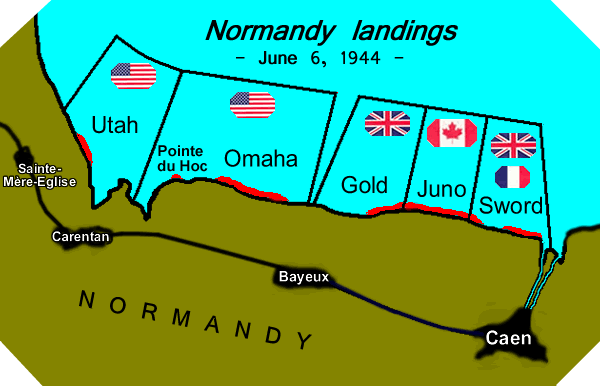
whole, the naval fleet was composed of five forces, one for each beach. (Utah, Omaha, Gold, Juno & Sword) Utah & Omaha beaches were invaded by American Forces. The other three by British, Canadian & a free French Battalion. Eight to sixteen distinct convoys composed the five principal convoys. These forces represented more than 5300 ships of all types plus the 4000 relay boats between the shore and the ships. During the landing, 3460 heavy bombers and 1650 light bombers dropped hundreds of tons of bombs on the Normandy coast, targeting the batteries and the fortifications of the German’s Atlantic Wall. The 82nd and 101st American airborne divisions had been parachuted in hours preceding the amphibian offensive, in the western sector of the allied invasion, West and South-west of Utah Beach, located in the Cotentin peninsula. Once on the ground, the Americans of the 82nd and 101st got under way immediately towards their objectives. Despite an extremely high number of losses (50% in the only night of June 6, 1944), the American parachutists of the 82nd and 101st Airborne achieved a great number of their missions.

Years in the planning~ the Battle of Normandy was fought during World War II in the summer of 1944, between the Allied nations and German forces occupying Western Europe. Seventy years later, the Normandy Invasion, or D-Day, remains
dday_map

the largest seaborne invasion in history, involving nearly three million troops crossing the English Channel from England to Normandy in occupied France. Twelve Allied nations provided fighting units that participated in the invasion, including Australia, Canada, Belgium, France, Czechoslovakia, Greece, New Zealand, the Netherlands, Norway, Poland, the United Kingdom, and the United States. The American, British, and Canadian troops were under the command of U.S. General Dwight D. Eisenhower, and crossed the English Channel on June 6, 1944, landing on six beaches along sixty miles of the Normandy coast. Their intention was to drive German forces east and out of France while Russian forces in Eastern Europe slowly pushed west. The heaviest fighting occurred at Omaha Beach, where perhaps as many as 3,000 American men were killed or wounded. By contrast, fewer than 200 casualties (out of 23,000 soldiers engaged) were suffered at Utah, the next beach over.

Operation Overlord was the codename for the Allied invasion of northwest Europe. The assault phase, or the establishment of a secure foothold, was known as Operation Neptune. Operation Neptune began on D-Day (June 6, 1944) and ended on June 30, when the Allies had finally established a firm foothold in Normandy. Operation Overlord continued until Allied forces crossed the River Seine on August 19, 1944.

The battle began months before the invasion, when Allied bombers began to pound the Normandy coast and farther south, to destroy transportation links, and disrupt the German army’s build-up of their military strength. More than 300 planes dropped 13,000 bombs over Normandy in advance of the invasion. Six parachute regiments, with more than 13,000 men, also went ahead to cut railroad lines, blow up bridges, and seize landing fields. Gliders also brought in men, light artillery, jeeps, and small tanks. ~ D. F. Howard© June 1, 2014
7c4a77c79b248aef10e9d387e7414d41

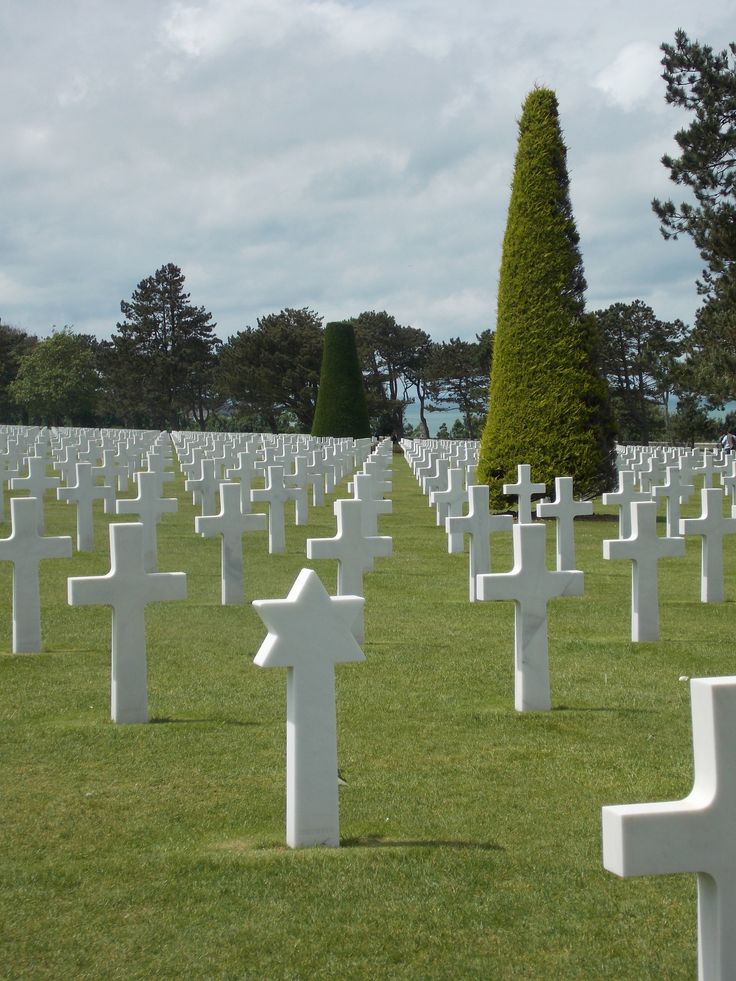
Portion of the American Cemetery in Normandy, France.

Death Tolls: Germany had 320,000 deaths, followed by the United States with 135,000, then the United Kingdom, Canada, and France where the last three all with less than 65,000.
375px-Nationald-daymemorial

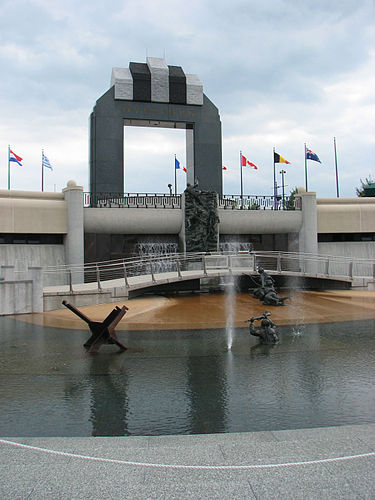
The OVERLORD ARCH located at the National D-DAY Memorial in Bedford, Virginia USA.

Courtesy of Wikipedia. The National D-Day Memorial is a war memorial located in Bedford, Virginia. It serves as the national memorial for American D-Day veterans. However, its scope is international in that it states, “In Tribute to the valor, fidelity and sacrifice of Allied Forces on D-Day, June 6, 1944” and commends all Allied Armed Forces during the D-Day invasion of Normandy, France on June 6, 1944 during World War II.[1] The memorial, bordering the Blue Ridge Mountains in southwestern Virginia, is an area comprising 88 acres (360,000 m2) that overlooks the town of Bedford. It officially opened on June 6, 2001 with 15,000 people present, one of whom was then-President George W. Bush.[2] About 70,000 people have visited the memorial each year. Of those, more than half are from outside of Virginia. Bedford was selected for the National D-Day memorial because the town suffered the greatest per capita loss of life during the invasion of any town in the country.[3]

**Note”” As a U.S. Navy Veteran & wife of a Retired US Navy Chief Petty Officer, as well as the daughter & daughter-in-law of two wonderful WWII Veteran fathers ~ this Jersey Girl couldn’t help but include a link to the Naval History & Heritage page on the D-Day Landings on June 6, 1944. ~ JGT

GOD BLESS AMERICA!

Honor Courage Commitment!
Thank you to My Daddy & Pop Howard for your honorable sacrifice(s) during this horrific (WWII) War. Your children (Veterans) also knowingly respect the personal sacrifices you made for our wonderful country & to all of the Citizens of ~ The GREAT United States of America!
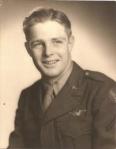
Donald W. Flint US Army Air Force 1942 – 1945

John Howard, US Army, 1942 -1943

I AM AN AMERICAN SAILOR

I Am An American Sailor!th5D0OF9UM

Hear my voice, America!  Though I speak through the mist of 200 years, my shout for freedom will echo through liberty’s halls for many centuries to come. Hear me speak, for my words are of truth and justice, and the rights of man. For those ideals I have spilled my blood upon the world’s troubled waters. Listen well, for my time is eternal -yours is but a moment. I am the spirit of heroes past and future! 

I am the American Sailor. I was born upon the icy shores at Plymouth, rocked upon the waves of the Atlantic, and nursed in the wilderness of Virginia. I cut my teeth on New England codfish, and I was clothed in southern cotton. I built muscle at the halyards of New Bedford whalers, and I gained my sea legs high atop mizzen of Yankee clipper ships.

Yes, I am the American Sailor, one of the greatest seamen the world has ever known. The sea is my home and my words are tempered by the sound of paddle wheels on the Mississippi and the song of whales off Greenland’s barren shore. My eyes have grown dim from the glare of sunshine on blue water, and my heart is full of star-strewn nights under the Southern Cross. My hands are raw from winter storms while sailing down round the Horn, and they are blistered from the heat of cannon broadside while defending our nation.  I am the American Sailor, and I have seen the sunset of a thousand distant, lonely lands.

 bonhomme_richardI am the American Sailor. It was I who stood tall beside John Paul Jones as he shouted, “I have not yet begun to fight!”  I fought upon the Lake Erie with Perry, and I rode with Stephen Decatur into Tripoli harbor to burn Philadelphia.  I met Guerriere aboard Constitution, and I was lashed to the mast with Admiral Farragut at Mobile Bay. I have heard the clang of Confederate shot against the sides of Monitor. I have suffered the cold with Peary at the North Pole, and I responded when Dewy said, “You may fire when ready Gridley,” at Manila Bay.  It was I who transported supplies through submarine infested waters when our soldiers were called “over there.”  I was there as Admiral Byrd crossed the South Pole.  It was I who went down with the Arizona at Pearl Harbor, who supported our troops at Inchon, and patrolled dark deadly waters of the Mekong Delta. 

 thI6IANB6VI am the American Sailor and I wear many faces. I am a pilot soaring across God’s blue canopy and I am a Seabee atop a navy-seal3dusty bulldozer in the South Pacific. I am a corpsman nursing the wounded in the jungle, and I am a Torpedoman in the Nautilus deep beneath the North Pole. I am hard and I am strong. But it was my eyes that filled with tears when my brother went down with the Thresher, and it was my heart that rejoiced when Commander Shepherd rocketed into orbit above the earth. It was I who languished in a Viet Cong prison camp, and it was I who walked upon the moon. It was I who saved the Stark and the Samuel B. Roberts in the mine infested waters of the Persian Gulf.  It was I who pulled my brothers from the smoke filled compartments of the Bonefish and wept when my shipmates died on the Iowa and White Plains. When called again, I was there, on the tip of the spear for Operations Desert Shield and Desert Storm.

 I am the American Sailor.  I am woman, I am man, I am white and black, yellow, red and brown. I am Jew, Muslim, Christian, and Buddhist. I am Irish, Filipino, African, French, Chinese, and Indian.  And my standard is the outstretched hand of Liberty. Today, I serve around the world; on land, in air, on and under the sea. I serve proudly, at peace once again, but with the fervent prayer that I need not be called again. Tell your children of me. Tell them of my sacrifice, and how my spirit soars above their country. I have spread the mantle of my nation over the ocean, and I will guard her forever.  I am her heritage and yours. ~ I am the American Sailor.   (Written by: ~MUCM J. Wallace, USN)


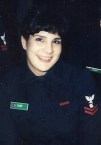
PN1 Dorian F. Howard, US Navy 1979 – 1990
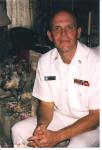


ENC Luke D. Howard, US Navy- Retired (1978 – 1999)


My husband & I met in 1986 and married the following March. Three months later, Luke deployed back to sea duty. His ship, (USS Butte AE-27)  was part of the USS Saratoga CV-60 battle group that was on deployment in the Mediterranean Sea. The year was 1987.  The mission was highly Top Secret so I didn’t hear from him for several months!   Ever heard of Operation Goldenrod ? Keeping secrets from your wife after only a few months of marriage can be deadly, however; this Navy wife understood completely!  And yes, we’re still married!


George Washington’s Thanksgiving Proclamation

Thanksgiving Proclamationf8e9d65d-94b5-3b02-9c66-74a7e4d35f2e
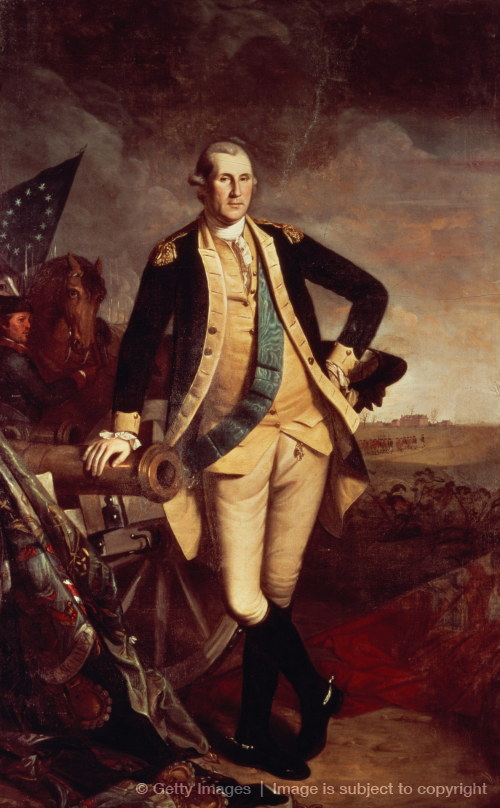
President George Washington
City of New York, October 3, 1789

 “Whereas it is the duty of all Nations to acknowledge the providence of Almighty God, to obey his will, to be grateful for his benefits, and humbly to implore his protection and favor, and Whereas both Houses of Congress have by their joint Committee requested me “to recommend to the People of the United States a day of public thanksgiving and prayer to be observed by acknowledging with grateful hearts the many signal favors of Almighty God, especially by affording them an opportunity peaceably to establish a form of government for their safety and happiness.”

Now therefore I do recommend and assign Thursday the 26th day of November next to be devoted by the People of these States to the service of that great and glorious Being, who is the beneficent Author of all the good that was, that is, or that will be. That we may then all unite in rendering unto him our sincere and humble thanks, for his kind care and protection of the People of this country previous to their becoming a Nation, for the signal and manifold mercies, and the favorable interpositions of his providence, which we experienced in the course and conclusion of the late war, for the great degree of tranquility, union, and plenty, which we have since enjoyed, for the peaceable and rational manner in which we have been enabled to establish constitutions of government for our safety and happiness, and particularly the national One now lately instituted, for the civil and religious liberty with which we are blessed, and the means we have of acquiring and diffusing useful knowledge and in general for all the great and various favors which he hath been pleased to confer upon us.

And also that we may then unite in most humbly offering our prayers and supplications to the great Lord and Ruler of Nations and beseech him to pardon our national and other transgressions, to enable us all, whether in public or private stations, to perform our several and relative duties properly and punctually, to render our national government a blessing to all the People, by constantly being a government of wise, just and constitutional laws, discreetly and faithfully executed and obeyed, to protect and guide all Sovereigns and Nations (especially such as have shown kindness unto us) and to bless them with good government, peace, and concord. To promote the knowledge and practice of true religion and virtue, and the increase of science among them and Us, and generally to grant unto all Mankind such a degree of temporal prosperity as he alone knows to be best.”

SUPPORT OUR PRESIDENT

The following was written by a dear friend of mine, whom I have known since my U.S. Navy days ~ way back when our country really was GREAT & then President Ronald Reagan led the American People with strength and our Military respectfully as Commander in Chief.  Then President Reagan, vowed to destroy the “Evil Empire” (referring of course, to the Iron Curtain countries) and low & behold~ the Berlin Wall came down & the Soviet Union was abolished by 1989. Indeed, with regard to his “Peace through Strength” doctrine, President Reagan responded to the Iranian attack on the USS Samuel B. Roberts, sailing in open waters of the Persian Gulf on 14 April 1988 with his approval of “Operation Praying Mantis“.

Mr. Reagan said, “They must know that we will protect our ships, and if they threaten us, they will pay a price.”

Operation Praying Mantis remains the largest surface battle engaged in by the U.S. Navy since World War II, and its outcome was decisive. According to official reports released afterward, using a combination of anti-ship missiles, naval gunfire, and aircraft launched from several ships, including the aircraft carrier the USS Enterprise, the Navy destroyed 2 oil platforms used by Iran for intelligence collection, sank 4 small Iranian Navy boats, sank an Iranian frigate, and severely damaged another Iranian warship.

But that was all on April 18, 1988. Back when the United States believed in delivering swift, decisive responses to enemy provocations. ~ JGT

FACEBOOK POST: February 16, 2017 by John M. Grashof, SMC, USN-Retired

What a bunch of crap. We get a guy in the white house who wants to do the right thing………and he gets attacked from all sides. Be it popular vote, electoral vote………..Trump won. He wants what the voters wanted. A wall. Keep possible terrorists out of the country. A better health plan that benefits EVERYONE. Better care for Veterans. Better jobs. Better pay. A fair trade deal with our trading partners, a stronger military……..The side show is the media, congress and the senate. The idiots in congress and senate say “We were here before he got here, and will be here after he leaves”………I get it. Checks and balances. But my gawd………….if its a good deal, makes sense, helps our economy, helps job growth, and is nothing but positive………..then for crying out loud…………..either reconsider your vote for scumbags like Nancy Pelosi and Chuck Schumer and all the other dopes that do nothing but hinder progress………..and make your voice heard loud and strong. TRUMP COULD CARE LESS ABOUT ANY RICHES HE GETS FROM HIS ELECTION. HE RAN BECAUSE HE THOUGHT HE COULD DO SOME GOOD……………Both parties are up in arms over Trumps decisions to date. Keep in mind. Not every senator, not every congressman are playing with a full deck. Trump admonished both senate and congress as being “DO NOTHINGS”……..He is right !!!!!!! They don’t do squat !!!! To them, its a lifelong career…….Its a good ole boy organization…….

I implore all those, that take sides in this political forum, go back some years and understand what this country is about………..and understand what has taken place to undermine our political system. Right is right, and wrong is wrong. God in our schools is right.. God out of our schools is wrong…….5 signs to say where one can pee is wrong, 2 signs to say where one can pee is right.

The sanctitity of the police in our society and what they stand for is good……..the notion that they are our enemies is bad.

The USA religion: Its Christianity. Our language is English. Abide, or feel free to find a better place to speak your language or practice your religion……..Why do the majority of this country have to cowtow to the minority ? …………What happened that the majority have to feel oppressed over their beliefs, and this “feel good society” has taken the front seat ? Seriously, whose toes are we stepping on ?………..Go to Iran, go to the majority of the middle east countries and practice your religion, your rights your beliefs as you do here in the USA and see what happens.

Back to Trump. He doesn’t need this headache. Guaranteed. He doesn’t. He has ALL he needs. He’s merely trying to do the right thing. Make America Great Again. Notice, there is no “Apology Tour” ?………He actually feels America is a great country. He said he would do what the voters wanted him to do…….but he has to deal with the “SWAMP”……..He is right !!! Washington is the Swamp !…….

He irks the GOP as well as the Dems. Its a power struggle.

This nation is divided. For sure. Over ideology. Over lots of stuff.

I know that a president cannot simply rule based on executive orders. Its not what our nation was built on. We need congress and the senate to play fair with the president. I’m not seeing this. What I’m seeing is many playing a power play……which may or may not be to the betterment of our country…..

In closing, please pray in earnest for this president. Please pray in earnest for this country. We are a diverse nation, many backgrounds, many various beliefs, etc……but, I believe this country has a guy in office right now who wants nothing but the best for this country……..Give Him the Support that he needs. He is less than 30 days in office and has been thru the ringer. Cut him some slack……..Pray for him that he sees his way thru the mud and slime and can make good on his promises.


Thanks, John;  for allowing me to post your patriotic opinion on my website. Affectionately, Dorian~

The Battle of Monmouth ~ June 28th 1778

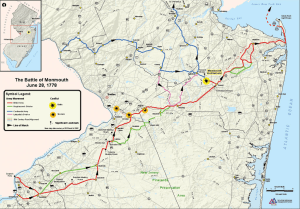
300px-BattleofMonmouthOn June 28, 1778, approximately 11,000 troops of the Continental Army (which included members of the New Jersey & Pennsylvania Militias) led by General George Washington & Major General Charles Lee, faced off against 14,500 British regulars led by Lieutenant General Sir Henry Clinton, Major General Earl Cornwallis and Major General Knyphausen at Monmouth Courthouse in New Jersey.
Although the Americans held the field and claimed victory, it is generally regarded as a draw, since the British were successful at defending their baggage train. This would be the last battle fought between the two MAIN armies as well as the longest. The remaining battles of the Revolutionary War would be fought by secondary forces in the southern states (colonies).

The Americans loved harassing the British by burning bridges, cutting down trees across roads & muddying wells & streams thus slowing down the march of the Redcoats and especially the Hessian troops who were carrying heavy backpacks & sweating profusely in the sweltering 98 degree June heat. Many of them fell from heat exhaustion and many more deserted. Indeed, the British only advanced about 40 miles a week!

As was his habit to dither & complain, General Lee continued advising Washington that he shouldn’t commit the American Army against British Regulars. However; in spite of Lee & his other generals, Washington ignored Lee’s advice because he knew that his troops are now trained and better equipped than they had been before and that he could not afford losing a major engagement at that point in the war. Yet; Washington also knew that the British would be vulnerable to attack since their army was now spread out widely across the state as he pursued them into New Jersey once leaving Valley Forge.

*Note: Washington & his army had spent the previous winter (1777/1778) in considerably deplorable conditions at Valley Forge, PA. Early on there was a lack of food and supplies. The Americans were suffering from starvation as well as influenza, dysentery, typhoid and typhus which killed two-thirds of the nearly 2,000 soldiers who died but the situation eventually improved with the proper issue of equipment and food rations. Once Washington put Prussian, Baron von Steuben in charge of training the American Regiments, morale improved and the Americans became eager to engage the British in the Spring.

The British left Philadelphia on 18th June 1778 and began the laborious march to the North-East into New Jersey. General Washington marched east from Valley Forge into New Jersey, determined to intercept the British. The two armies came face to face at Monmouth Courthouse, NJ.

General Washington moved his army forward with advanced force of some 4,000 troops which was designated to attack the marching British Army and cut it in half. He offered the command of this assault to Major General Charles Lee who eventually agreed to take charge once the troop force was increased to 5,000 men.  Lee had the task of attacking the British column in the flank and delaying it so that the main American army could come up and join the battle.NJ map Battle

The New Jersey militia warned that the British army was on the move so Washington ordered Lee to attack and bring the British withdrawal to a halt until he could bring up the main strength of the American army along the Monmouth Road. Lee lay to the west of the Middletown road and should have delivered a coordinated attack on the slow moving column. Properly executed, Lee could have halted the British withdrawal to the north east and enabled the main American army under Washington to attack from the rear.

However; history records that Lee gave no proper orders to his commanders and permitted them to commit their troops as they saw fit. Various skirmishes with small parties of British troops took place as Lee’s force moved tentatively forward towards the Middletown Road. Confused fighting broke out with Clinton’s rearguard, largely composed of British regiments. Finally, Lee ordered his troops to into a cowardly retreat on the main American army. As he withdrew down the road, Clinton launched his troops in pursuit.

General Washington, bringing the main American army along the Monmouth road, encountered, not the rear of the British column, but Lee’s regiments, retreating in considerable disorder with the British advancing behind them.

*Memorably this is the one occasion Washington is said to have sworn. He deployed a consignment of oaths directed at Lee, to the admiration of those listening, before ordering Lee to the rear. Washington then galloped forward and began the task of rallying Lee’s disordered troops.

Washington ordered General Wayne, with the last of Lee’s regiments, Stewart’s 13th Pennsylvania and Ramsay’s 3rd Maryland, to form to the North of the road and hold the British advance. These regiments resisted strongly but were driven back by the British 16th Light Dragoons. Their stand gave Washington the time to form the rest of the American army, with artillery on Comb’s Hill to the South of the road. Ferocious fighting took place as the British attempted to drive back the American line. This was the first test of Steuben’s re-trained American Continental Foot regiments and they withstood the trial well. As the evening wore on, the British troops fell back, and returned to their journey north, leaving the Americans on the field. ~ Dorian F. Howard© 2016

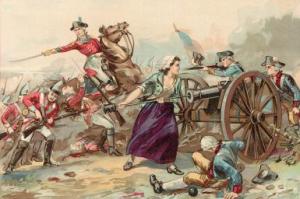
Illustration depicting American widow Mary Ludwig Hays McCauley (1754 - 1832), nicknamed 'Molly Pitcher,' stoking a cannon for the US Pennsylvania artillery in the Battle of Monmouth, during the American Revolutionary War, Freehold, New Jersey, June 1778. She replaced her fallen husband John Hays as a cannon loader. (Photo by Kean Collection/Getty Images)

The Battle of Monmouth is often remembered for the legend of “Molly Pitcher.” While many of the details regarding “Molly Pitcher” have been embellished or are in dispute, the story refers to a woman who brought water to American artillery during the battle. This water was intended for swabbing the guns during the reloading process as well as cooling the hot gun crew. In one version of the story she replaced her husband on a gun crew when he fell wounded or from heat stroke. The Molly Pitcher of Monmouth, New Jersey is generally identified Mary Ludwig Hayes. 


HISTORY & OBSERVATION OF “FLAG DAY” IN THE UNITED STATES

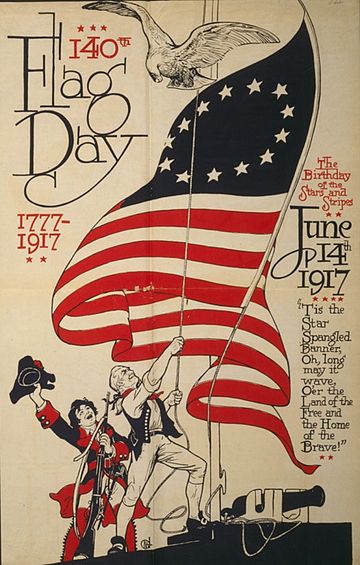
360px-US_Flag_Day_poster_1917Flag Day is a celebration of the adoption of the American flag by Continental Congress in the First Flag Resolution of June 14, 1777. Although the 200-year anniversary of this date was celebrated by flying flags on public buildings and holding remembrances in several cities, Flag Day wasn’t officially recognized until President Harry Truman signed it into law in 1949.  The week of June 14 is designated as “National Flag Week.” During National Flag Week, the president will issue a proclamation urging U.S. citizens to fly the American flag for the duration of that week. The flag should also be displayed on all Government buildings. Some organizations hold parades and events in celebration of our national flag and everything it represents. It’s also a time to remember and honor military men and women who defend our flag and our country. ~ JGT

HISTORY

The Fourth of July was traditionally celebrated as America’s birthday, but the idea of an annual day specifically celebrating the Flag is believed to have first originated in 1885. BJ Cigrand, a schoolteacher, arranged for the pupils in the Fredonia, Wisconsin Public School, District 6, to observe June 14 (the 108th anniversary of the official adoption of The Stars and Stripes) as ‘Flag Birthday’. In numerous magazines and newspaper articles and public addresses over the following years, Cigrand continued to enthusiastically advocate the observance of June 14 as ‘Flag Birthday’, or ‘Flag Day’.

On June 14, 1889, George Balch, a kindergarten teacher in New York City, planned appropriate ceremonies for the children of his school, and his idea of observing Flag Day was later adopted by the State Board of Education of New York. On June 14, 1891, the Betsy Ross House in Philadelphia held a Flag Day celebration, and on June 14 of the following year, the New York Society of the Sons of the Revolution, celebrated Flag Day.

Following the suggestion of Colonel J Granville Leach (at the time historian of the Pennsylvania Society of the Sons of the Revolution), the Pennsylvania Society of Colonial Dames of America on April 25, 1893 adopted a resolution requesting the mayor of Philadelphia and all others in authority and all private citizens to display the Flag on June 14th. Leach went on to recommend that thereafter the day be known as ‘Flag Day’, and on that day, school children be assembled for appropriate exercises, with each child being given a small Flag.

Two weeks later on May 8th, the Board of Managers of the Pennsylvania Society of Sons of the Revolution unanimously endorsed the action of the Pennsylvania Society of Colonial Dames. As a result of the resolution, Dr. Edward Brooks, then Superintendent of Public Schools of Philadelphia, directed that Flag Day exercises be held on June 14, 1893 in Independence Square. School children were assembled, each carrying a small Flag, and patriotic songs were sung and addresses delivered.

In 1894, the governor of New York directed that on June 14 the Flag be displayed on all public buildings. With BJ Cigrand and Leroy Van Horn as the moving spirits, the Illinois organization, known as the American Flag Day Association, was organized for the purpose of promoting the holding of Flag Day exercises. On June 14th, 1894, under the auspices of this association, the first general public school children’s celebration of Flag Day in Chicago was held in Douglas, Garfield, Humboldt, Lincoln, and Washington Parks, with more than 300,000 children participating.

Adults, too, participated in patriotic programs. Franklin K. Lane, Secretary of the Interior, delivered a 1914 Flag Day address in which he repeated words he said the flag had spoken to him that morning: “I am what you make me; nothing more. I swing before your eyes as a bright gleam of color, a symbol of yourself.”

Inspired by these three decades of state and local celebrations, Flag Day – the anniversary of the Flag Resolution of 1777 – was officially established by the Proclamation of President Woodrow Wilson on May 30th, 1916. While Flag Day was celebrated in various communities for years after Wilson’s proclamation, it was not until August 3rd, 1949, that President Truman signed an Act of Congress designating June 14th of each year as National Flag Day.  Courtesy of  USFlag.org:- The History Of Flag Day.

This Jersey Girl couldn’t let this article be complete without including a tidbit of New Jersey  history. ~JGT

1913, City of Paterson, New Jersey

During the 1913 Paterson silk strike, IWW leader “Big” Bill Haywood asserted that someday all of the world’s flags would be red, “the color of the working man’s blood.” In response, the city’s leaders (who opposed the strike) declared March 17 to be “Flag Day,” and saw to it that each of the city’s textile mills flew an American flag. This attempt by Paterson’s leaders to portray the strikers as un-American backfired when the strikers marched through the city with American flags of their own, along with a banner that stated:

WE WEAVE THE FLAG

WE LIVE UNDER THE FLAG

WE DIE UNDER THE FLAG

BUT DAM’D IF WE’LL STARVE UNDER THE FLAG.


TOMB OF THE UNKNOWN SOLDIER

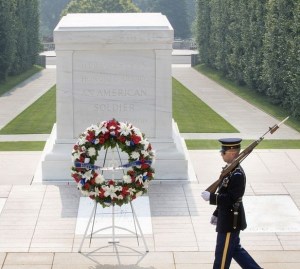
tomb-of-unknown-soldier-usa-12

1. How many steps does the guard take during his walk across the tomb of the Unknowns and why? They take 21 steps. This alludes to the twenty-one gun salute, which is the highest honor given any military or foreign dignitary.

2. How long does he hesitate after his about face to begin his return walk and why? It takes 21 seconds for the same reason as the answer above.

3. Why are his gloves kept wet? His gloves are moistened to prevent his losing his grip on the rifle.

4. Does he carry his rifle on the same shoulder all the time and if not, why not? He carries the rifle on the shoulder away from the tomb. After his march across the path, he executes an about face and moves the rifle to the outside shoulder.

5. How often are the guards changed? Guards are changed every thirty minutes, twenty-four hours a day, 365 days a year.

6. What are the physical traits of the guard limited to? For a person to apply for guard duty at the tomb, he must be between 5′ 10′ and 6′ 2′ tall and his waist size cannot exceed 30.’

Other Requirements of the Guard are:

  1. They must commit 2 years of life to guard the tomb, live in a barracks under the tomb, and cannot drink any alcohol on or off duty for the rest of their lives. They cannot swear in public for the rest of their lives and cannot disgrace the uniform {fighting} or the tomb in any way.
  2. After two years, the guard is given a wreath pin that is worn on their lapel signifying they served as guard of the tomb. There are only 400 presently worn. The guard must obey these rules for the rest of their lives or give up the wreath pin.
  3. The shoes are specially made with very thick soles to keep the heat and cold from their feet. There are metal heel plates that extend to the top of the shoe in order to make the loud click as they come to a halt.
  4. There are no wrinkles, folds or lint on the uniform. Guards dress for duty in front of a full-length mirror.
  5. The first six months of duty a guard cannot talk to anyone, nor watch Television.
  6. Every guard spends five hours a day getting his uniforms ready for guard duty.
  7. All off duty time is spent studying the 175 notable people laid to rest in Arlington National Cemetery. A guard must memorize who they are and where they are interred.

Among the notables are: President Taft, Joe E. Lewis {the boxer} and Medal of Honor winner Audie Murphy, {the most decorated soldier of WWII} of Hollywood fame.

ETERNAL REST GRANT THEM O LORD, AND LET PERPETUAL LIGHT SHINE UPON THEM.

In 2003 as Hurricane Isabelle was approaching Washington , DC , our US Senate/House took 2 days off with anticipation of the storm. On the ABC evening news, it was reported that because of the dangers from the hurricane, the military members assigned the duty of guarding the Tomb of the Unknown Soldier were given permission to suspend the assignment.

They respectfully declined the offer, ‘No way, Sir!’ Soaked to the skin, marching in the pelting rain of a tropical storm, they said that guarding the Tomb was not just an assignment, it was the highest honor that can be afforded to a serviceperson. The tomb has been patrolled continuously, 24/7, since 1930.

God Bless and Keep Them

Without sounding too self-serving, I’d like to add that all Americans should be very proud of our young men and women in the service of the United States of America no matter where they serve. ~JGT

tomb_of_the_unknown_soldier_-_nw_view_detail_-_arlington_national_cemetery_-_2012Duty – Honor – Country
IN GOD WE TRUST

THE HISTORY OF MEMORIAL DAY

 THE HISTORY OF MEMORIAL DAY ~ by Dorian F. Howard© (Jersey Girl & U.S. Navy Veteran)

Three years after the Civil War ended, on May 5, 1868, the head of an organization of Union veterans — the thDG2GUUZ6Grand Army of the Republic (GAR) — established Decoration Day as a time for the nation to decorate the graves of the war dead with flowers. It started as an event to honor Union soldiers, who had died during the American Civil War and was declared that Decoration Day should be observed yearly on May 30th. It is believed that date was chosen because flowers would be in bloom all over the country. The current name for this day, Memorial Day, did not come into use until after World War II. The first large observance was held that year at Arlington National Cemetery,** across the Potomac from Washington DC.  The ceremonies centered around the mourning-draped veranda of the Arlington mansion, once the home of Gen. Robert E. Lee. Various Washington officials, including Gen. and Mrs. Ulysses S. Grant, presided over the ceremonies. After speeches, children from the Soldiers’ and Sailors’ Orphan Home and members of the GAR made their way through the cemetery, strewing flowers on both Union and Confederate graves, reciting prayers and singing hymns.

NOTE**Arlington was for many years the estate of Colonel Robert E. Lee. At the onset of the Civil War, after first refusing the command of all Union forces, he volunteered his services to the Confederate Army. During the course of the war, his former estate was seized by the Union Army, which made it a headquarters. In 1864, with Union dead piling up throughout the Washington area, the search for a suitable site for a military cemetery resulted in a recommendation that Lee’s former estate be converted to a burial ground. Out of the death and destruction of the Civil War, was born Arlington National Cemetery.

By the end of the 19th century, Memorial Day ceremonies were being held on May 30 throughout the nation. State legislatures passed proclamations designating the day, and the Army and Navy adopted regulations for proper observance at their facilities. It was not until after World War I, however, that the day was expanded to honor those who have died in all American wars. In 1971, Memorial Day was declared a national holiday by an act of Congress, though it is still often called Decoration Day. It was then also placed on the last Monday in May, as were some other federal holidays.

Decoration Day and then Memorial Day used to be held on May 30, regardless of the day of the week, on which it fell. In 1968, the Uniform Holidays Bill was passed as part of a move to use federal holidays to create three-day weekends. This meant that that, from 1971, Memorial Day holiday has been officially observed on the last Monday in May. However, it took a longer period for all American states to recognize the new date.

To ensure the sacrifices of America’s fallen heroes are never forgotten, in December 2000, the U.S. Congress passed and the president signed into law “The National Moment of Remembrance Act,” P.L. 106-579, creating the White House Commission on the National Moment of Remembrance. The commission’s charter is to “encourage the people of the United States to give something back to their country, which provides them so much freedom and opportunity” by encouraging and coordinating commemorations in the United States of Memorial Day and the National Moment of Remembrance.

thXTV02NDRThe National Moment of Remembrance encourages all Americans to pause wherever they are at 3 p.m. local time on Memorial Day for a minute of silence to remember and honor those who have died in service to the nation.  As Moment of Remembrance founder Carmella LaSpada states: “It’s a way we can all help put the memorial back in Memorial Day.”

“Changing the date of Memorial Day merely to create a 3 day weekend has undermined the very meaning of the day. No doubt this has greatly contributed to the general public’s nonchalant observance of Memorial Day.” ~ VFW 2002 Memorial Day Address.

Memorial Day has become less of an occasion of remembrance. Many people choose to hold picnics, sports events and family gatherings on this weekend. This day is traditionally seen as the start of the summer season for cultural events. For the fashion conscious, it is seen as acceptable to wear white clothing, particularly shoes from Memorial Day until Labor Day. However, fewer and fewer people follow this rule and many wear white clothing throughout the year.

It is traditional to fly the flag of the United States at half mast from dawn until noon. Many people visit cemeteries and memorials, particularly to honor those who have died in military service. Many volunteers place an American flag on each grave in national cemeteries. Memorial Day used to be a solemn day of mourning, a sacred day of remembrance to honor those who paid the ultimate price for our freedoms. Businesses closed for the day. Towns held parades honoring the fallen, the parade routes often times ending at a local cemetery, where Memorial Day speeches were given and prayers offered up. People took the time that day to clean and decorate with flowers and flags the graves of those the fell in service to their country. We need to remember with sincere respect those who paid the price for our freedoms; we need to keep in sacred remembrance those who died serving their country. We need to never let them be forgotten. However, over the years the original meaning and spirit of Memorial Day has faded from the public consciousness. I consider it to be a national day of mourning. Do you?

On Memorial Day we need to stop and pay with sincere conviction our respects for those who died protecting and preserving the freedoms we enjoy, for we owe those honored dead more than we can ever repay. How many graves of our fallen do we in America leave dishonored by leaving their resting places forgotten and neglected? Unfortunately, when Congress made Memorial day into a mandatory three-day weekend in with the National Holiday Act of 1971 (P.L. 90 – 363), it made it all the easier for us to be distracted from the spirit and meaning of the day.

However, during their 2010 legislative session, the State of New Jersey passed legislation urging congress to Restore Memorial Day to its original observance day of May 30th.   Their bill is SR17. Thank you New Jersey. You make this Jersey Girl and U.S. Navy Veteran very proud! ~ JGT

In my opinion as well as those of others; in order to keep the number of three day Federal Holidays the same, Armed Forces day, the third weekend of every May, could easily become a three-day holiday. On that holiday we can celebrate our freedoms won and maintained by our Armed Forces – a three-day holiday to focus on our active duty men and women in uniform and to expressively show them our love and support.

thV7HD2Y5M

IN FLANDERS FIELDS

~ By Lieutenant Colonel John McCrae (18721918)

In Flanders fields the poppies blow
Between the crosses, row on row,
That mark our place: and in the sky
The larks still bravely singing fly
Scarce heard amid the guns below.

We are the dead: Short days ago,
We lived, felt dawn, saw sunset glow,
Loved and were loved: and now we lie
In Flanders fields!

Take up our quarrel with the foe
To you, from failing hands, we throw
The torch: be yours to hold it high
If ye break faith with us who die,
We shall not sleep, though poppies grow
In Flanders fields….
 

Composed at the battlefront on May 3, 1915
during the second battle of Ypres, Belgium


Christmas 1776 – The Battle of Trenton

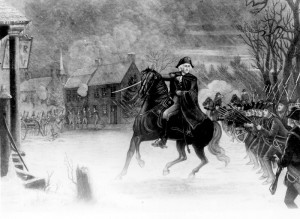
George-Washington--300x219

Christmas of 1776 marked the first major victory for the Continental Army.  Several months earlier, General Washington’s troops lost New York City to the British and eventually retreated south.  The British army chased the Americans through New Jersey and Delaware en route to Philadelphia, the Continental capital.  The situation was made even more dire by the prospect of a vastly reduced number of Continental troops after December 31, when enlistments were due to expire.

In early December the Continental Army crossed the Delaware and destroyed or captured all watercraft for a 75-mile stretch along the river to deter the British from crossing.  The British leaders evidently thought the Continental Army was no threat, and General Howe decided to move his men into winter quarters in Trenton, Pennington and Bordentown, New Jersey, with a base of operations in Brunswick.

Washington decided to make a bold move and attack Trenton, where Hessian troops were wintering.  On December 25, the Americans formed into three divisions and were to cross the river at three separate locations once night fell.  Washington personally led one division.  The weather was poor.  Ice chunks were floating in the river, and the falling snow soon turned to sleet and hail driven by a bitterly cold wind.  Once the troops – many lacking warm winter clothing and shoes – crossed the river, they marched nine miles to the town of Trenton.  The Hessian soldiers were celebrating Christmas in a traditional German style, never expecting an attack on the morning of December 26.

The Continental Army’s overwhelming victory at Trenton had several important consequences.  The Americans managed to capture more than 900 men and their weapons and accouterments, and lost only two soldiers.  British General Howe was so stunned by the outcome of Trenton that he sent for General Cornwallis, who was about to board a ship for England, to return to New Jersey to command the army.  For the American cause, Trenton was a great morale booster, and General Washington became an overnight hero! 

Article courtesy of http://www.historyisfun.org/blog/christmas-1776/

US NAVY SAILOR’S “T’was The Night Before Christmas”

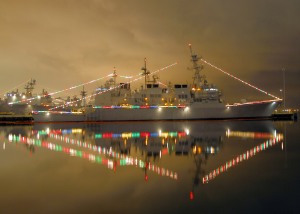
USS John Paul Jones (DDG 53)

USS John Paul Jones (DDG 53)

T’was the night before Christmas, the ship was out steaming,
Sailors stood watch while others were dreaming.
They lived in a crowd with racks tight and small,
In a 40-man berthing, cramped one and all.

I had come down the stack with presents to give,
And to see inside just who might perhaps live.
I looked all about, a strange sight did I see,
No tinsel, no presents, not even a tree.

No stockings were hung, shined boots close at hand,
On the bulkhead hung pictures of a far distant land.
They had medals and badges and awards of all kind,
And a sober thought came into my mind.

For this place was different, so dark and so dreary,
I had found the house of a Sailor, once I saw clearly.
A Sailor lay sleeping, silent and alone,
Curled up in a rack and dreaming of home.

The face was so gentle, the room squared away,
This was the United States Sailor today.
This was the hero we saw on TV,
Defending our country so we could be free.

I realized the families that I would visit this night,
Owed their lives to these Sailors lay willing to fight.
Soon round the world, the children would play,
And grownups would celebrate on Christmas Day.

They all enjoyed freedom each day of the year,
Because of the Sailor, like the one lying here.
I couldn’t help wonder how many lay alone,
On a cold Christmas Eve on a sea, far from home.

The very thought brought a tear to my eye,
I dropped to my knees and started to cry.
The Sailor awakened and I heard a calm voice,
“Santa, don’t cry, this life is my choice.”

“Defending the seas all days of the year,
So others may live and be free with no fear.”
I thought for a moment, what a difficult road,
To live a life guided by honor and code.

After all it’s Christmas Eve and the ship’s underway!
But freedom isn’t free and it’s sailors who pay.
The Sailor say’s to our country “be free and sleep tight,
No harm will come, not on my watch and not on this night.”

The Sailor rolled over and drifted to sleep,
I couldn’t control it, I continued to weep.
I kept watch for hours, so silent, so still,
I watched as the Sailor shivered from the night’s cold chill.

I didn’t want to leave on that cold dark night,
This guardian of honor so willing to fight.
The Sailor rolled over and with a voice strong and sure,
Commanded, “Carry on Santa, It’s Christmas, and All is Secure!”

Merry Christmas to all my brothers & sisters currently serving on active duty, in the reserves, retired or veterans (like me). Fair Winds & Following Seas!  Never Forget; WE OWN THE SEAS!~ JGT

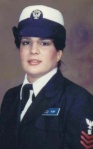
DoriNavy1stClass (4)

USN 1979 – 1990

0817-02TheSeaIsOurs