Source: SECOND DECLARATION OF CAUSES – FIRST ROUGH DRAFT 05/17/2015
Author: jerseygirltoday
HISTORY OF THE CRUSADES
THE CRUSADES
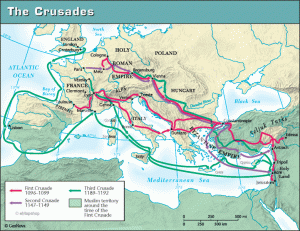 In 1095 an assembly of churchmen called by Pope Urban II met at Clermont, France. Messengers from the Byzantine Emperor Alexius Comnenus had urged the pope to send help against the armies of Muslim Turks. On November 27 the pope addressed the assembly and asked the warriors of Europe to liberate the Holy Land from the Muslims. The response of the assembly was overwhelmingly favorable. Thus was launched the first and most successful of at least eight crusades against the Muslim caliphates of the Near East.
“God wills it!”
That was the battle cry of the thousands of Christians who joined crusades to free the Holy Land from the Muslims. From 1096 to 1270 there were eight major crusades and two children’s crusades, both in the year 1212. Only the First and Third Crusades were successful. In the long history of the Crusades, thousands of knights, soldiers, merchants, and peasants lost their lives on the march or in battle.
1095: Beginning of the Crusades
In 1095 an assembly of churchmen called by Pope Urban II met at Clermont, France. 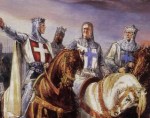 Messengers from the Byzantine Emperor Alexius Comnenus had urged the pope to send help against the armies of Muslim Turks. On November 27 the pope addressed the assembly and asked the warriors of Europe to liberate the Holy Land from the Muslims. The response of the assembly was overwhelmingly favorable. Thus was launched the first and most successful of at least eight crusades against the Muslim caliphates of the Near East.
The word “crusade” literally means “going to the Cross.” Hence the idea at the time was to urge Christian warriors to go to Palestine and free Jerusalem and other holy places from Muslim domination. The first crusade was a grand success for the Christian armies; Jerusalem and other cities fell to the knights. The second crusade, however, ended in humiliation in 1148, when the armies of France and Germany failed to take Damascus. The third ended in 1192 in a compromise between English king Richard the Lion-Hearted of England and the Muslim leader Saladin, who granted access to Christians to the holy places. The fourth crusade led to the sacking of Constantinople, where a Latin Kingdom of Byzantium was set up in 1204 and lasted for about 60 years. The Children’s Crusade of 1212 ended with thousands of children being sold into slavery, lost, or killed. Other less disastrous but equally futile crusades occurred until nearly the end of the 13th century. The last Latin outpost in the Muslim world fell in 1291.
Historians have viewed the Crusades as a mixture of benefits and horrors. On one hand, there was a new knowledge of the East and the possibilities of trade to be found there, not to mention the spread of Christianity. On the other hand, Christianity was spread in a violent, militaristic manner, and the result was that new areas of possible trade turned into new areas of conquest and bloodshed. A number of non-Christians lost their lives to Christian armies in this era, and this trend would continue in the inquisitions of the coming centuries.
The Crusades were a series of wars by Western European Christians to recapture the Holy Land from the Muslims. The Crusades began in 1095 and ended in the mid- or late 13th century. The term Crusade was originally applied solely to European efforts to retake from the Muslims the city of Jerusalem, which was sacred to Christians as the site of the crucifixion of Jesus Christ. It was later used to designate any military effort by Europeans against non-Christians.
The Crusaders carved out feudal states in the Near East. Thus the Crusades are an important early part of the story of European expansion and colonialism. They mark the first time Western Christendom undertook a military initiative far from home, the first time significant numbers left to carry their culture and religion abroad.
In addition to the campaigns in the East, the Crusading movement includes other wars against Muslims, pagans, and dissident Christians and the general expansion of Christian Europe. In a broad sense the Crusades were an expression of militant Christianity and European expansion. They combined religious interests with secular and military enterprises. Christians learned to live in different cultures, which they learned and absorbed; they also imposed something of their own characteristics on these cultures. The Crusades strongly affected the imagination and aspirations of people at the time, and to this day they are among the most famous chapters of medieval history.
ORIGINS OF THE CRUSADES
After the death of Charlemagne, king of the Franks, in 814 and the subsequent collapse of his empire, Christian Europe was under attack and on the defensive. Magyars, nomadic people from Asia, pillaged eastern and central Europe until the 10th century. Beginning about 800, several centuries of Viking raids disrupted life in northern Europe and even threatened Mediterranean cities. But the greatest threat came from the forces of Islam, militant and victorious in the centuries following the death of their leader, Muhammad, in 632. By the 8th century, Islamic forces had conquered North Africa, the eastern shores of the Mediterranean, and most of Spain. Islamic armies established bases in Italy, greatly reduced the size and power of the Byzantine Empire (the Eastern Roman Empire) and besieged its capital, Constantinople. The Byzantine Empire, which had preserved much of the classical civilization of the Greeks and had defended the eastern Mediterranean from assaults from all sides, was barely able to hold off the enemy. Islam posed the threat of a rival culture and religion, which neither the Vikings nor the Magyars had done.
In the 11th century the balance of power began to swing toward the West. The church became more centralized and stronger from a reform movement to end the practice whereby kings installed important clergy, such as bishops, in office. Thus for the first time in many years, the popes were able to effectively unite European popular support behind them, a factor that contributed greatly to the popular appeal of the first Crusades.
Furthermore, Europe’s population was growing, its urban life was beginning to revive, and both long distance and local trade were gradually increasing. European human and economic resources could now support new enterprises on the scale of the Crusades. A growing population and more surplus wealth also meant greater demand for goods from elsewhere. European traders had always looked to the Mediterranean; now they sought greater control of the goods, routes, and profits. Thus worldly interests coincided with religious feelings about the Holy Land and the pope’s newfound ability to mobilize and focus a great enterprise.
THE FIRST CRUSADE
It was against this background that Pope Urban II, in a speech at Clermont in France in November 1095, called for a great Christian expedition to free Jerusalem from the Seljuk Turks, a new Muslim power that had recently begun actively harassing peaceful Christian pilgrims traveling to Jerusalem. The pope was spurred by his position as the spiritual head of Western Europe, by the temporary absence of strong rulers in Germany (the Holy Roman Empire) or France who could either oppose or take over the effort, and by a call for help from the Byzantine emperor, Alexius I. These various factors were genuine causes, and at the same time, useful justifications for the pope’s call for a Crusade. In any case, Urban’s speech—well reported in several chronicles—appealed to thousands of people of all classes. It was the right message at the right time.
The First Crusade was successful in its explicit aim of freeing Jerusalem. It also established a Western Christian military presence in the Near East that lasted for almost 200 years. The Crusaders called this area Outremer, French for “beyond the seas.” The First Crusade was the wonder of its day. It attracted no European kings and few major nobles, drawing mainly lesser barons and their followers. They came primarily from the lands of French culture and language, which is why Westerners in Outremer were referred to as Franks.
The Crusaders faced many obstacles. They had no obvious or widely accepted leader, no consensus about relations with the churchmen who went with them, no definition of the pope’s role, and no agreement with the Byzantine emperor on whether they were his allies, servants, rivals, or perhaps enemies. These uncertainties divided the Crusaders into factions that did not always get along well with one another.
Different leaders followed different routes to Constantinople, where they were all to meet. The contingents of Robert of Flanders and Bohemond of Taranto went by sea via Italy, while the other major groups, those of Godfrey of Bouillon and Raymond of Toulouse, took the land route around the Adriatic Sea. As the Crusaders marched east, they were joined by thousands of men and even women, ranging from petty knights and their families, to peasants seeking freedom from their ties to the manor. A vast miscellany of people with all sorts of motives and contributions joined the march. They followed local lords or well-known nobles or drifted eastward on their own, walking to a port town and then sailing to Constantinople. Few knew what to expect. They knew little about the Byzantine Empire or its religion, Eastern Orthodox Christianity. Few Crusaders understood or had much sympathy for the Eastern Orthodox religion, which did not recognize the pope, used the Greek language rather than Latin, and had very different forms of art and architecture. They knew even less about Islam or Muslim life. For some the First Crusade became an excuse to unleash savage attacks in the name of Christianity on Jewish communities along the Rhine.
The leaders met at Constantinople and chose to cross on foot the inhospitable and dangerous landscape of what is now Turkey, rather than going by sea. Somehow, despite this questionable decision, the original forces of perhaps 25,000 to 30,000 still survived in sufficient numbers to overcome the Muslim states and principalities of what are now Syria, Lebanon, and Israel. Like Western Christendom, Islam was disunited. Its rulers failed to anticipate the effectiveness of the enemy. In addition, the Franks, as the attacking force, had at least a temporary advantage. They exploited this, taking the key city of Antioch in June 1098, under the lead of Bohemond of Taranto. Then, despite their divisions and factionalism, they moved on to Jerusalem. The siege of Jerusalem culminated in a bloody and destructive Christian victory in July 1099, in which many of the inhabitants were massacred.
With victory came new problems. Many Crusaders saw the taking of Jerusalem as the goal; they were ready to go home. Others, especially minor nobles and younger sons of powerful noble families, saw the next step as the creation of a permanent Christian presence in the Holy Land. They looked to build feudal states like those of the West. They hoped to transplant their military culture and to carve out fortunes on the new frontier. Though the Crusaders were more intolerant than understanding of Eastern life, they recognized its riches. They also saw such states as the way to protect the routes to the Holy Land and its Christian sites. The result was the establishment of the Latin Kingdom of Jerusalem, first under Godfrey of Bouillon, who took the title of Defender of the Holy Sepulchre, and then under his brother Baldwin, who ruled as king. In addition to the Latin Kingdom, which was centered on Jerusalem, three other Crusader states were founded: the County of Tripoli, in modern Lebanon; the Principality of Antioch, in modern Syria; and the County of Edessa, in modern northern Syria and southern Turkey.
CRUSADES OF THE 12TH CENTURY
The Crusades of the 12th century, through the end of the Third Crusade in 1192, illustrate the tensions and problems that plagued the enterprise as a whole. For the lords of Outremer a compromise with the residents and Muslim powers made sense; they could not live in constant warfare. And yet as European transplants they depended on soldiers and resources from the West, which were usually only forthcoming in times of open conflict. Furthermore, rivalries at home were translated into factional quarrels in Outremer that limited any common policy among the states. Nor was the situation helped by the arrival of European princes and their followers, as happened when the Second and Third Crusades came East; European tensions and jealousies proved just as divisive in the East as they had been at home.
There is little reason to think that colonization had been anticipated or encouraged by the pope, let alone by the Byzantine emperor; however, it seems a logical consequence of the Crusade’s success. Frankish nobles maintained links with their families at home, and they built lives and careers that spanned the Mediterranean. Moreover, in town and countryside, daily life in the region did not alter greatly; one military master was much like another. Christian lords had no plan for mass conversion of the natives or for any systematic mistreatment comparable to modern genocide or enforced migration. They wanted to maintain their privileged position and to enjoy the lives of European nobles in a new setting. As they settled in, they gradually lost interest in any papal efforts at raising new military expeditions. Nor did they ever reach any real compromise with the Byzantine emperor regarding reconquered territory that had once been his. Although the two groups of Christians had a common enemy, this was not a sufficient motive for cooperation between worlds with so little mutual regard.
To the rulers of Muslim states a concerted military effort was imperative. The Franks were an affront to religious as well as to political and economic interests. The combination of zeal and luck that had enabled the Crusaders to triumph in 1099 evaporated in the face of such realities as the need to recruit and maintain soldiers who were loyal and effective. Islamic rulers turned almost at once to the offensive, though a major blow to Christian power did not come until 1144, when the Muslims recaptured Edessa, on the Euphrates River. The city of Edessa had guarded the back door of the Frankish holdings, which were mostly near the coast. This loss marked the beginning of the end of a viable Christian military bastion against Islam.
News of the fall of Edessa reverberated throughout Europe, and the Second Crusade was called by Pope Eugenius III. Though the enthusiasm of 1095 was never again matched, a number of major figures joined the Second Crusade, including Holy Roman Emperor Conrad III and France’s King Louis VII. Conrad made the mistake of choosing the land route from Constantinople to the Holy Land and his army was decimated at Dorylaeum in Asia Minor. The French army was more fortunate, but it also suffered serious casualties during the journey, and only part of the original force reached Jerusalem in 1148. In consultation with King Baldwin III of Jerusalem and his nobles, the Crusaders decided to attack Damascus in July. The expedition failed to take the city, and shortly after the collapse of this attack, the French king and the remains of his army returned home. The Second Crusade resulted in many Western casualties and no gains of value in Outremer. In fact the only military gains during this period were made in what is now Portugal, where English troops, which had turned aside from the Second Crusade, helped free the city of Lisbon from the Moors.
After the failure of the Second Crusade, it was not easy to see where future developments would lead. In the 1120s and 1130s the Military Religious Orders had been created to further the Crusading ideal by combining spirituality with the martial ideas of knighthood and chivalry. Men who joined the orders took vows of chastity and obedience patterned after those of monasticism. At the same time they were professional soldiers, willing to spend long periods in the East. The most famous were the Knights of St. John of Jerusalem, called Hospitalers, and the Poor Knights of Christ and of the Temple of Solomon, called Templars. These groups sent men to Outremer to protect Christian pilgrims and settlements in the east. This meant that the rulers in Outremer did not have to depend only on the huge but wayward armies led by princes. These orders of Crusading knights tried to mediate between the Church’s concerns and the more worldly interests of princes who saw the East as an extension of their own ambitions and dynastic policies.
After the Second Crusade these orders began steadily to gain popularity and support. As they attracted men and wealth, and as the Crusading movement became part of the extended politics of Western Europe, the orders themselves became players in European politics. They established chapters throughout the West, both as recruiting bases and as a means to funnel money to the East; they built and fortified great castles; they sat on the councils of princes; and they too became rich and entrenched.
In the years between the failure of the Second Crusade and 1170, when the Muslim prince Saladin came to power in Egypt, the Latin States were on the defensive but were able to maintain themselves. But in 1187 Saladin inflicted a major defeat on a combined army at Hattin and subsequently took Jerusalem. The situation had become dire. In response to the Church’s call for a new, major Crusade, three Western rulers undertook to lead their forces in person. These were Richard I, the Lion-Hearted of England, Philip II of France, and Frederick I, called Frederick Barbarossa, the Holy Roman Emperor. Known as the Third Crusade, it has become perhaps the most famous of all Crusades other than the First Crusade, though its role in legend and literature greatly outweighs its success or value.
The three rulers were rivals. Richard and Philip had long been in conflict over the English holdings in France. Though English kings had inherited great fiefs in France, their homage to the French king was a constant source of trouble. Frederick Barbarossa, old and famous, died in 1189 on the way to the Holy Land, and most of his armies returned to Germany following his death. Philip II had been spurred into taking up the Crusade by a need to match his rivals, and he returned home in 1191 with little concern for Eastern glories. But Richard, a great soldier, was very much in his element. He saw an opportunity to campaign in the field, to establish links with the local nobility, and to speak as the voice of the Crusader states. Though he gained much glory, the Crusaders were unable to recapture Jerusalem or much of the former territory of the Latin Kingdom. They did succeed, however, in wrestling from Saladin control of a chain of cities along the Mediterranean coast. By October 1192, when Richard finally left the Holy Land, the Latin Kingdom had been reconstituted. Smaller than the original kingdom and considerably weaker militarily and economically, the second kingdom lasted precariously for another century.
CRUSADES OF THE 13TH CENTURY
After the disappointments of the Third Crusade, Western forces would never again threaten the real bases of Muslim power. From that point on, they were only able to gain access to Jerusalem through diplomacy, not arms.
In 1199 Innocent III called for another Crusade to recapture Jerusalem. In preparation for this Crusade, the ruler of Venice agreed to transport French and Flemish Crusaders to the Holy Land. However, the Crusaders never fought the Muslims. Unable to pay the Venetians the amount agreed upon, they were forced to bargain with the Venetians. They agreed to take part in an attack on one of the Venetians’ rivals, Zara, a trading port on the Adriatic Sea, in the nearby Kingdom of Hungary. When Innocent III learned of the expedition, he excommunicated the participants, but the combined force captured Zara in 1202. The Venetians then persuaded the Crusaders to attack the Byzantine capital of Constantinople, which fell on April 13, 1204. For three days the Crusaders sacked the city. Subsequently the Venetians gained a monopoly on Byzantine trade. The Latin Empire of Constantinople was established, which lasted until the recapture of Constantinople by the Byzantine emperor in 1261. In addition, several new Crusader states sprang up in Greece and along the Black Sea. The Fourth Crusade did not even threaten the Muslim powers. Trade and commerce had triumphed, as Venice had hoped, but at the cost of irreparably widening the rift between the Eastern and Western churches.
Crusades after the Fourth were not mass movements. They were military enterprises led by rulers moved by personal motives. Holy Roman Emperor Frederick II vowed to lead a Crusade in 1215, but for domestic political reasons postponed his departure. Under pressure from Pope Gregory IX, Frederick and his army finally sailed from Italy in August 1227, but returned to port within a few days because Frederick had fallen ill. The pope, outraged at this further delay, promptly excommunicated the emperor. Undaunted, Frederick embarked for the Holy Land in June 1228. There he conducted his unconventional Crusade almost entirely by diplomatic negotiations with the Egyptian sultan. These negotiations produced a peace treaty by which the Egyptians restored Jerusalem to the Crusaders and guaranteed a ten-year respite from hostilities. However, Frederick was ridiculed in Europe for using diplomacy rather than the sword.
In 1248 Louis IX, Saint Louis of France, decided that his obligations as a son of the Church outweighed those of his throne, and he left his kingdom for a six-year adventure. Since the base of Muslim power had shifted to Egypt, Louis did not even march on the Holy Land; any war against Islam now fit the definition of a Crusade. Louis and his followers landed in Egypt on June 5, 1249, and the following day captured Damietta. The next phase of their campaign, an attack on Cairo in the spring of 1250, proved to be a catastrophe. The Crusaders failed to guard their flanks, and as a result the Egyptians retained control over the water reservoirs along the Nile. By opening the sluice gates, they created floods that trapped the whole Crusading army, and Louis was forced to surrender in April 1250. After paying an enormous ransom and surrendering Damietta, Louis sailed to Palestine, where he spent four years building fortifications and strengthening the defenses of the Latin Kingdom. In the spring of 1254 he and his army returned to France.
King Louis also organized the last major Crusade, in 1270. This time the response of the French nobility was unenthusiastic, and the expedition was directed against the city of Tunis rather than Egypt. It ended abruptly when Louis died in Tunisia during the summer of 1270.
The tale of the Crusader states, after the mid-13th century, is a sad and short one. Though popes, some zealous princes—including Edward I of England—and various religious and political thinkers continued to call for a Crusade to unite the warring armies of Europe and to deliver a smashing blow to Islam, later efforts were too small and too sporadic to do more than buy time for the Crusader states. With the fall of ‘Akko (Acre) in 1291, the last stronghold on the mainland was lost, though the military religious orders kept garrisons on Cyprus and Rhodes for some centuries. However, the Crusading impulse was not dead. As late as 1396 a large expedition against the Ottoman Turks in the Balkans, summoned by Sigismund of Hungary, drew knights from all over the West. But a crushing defeat at Nicopolis (Nikopol) on the Danube River also showed that the appeal of these ventures far outstripped the political and military support needed for their success.
OTHER CRUSADES
The expeditions to Outremer are thought of as the Crusades. Military-Christian enterprises and expeditions elsewhere are easily branded as misdirected or perverted Crusades, but there is really no significant difference between them. Medieval Christendom perceived itself as having a right or duty to expand, to convert and dominate Muslims and pagans, and to bring dissident Christians back to the fold. When English forces helped take Lisbon from the Moors in 1147, they were carrying out what seemed the true purpose of a Crusade. This was also true for German soldiers under the banner of the Teutonic Knights when they imposed Christianity on the pagans of eastern Germany and the Baltic in the 12th and 13th centuries.
Since the Crusades had become the militant arm of Christian society, it seemed only logical to launch the Albigensian Crusade (see Albigenses). This was a war fought by the French kings and their vassals against heretics in the south of France from around 1210 to 1229. This use of the Crusading banner seems a hypocritical smoke screen, as the French knights took the lands of their enemies, savaged by the people, and became the new feudal lords. But the distinction between what happened in France, in Jerusalem, or in Rîga in the Baltic was one of place and time, not of essence.
As late as the 15th century, this extension of the Crusading ideal to areas outside the Holy Land was a powerful force when directed against a specific opponent. When national feeling and the adoption of religious ideas later associated with the Protestants made Bohemia a threat to European stability, at least in the eyes of the Holy Roman Empire and the pope, a Crusade was declared against Hussites, who were named for John Hus, their first leader. Some decried this as a false Crusade, saying that greed was being sanctified by ecclesiastical banners. But most of Europe endorsed the brutal warfare and the reimposition of Catholicism. This was, in their eyes, a Crusade for Christ’s church and people, as valid as any of the expeditions to the Holy Land.
CONSEQUENCES AND CONCLUSION
When judged by narrow military standards, the Crusades were a failure. What was gained so quickly was slowly but steadily lost. On the other hand, to hold territory under a Christian banner so far from home, given the contemporary conditions of transport and communication, was impressive. The taking of Constantinople during the Fourth Crusade had been just short of fatal to the Byzantine Empire, and it cast a blemish on the movement in the West, where there were critics of the whole concept of armed Crusades. While Constantinople was not taken by the Turks until 1453, the Byzantine Empire after the Fourth Crusade was but a shell of its former self.
For many years, scholars were inclined to give the Crusades credit for making Western Europe more cosmopolitan. They believed the Crusades had brought Western Europe higher standards of Eastern medicine and learning, Greek and Muslim culture, and such luxuries as silks, spices, and oranges. Extreme statements of this view held that the Crusades brought Europe out of the provincialism of the Dark Ages.
Scholars no longer accept this assessment. It is too simple. It ignores the larger trends of population growth, expanding trade, and the exchange of ideas and cultures that existed long before 1095. These trends would have encouraged East-West exchange without military expeditions or the taking of Jerusalem. The Crusades, while an exciting and integral part of the Middle Ages, merely served to hasten changes that were inevitable.
The most important effect of the Crusades was economic. The Italian cities prospered from the transport of Crusaders and replaced Byzantines and Muslims as merchant-traders in the Mediterranean. Trade passed through Italian hands to Western Europe at a handsome profit. This commercial power became the economic base of the Italian Renaissance. It also provoked such Atlantic powers as Spain and Portugal to seek trade routes to India and China. Their efforts, through such explorers as Vasco da Gama and Christopher Columbus, helped to open most of the world to European trade dominance and colonization and to shift the center of commercial activity from the Mediterranean to the Atlantic.
VICTORY!: President Obama Guarantees All Military Working Dogs Retirement On U.S. Soil
Article Courtesy of World Animal News, November 29, 2015 By: Ginn Andrews
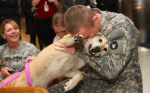 President Obama has signed the 2016 National Defense Authorization Act, which guarantees all military service dogs a ride home and retirement on U.S. soil.
In addition, the handlers who served bravely alongside them will be given the first rights to adopt these canine heroes. Previously, military dogs were retired overseas and it was extremely difficult for handlers to bring the dogs back to the U.S.
There are many to thank for the passing of this act, including military dog advocates Congressman Frank LoBiondo and Senator Claire McCaskill who introduced this language in the House and Senate. Many animal lovers and supporters sent letters to their representatives asking them to support this essential bill.
“I am proud the President and Congress recognized the sacrifice and status of all of those that serve, including our military working dogs. As someone fortunate enough to have a retired MWD in my family, I know that these brave dogs deserve an opportunity to return home and enjoy their retirement,” said Bonnie-Jill Laflin, founder of Hounds and Heroes, an organization dedicated to raising funds for ALL Heroes including military, vets, first responders and animals.
To support Hounds and Heroes, please VISIT: http://www.houndsandheroes.com.
President Ronald Reagan’s Thanksgiving Day Proclamation 1981
Happy Thanksgiving!

 America has much for which to be thankful. The unequaled freedom enjoyed by our citizens has provided a harvest of plenty to this nation throughout its history. In keeping with America’s heritage, one day each year is set aside for giving thanks to god for all of His blessings. On this day of thanksgiving, it is appropriate that we recall the first thanksgiving, celebrated in the autumn of 1621. After surviving a bitter winter, the Pilgrims planted and harvested a bountiful crop. After the harvest they gathered their families together and joined in celebration and prayer with the Native Americans who had taught them so much. Clearly our forefathers were thankful not only for the material well being of their harvest but for this abundance of goodwill as well.
In this spirit, Thanksgiving has become a day when Americans extend a helping hand to the less fortunate. Long before there…
View original post 223 more words
George Washington’s Thanksgiving Proclamation
Thanksgiving Proclamation
President George Washington
City of New York, October 3, 1789
“Whereas it is the duty of all Nations to acknowledge the providence of Almighty God, to obey his will, to be grateful for his benefits, and humbly to implore his protection and favor, and Whereas both Houses of Congress have by their joint Committee requested me “to recommend to the People of the United States a day of public thanksgiving and prayer to be observed by acknowledging with grateful hearts the many signal favors of Almighty God, especially by affording them an opportunity peaceably to establish a form of government for their safety and happiness.”
Now therefore I do recommend and assign Thursday the 26th day of November next to be devoted by the People of these States to the service of that great and glorious Being, who is the beneficent Author of all the good that…
View original post 297 more words
“Anonymous” just released something to help EVERYONE fight ISIS…
Written by Michele Hickford, Editor-in-Chief on November 19, 2015
 There’s an interesting counter-terrorism movement afoot against ISIS. It’s not centrally organized. It belongs to no nation. It sheds no blood (as of yet). And you can join!
As USA Today reports, the “hacktivist” group Anonymous has managed to shut down more than 6,000 Twitter accounts so far, and is also targeting other social media accounts and websites.
Now the group is ratcheting up its efforts by publishing an online guide for inexperienced hackers to help join the fight.
You can access one of the guides right here.
I will admit to being a complete “noob” (newbie) where all of this is concerned, but am enjoying the swift response by Anonymous against ISIS (something our own leaders seem incapable of).
Here’s a snippet of the guide:
There is a system, made by a fellow anon, that has been deployed before. The system acts like a botnet to collect, coordinate, and take down targets. It is comprised of a “loader” that uploads the targets to a protected and secure command and control system. This system also discards duplicates, verifies targets as still active, and distributes them to the pool of active participants in real time. The c&c may then be used by “bots”that will perform certain actions. Many different types of bots may be constructed and used. For example, there are several forms of twittebots. One which simply files complaints with twitter (for those who want to help but notcmmit crimes). Other forms of bots will attempt to brute force targets, fileexcessive password resets, spam, etc. In other words, any form of attack that be conceived may be constructed and executed. This system coordinates all of the efforts so that they are all working together and sharing to ensure a highly effective fighting force. Its results are staggering. When people work together, they are unstoppable.
These bots are completely legal and violate no laws. However, you might consider creating a new twitter account. Thank you for your support. F**k isis.
After Anonymous announced its success yesterday, ISIS was quick to call the group “idiots” and has quickly posted its own online guide, which was immediately mocked by the hacker community as “some of the lamest and n00bish recommendations you’ll read and show the group’s lack of cyber skills.”
I have to admit “do not talk to people you don’t know” does sound pretty lame, even to my n00bish self (side note: when I was growing up, we called that type of person a “nebbish”)

Brother & Sister Americans~ this is truly the 21st century battlefield, and we are ALL in it whether we want to be or not. So, prepare yourselves to protect your family & friends. As a US Navy Veteran and supporter of ALL American Constitutional Rights, I wholeheartedly suggest that you be extremely vigilant at all times & if you don’t have one already… Buy A Gun! ~ JGT
[Note: This article was written by Michele Hickford]
HISTORY OF VETERAN’S DAY
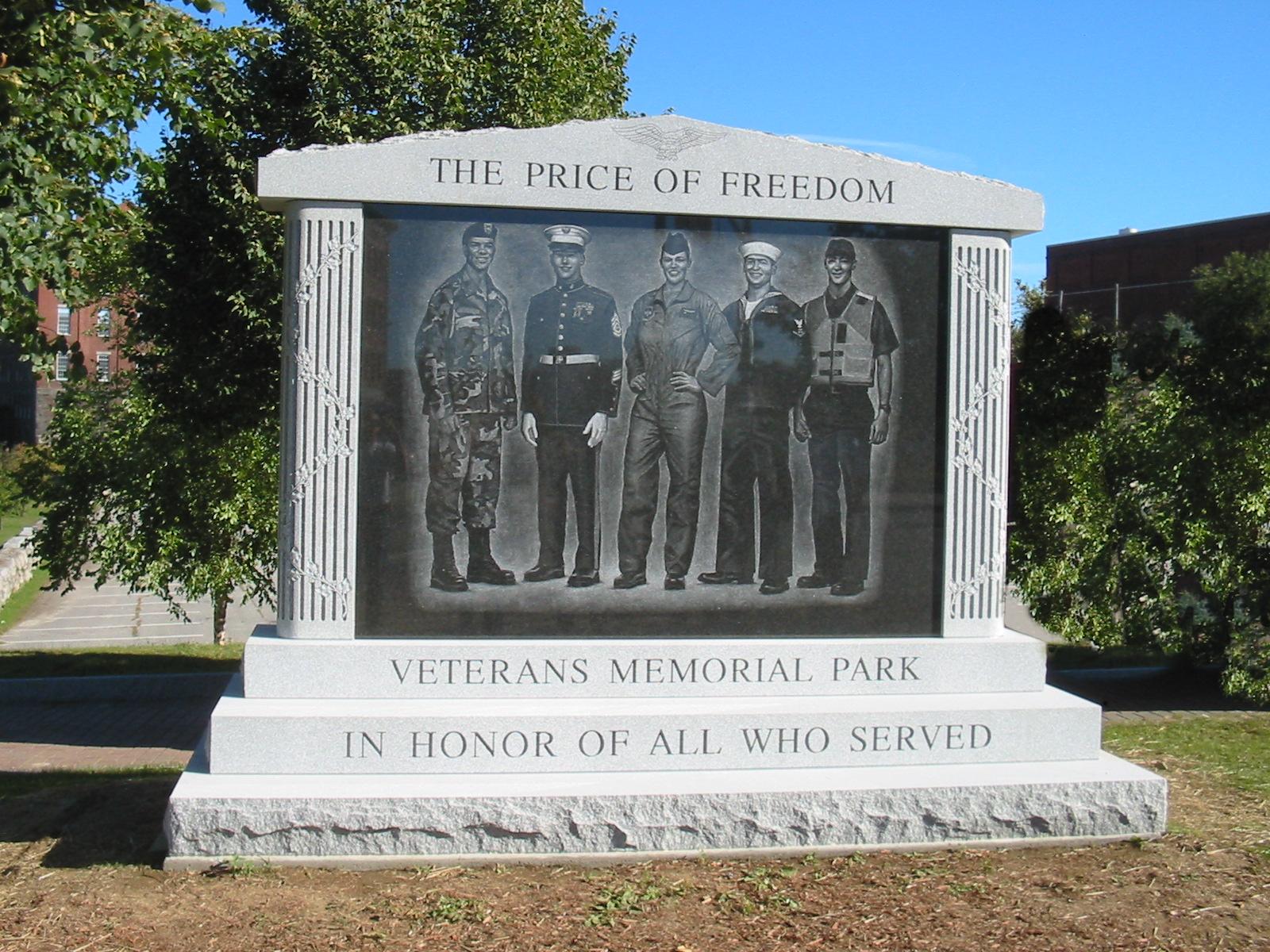 World War I – known at the time as “The Great War” – officially ended when the Treaty of Versailles was signed on June 28, 1919, in the Palace of Versailles outside the town of Versailles, France. However, fighting ceased seven months earlier when an armistice, or temporary cessation of hostilities, between the Allied nations and Germany went into effect on the eleventh hour of the eleventh day of the eleventh month. For that reason, November 11, 1918, is generally regarded as the end of “the war to end all wars.”
Soldiers of the 353rd Infantry near a church at Stenay, Meuse in France, wait for the end of hostilities.  This photo was taken at 10:58 a.m., on November 11, 1918, two minutes before the armistice ending World War I went into effect
In November 1919, President Wilson proclaimed November 11 as the first commemoration of Armistice Day with the following words: “To us in America, the reflections of Armistice Day will be filled with solemn pride in the heroism of those who died in the country’s service and with gratitude for the victory, both because of the thing from which it has freed us and because of the opportunity it has given America to show her sympathy with peace and justice in the councils of the nations…” The original concept for the celebration was for a day observed with parades and public meetings and a brief suspension of business beginning at 11:00 a.m.
The United States Congress officially recognized the end of World War I when it passed a concurrent resolution on June 4, 1926, with these words:
Whereas the 11th of November 1918, marked the cessation of the most destructive, sanguinary, and far reaching war in human annals and the resumption by the people of the United States of peaceful relations with other nations, which we hope may never again be severed, and
Whereas it is fitting that the recurring anniversary of this date should be commemorated with thanksgiving and prayer and exercises designed to perpetuate peace through good will and mutual understanding between nations; and
Whereas the legislatures of twenty-seven of our States have already declared November 11 to be a legal holiday: Therefore be it Resolved by the Senate (the House of Representatives concurring), that the President of the United States is requested to issue a proclamation calling upon the officials to display the flag of the United States on all Government buildings on November 11 and inviting the people of the United States to observe the day in schools and churches, or other suitable places, with appropriate ceremonies of friendly relations with all other peoples.
An Act (52 Stat. 351; 5 U. S. Code, Sec. 87a) approved May 13, 1938, made the 11th of November in each year a legal holiday—a day to be dedicated to the cause of world peace and to be thereafter celebrated and known as “Armistice Day.” Armistice Day was primarily a day set aside to honor veterans of World War I, but in 1954, after World War II had required the greatest mobilization of soldiers, sailors, Marines and airmen in the Nation’s history; after American forces had fought aggression in Korea, the 83rd Congress, at the urging of the veterans service organizations, amended the Act of 1938 by striking out the word “Armistice” and inserting in its place the word “Veterans.” With the approval of this legislation (Public Law 380) on June 1, 1954, November 11th became a day to honor American veterans of all wars.
Later that same year, on October 8th, President Dwight D. Eisenhower issued the first “Veterans Day Proclamation” which stated: “In order to insure proper and widespread observance of this anniversary, all veterans, all veterans’ organizations, and the entire citizenry will wish to join hands in the common purpose. Toward this end, I am designating the Administrator of Veterans’ Affairs as Chairman of a Veterans Day National Committee, which shall include such other persons as the Chairman may select, and which will coordinate at the national level necessary planning for the observance. I am also requesting the heads of all departments and agencies of the Executive branch of the
On that same day, President Eisenhower sent a letter to the Honorable Harvey V. Higley, Administrator of Veterans’ Affairs (VA), designating him as Chairman of the Veterans Day National Committee.
In 1958, the White House advised VA’s General Counsel that the 1954 designation of the VA Administrator as Chairman of the Veterans Day National Committee applied to all subsequent VA Administrators. Since March 1989 when VA was elevated to a cabinet level department, the Secretary of Veterans Affairs has served as the committee’s chairman.
The Uniform Holiday Bill (Public Law 90-363 (82 Stat. 250)) was signed on June 28, 1968, and was intended to ensure three-day weekends for Federal employees by celebrating four national holidays on Mondays: Washington’s Birthday, Memorial Day, Veterans Day, and Columbus Day. It was thought that these extended weekends would encourage travel, recreational and cultural activities and stimulate greater industrial and commercial production. Many states did not agree with this decision and continued to celebrate the holidays on their original dates.
The first Veterans Day under the new law was observed with much confusion on October 25, 1971. It was quite apparent that the commemoration of this day was a matter of historic and patriotic significance to a great number of our citizens, and so on September 20th, 1975, President Gerald R. Ford signed Public Law 94-97 (89 Stat. 479), which returned the annual observance of Veterans Day to its original date of November 11, beginning in 1978. This action supported the desires of the overwhelming majority of state legislatures, all major veterans service organizations and the American people.
Veterans Day continues to be observed on November 11, regardless of what day of the week on which it falls. The restoration of the observance of Veterans Day to November 11th not only preserves the historical significance of the date, but helps focus attention on the important purpose of Veterans Day: “A celebration to honor America’s veterans for their patriotism, love of country, and willingness to serve and sacrifice for the common good. The US Government to assist the National Committee in every way possible.”
Original Article courtesy of http://www.va.gov/opa/vetsday/vetdayhistory.asp
A Note from this Jersey Girl:
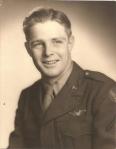
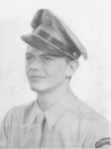
A heartfelt Thank You to my Father (Donald W. Flint, US Army Air Corps 1942 – 1945) and my Father-in Law (John Howard, US Army Rangers 3rd Battalion 1942- 1943 ) for your Patriotism & Sacrifices made during World War II. Your examples of honor & duty to country were eventually followed by your children, my husband & I when we joined the US Navy in the late 1970’s. However & Therefore; without sounding too self-serving, I’d like to thank you~both of my fathers~ for your Service to our country! (And you too, Luke!) ~JGT


IT’S THE “GREEN THING”.

‘We’re trying to discourage carrier bag use.’
Checking out at the store, the young cashier suggested to the much older lady that she should bring her own grocery bags, because plastic bags are not good for …the environment. The woman apologized to the young girl and explained, “We didn’t have this ‘green thing’ back in my earlier days.”
The young clerk responded, “That’s our problem today. Your generation did not care enough to save our environment for future generations.”
The older lady said that she was right — our generation didn’t have the ‘green thing’ in its day. The older lady went on to explain:
“Back then, we returned milk bottles, soda bottles and beer bottles to the store. The store sent them back to the plant to be washed and sterilized and refilled, so it could use the same bottles over and over. So they really were recycled. But we didn’t have the “green thing” back in our day.”
She went on. “Grocery stores bagged our groceries in brown paper bags that we reused for numerous things. Most memorable besides household garbage bags was the use of brown paper bags as book covers for our school books. This was to ensure that public property (the books provided for our use by the school) was not defaced by our scribblings. Then we were able to personalize our books on the brown paper bags. But, too bad we didn’t do the “green thing” back then. We walked up stairs because we didn’t have an escalator in every store and office building. We walked to the grocery store and didn’t climb into a 300-horsepower machine every time we had to go two blocks.
But the clerk was right, the older lady thought, We didn’t have the ‘green thing’ in our day.
“Back then we washed the baby’s diapers because we didn’t have the throw away kind. We dried clothes on a line, not in an energy-gobbling machine burning up 220 volts. Wind and solar power really did dry our clothes back in our early days. Kids got hand-me-down clothes from their brothers, sisters or cousins, not always brand-new clothing.”
“Back then we had one TV, or radio, in the house — not a TV in every room. And the TV had a small screen the size of a handkerchief (remember them?), not a screen the size of the state of Montana. In the kitchen we blended and stirred by hand because we didn’t have electric machines to do everything for us. When we packaged a fragile item to send in the mail, we used wadded up old newspapers to cushion it, not Styrofoam or plastic bubble wrap. Back then, we didn’t fire up an engine and burn gasoline just to cut the lawn. We used a push mower that ran on human power. We exercised by working so we didn’t need to go to a health club to run on treadmills that operate on electricity.”
But she’s right; we didn’t have the ‘green thing’ back then.
“We drank from a fountain when we were thirsty instead of using a cup or a plastic bottle every time we had a drink of water. We refilled writing pens with ink instead of buying a new pen, and we replaced the razor blade in a r azor instead of throwing away the whole razor just because the blade got dull. Back then, people took the streetcar or a bus and kids rode their bikes to school or walked instead of turning their moms into a 24-hour taxi service in the family’s $45,000 SUV or van, which cost what a whole house did before the”green thing.” We had one electrical outlet in a room, not an entire bank of sockets to power a dozen appliances. And we didn’t need a computerized gadget to receive a signal beamed from satellites 23,000 miles out in space in order to find the nearest burger joint.”
But isn’t it sad the current generation laments how wasteful we older folks were just because we didn’t have the ‘green thing’ back then?
Please pass this information on to another selfish old person who needs a lesson in conservation from a smart ass young person. We don’t like being old in the first place, so it doesn’t take much to piss us off… Especially from a tattooed, multiple pierced smartass who can’t make change without the cash register telling them how much!

‘Glad to see folks like you using reusable shopping bags. We’re saving a lot of trees! Here’s your receipt.’
I don’t know who the original author was but I’ve read this before and I remember doing most of these things as a kid including hand washing clothes on a scrub board in my grandmother’s kitchen sink! I have observed that the generations that have followed mine, for the most part; are spoiled by technology & and have obviously not been educated enough by their parents or the public school systems to have learned the REAL ecological history of recycling in our country. Indeed, many had been indoctrinated into this particular propaganda by their former hippie parents & grandparents beginning in the late 1960s and on into the 1970s, I’m ashamed to say.
My advice to the younger generation would be to check out the environmental policies & existing conditions of other countries around the world ~or to travel to many, as I have done over the years. They should observe the environments first-hand paying particular attention to how filthy & filled with visible garbage & human waste many of those countries really are before disrespecting their elders by scolding them on environmental issues that they are obviously clueless about! ~ JGT
CANINE INFLUENZA ALERT 2015
UPDATE: New cases have just been confirmed in Chicago. (July 30, 2015) Please contact your Veterinarian to ensure your pet is inoculated and to find out if there are any recent cases in your state. This new strain of dog flu is not covered by your pet’s regular flu vaccination. If there are documented cases in your area, DO NOT board or groom your dog and if you notice symptoms, take your dog to the vet IMMEDATELY!
 You may already be aware of a reported outbreak of dog flu/canine influenza in the Chicago area, with a few reported cases in Wisconsin and Indiana. I don’t wish to cause alarm, but I consider this an important situation for dog owners which calls for some extra awareness and attention. Canine influenza (CI), or dog flu, is caused by an influenza A virus. Originally believed to be a strain of the H3N8 canine influenza identified in the U.S. dog population in 2004, this virus is now considered closely related to Asian strains of influenza A H3N2 viruses. Although it does not infect people, it’s highly contagious to other dogs and can occur year round. Most dogs recover within 2-3 weeks; however, some fatal cases of pneumonia resulting from CI have been reported. Exposure to the virus comes from other dogs, in situations such as boarding, dog parks, or other activities… You may already be aware of a reported outbreak of dog flu/canine influenza in the Chicago area, with a few reported cases in Wisconsin and Indiana. I don’t wish to cause alarm, but I consider this an important situation for dog owners which calls for some extra awareness and attention. Canine influenza (CI), or dog flu, is caused by an influenza A virus. Originally believed to be a strain of the H3N8 canine influenza identified in the U.S. dog population in 2004, this virus is now considered closely related to Asian strains of influenza A H3N2 viruses. Although it does not infect people, it’s highly contagious to other dogs and can occur year round. Most dogs recover within 2-3 weeks; however, some fatal cases of pneumonia resulting from CI have been reported. Exposure to the virus comes from other dogs, in situations such as boarding, dog parks, or other activities… |
View original post 139 more words
FATHER’S DAY (A PERSONAL NOTE FOR MY DADDY)
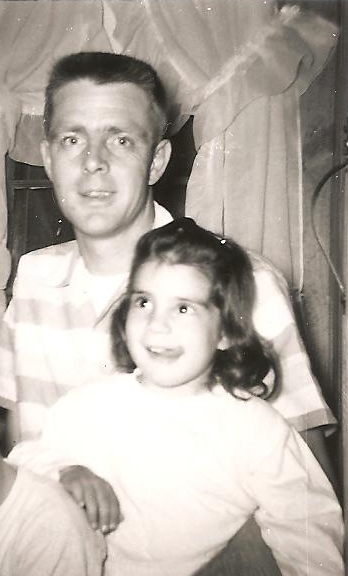
Our fathers carry half of our genetic makeup. Our relationship with our fathers play such a huge part of who we will become as adults. In many segments of society, people grow up without ever knowing their fathers. This is unfortunate because in my opinion, ALL fathers should play as important a role in raising their children as their mothers. A father is the model of a man that a daughter will unconsciously look for in her search for a future mate ~ and because of that, he is the ideal that she will model all her future relationships after. She will inevitably choose a man who is very much like her father. A father is also the model for his son as well. (However, since I was a “Daddy’s Little Girl”, I’ll let my brother come up with his own opinion on fathers. *Good Luck, Ross!) Indeed, this opinion is all mine! ~ D. F. Howard © 2015
“I miss love you & miss you Daddy, every~ single~ day. Thanks for everything! Happy Father’s Day!, Love & Hugs, your little mooch!”
In the year 1910 on July 19, it was said that the Governor of Washington state declared the first ‘Father’s Day’. The day of celebration for fathers did not meet the same height of enthusiasm as mother’s day because supposedly a father did not have an equal amount of sentimental value. It was not until July 5, 1908 in a West Virginia church that the very first celebrated, sponsored event for fathers took place. The sermon that very day was held and centered on the 362 fallen men that lost their lives in explosions that took place in the Fairmount Coal Company mines. This event, however, was only a one day thing and not the annual holiday that many know of today.
A BRIEF HISTORY OF FATHER’S DAY: A woman by the name of Sonora Smart Dodd had her place in the history of father’s day. As one of six children raised by a widow, she tried to create a day that would be an official day just like mother’s day for the counterparts to female parents. She wished to create this day in honor of her farther. It was said that Dodd went all over to places such as churches and the YMCA to gather some type of support for this thought. She was met with success as Washington then celebrated Father’s Day as a national holiday. However, despite Dodd’s effort and success of obtaining the male version of Mother’s Day, many men were seen to not partake in such a thing as they felt it somehow toned down their manliness with gift giving. In fact, most men back in that time scoffed at the very existence of the holiday.
Father’s Day took its place in history in 1966. President Lyndon Johnson made Father’s Day into the national holiday that is now as popular as Mother’s Day. Today, the holiday is met with an equal amount of love and affection, gift-giving, and bonding as seen on Mother’s Day. This day is the one of the largest card sending days of the year where about 87 million cards are given. Most of these cards come from the wives and daughters of the families. Sons are sometimes seen fishing with their fathers on this day. Other activities involve barbecues and family bonding.
The importance of Father’s Day from back in history to the present day is to help bring acknowledgement to the roles that father’s play within society and in families. The celebration, much like Mother’s Day, also gives children the opportunity to show just how much they love and respect their fathers. This is said to assist with strengthening the initial bond shared by father and child. Father’s Day is just around the corner now. The celebration and the honoring of those dads still here or that have passed away will be felt by many around the globe.
By Isis E. Stevens
Read more at http://guardianlv.com/2014/06/fathers-day-a-history/#C66vsPb4EeWSPEXv.99
 Jersey Girl Today