 One hundred forty-eight years ago today, on April 10, 1866~ the American Society for the Prevention of Cruelty to Animals (ASPCA) was founded in New York City by philanthropist and diplomat Henry Bergh. Thank you, Mr. Bergh and Happy Birthday ASPCA! ~JGT
It was the first humane society to be established in North America. Bergh was the son of a prominent shipbuilder and spent some time traveling in Europe. He visited the Earl of Harrowby, president of England’s Royal Society for the Prevention of Cruelty to Animals, founded in 1840. He used the knowledge he learned from him to establish a humane society in New York. He convinced the New York State Legislature to incorporate the ASPCA. The legislature passed its first animal cruelty law and the society was given the right to enforce it.
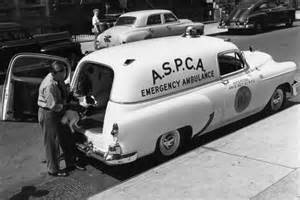
Bergh worked tirelessly to improve the lot of animals everywhere. His society  created the first animal ambulance and the first sling for horse rescue. He placed public drinking fountains in the streets for the horses who pulled carts all day long. Other animals took advantage of these fountains as well. Bergh personally rescued injured animals, enforced laws and educated the public about animal welfare. Although the society’s focus was on horses, Bergh helped cats and dogs too. In 1867, he helped pass a law prohibiting the use of dogs to pull carts without a license. He also fought fiercely against dog fighting. By the time of his death in 1888, there were humane societies in many other states, and all but one of the states had passed anti-cruelty laws.
In 1894, the ASPCA took over the responsibility for catching stray dogs in Manhattan. Previously, stray dogs were thrown into the river. Dog catchers got paid by the dog, so they would frequently steal pets from their owners’ yards. The ASPCA opened shelters to care for these dogs. In 1995, when the ASPCA’s agreement with the city expired, the society decided not to renew it for financial reasons.
At the turn of the twentieth century, the society shifted its focus away from horses, towards dogs and cats. It opened an animal hospital in 1912. In 1918, this hospital helped develop the use of anesthesia and performed a previously unheard of surgery on a horse with a broken kneecap. In 1961, the hospital performed its first open-heart surgery on a dog.
In the 1960s, pet ownership became much more popular. The ASPCA shifted its focus to sheltering and putting up animals for adoption. It also ran obedience training courses for dogs and enforced the law that all dogs must wear their license. It began to promote neutering and spaying and around this time, although it was not until 1972 that the society recommended it for every pet.
Today the organization focuses on three main areas: “caring for pet parents and pets, providing positive outcomes for at-risk animals and serving victims of animal cruelty.” It runs an animal poison control center and an animal hospital named for Bergh. The ASPCA educates pet owners about disaster response and sends out a team in the event of a large disaster. It offers free and low-cost spaying and neutering, as well as grief counseling. The ASPCA is involved in many other programs which benefit animals around the country.
An 1845 diary of Henry Bergh, founder of the ASPCA chronicles his honeymoon in Europe with wife Catherine where Henry Bergh described the carnage of bullfighting in Spain. This event is a precursor to the dramatic changes he would make in the United States 20 years later.
*Historic Facts:
- The ASPCA‘s founding documents published in April 1866 is often featured in some of the most reputable museums in New York and described as the “Animals’ Declaration of Independence,” the founding document features notable signatories such as Horace Greeley, John Jacob Astor, August Belmont (of Belmont Racetrack), Peter Cooper, C.V.S. Roosevelt, James J. Roosevelt, Samuel Ruggles, William Bryant, Frank Leslie, ASPCA founder Bergh and more.
- “Mercy to animals means mercy to mankind!” Is an original quote of Henry Bergh, circa 1867.
- The ASPCA’s original bronze medallion shield of 1875 depicts an armed angel of mercy hovering over a beaten carriage horse, this iconic image was created by ASPCA supporter and famed illustrator Frank Leslie, and still stands as the symbol of the ASPCA.
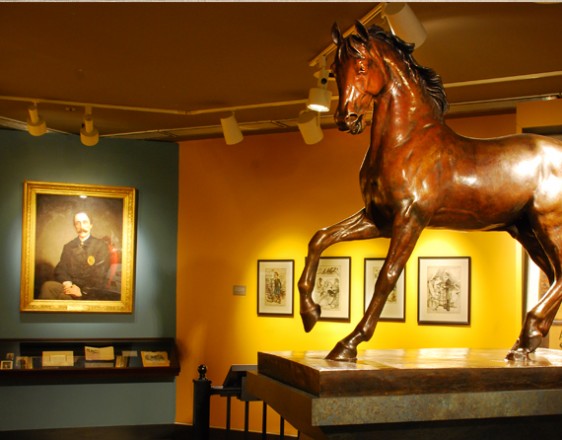
- Only one known existing oil portrait of Henry Bergh, painted by famous miniature portraitist John Wood Dodge in 1878 is known to exist. In it, Bergh wears an 18K diamond-encrusted badge with the seal of the fallen carriage horse and avenging angel. The badge was a gift to Bergh from a wealthy “first patron” of the ASPCA.
- There is an 1880s zinc stallion horse finial from an ASPCA horse
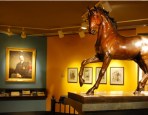 fountain which weighs almost 800 pounds. Having graced the tops of ornate ASPCA horse fountains and guarded various ASPCA headquarters, it now has a permanent residence at the International Museum of the Horse in Lexington Kentucky.
Some Article excerpts courtesy of The Pet Wiki ASPCA ~JGT


 invented secular excuse to commemorate a CHRISTIAN holiday (celebrating the resurrection of Jesus Christ, three days after his crucifixion) in order for government, civil service & union employees to get paid for NOT going to work!!!!! However; this is just another link ~ in the long string of chains strung by our “politically correct” & elected government & union biased officials which continually promotes the rise of liberal Secularism in America! SICKENING!!!!
 invented secular excuse to commemorate a CHRISTIAN holiday (celebrating the resurrection of Jesus Christ, three days after his crucifixion) in order for government, civil service & union employees to get paid for NOT going to work!!!!! However; this is just another link ~ in the long string of chains strung by our “politically correct” & elected government & union biased officials which continually promotes the rise of liberal Secularism in America! SICKENING!!!!

 Jersey Girl Today